Found in
Many small and midsize manufacturers have been unable to take advantage of automation because of the cost and technical support required to deploy and maintain the systems. Developers are ramping up efforts to introduce ease-of-use features to make robots more accessible to a broader, more transversal pool of users. Making robots easier to implement and use has helped smaller shops…
Found in
The convergence of emerging market trends and recent technological advances has opened the door for autonomous mobile robots, or AMRs, to take on more tasks in manufacturing and supply chain operations. The changes don't stop there, however. Today, adopters of AMRs have begun to shift into high gear, transitioning from pilot projects involving small numbers of robots to “fleet-size” implementations.…
Found in
The stage is set for the reshoring of U.S. manufacturing to finally gain momentum, and the latest generation of robots represents a key element of the equation. The backdrop against which this shift will unfold reflects a new set of economic realities for the industry. Two elements stand out as drivers of change: the rise in offshore wages and the…
Found in
The presence of robots in the electronics industry is not new. What is new, however, is the rate at which manufacturers in this sector are deploying robotics and the applications in which they are using the technology. “We’re seeing accelerated adoption by manufacturers thanks to increased demand for semiconductor products, rising labor costs, and innovations that allow robotics to address…
Found in
To increase collaborative robots, or cobots, capabilities and broaden their application range, robotics companies are leveraging advances in both vision and motion control systems. One of the most important recent developments in vision technology has been 3D vision. “3D vision systems are becoming very easy to integrate into robot applications and provide much better information for a robotic application than…
Found in
Robotics companies are seeking to advance the ability of their technology to perceive and understand their work environments and by cultivating the capacity to adapt dynamic operating conditions on the fly. This situational awareness is enabled by a synergy between sensors and machine learning. By giving mobile and picking robots more human-like perception of their physical environments, developers are also…
Found in
Advanced motor technologies are helping improve tasks robots can perform, helping to make them stronger, nimbler, and more sustainable. Empowered with these enhancements, a new class of robots has begun to take on tasks in industries that haven’t typically taken advantage of automation. Market demand for compact and energy-efficient mobile robots continues to grow. At the same time, advances in…
Found in
Surgical robots are starting to play a key role in the medical space and are helping increase positive outcomes for both doctors and patients. The promise is that these robots will work alongside surgeons to move from manual laparoscopy to more efficient approaches—expanding the number of patients who can have minimally invasive surgery. Robotic systems are now being used for…
Found in
Collaborative robots, or cobots, fundamentally change the nature of production by creating new synergies between humans and machines. By playing to the strengths of people and automation, multiple industries can improve productivity and product quality while reducing operating costs. Equipped with sensors for safe collaboration and accurate manipulation, ways of learning new tasks without programming expertise, and a variety of…
Found in
Product development teams have only just begun to use artificial intelligence in combination with physics-based simulation platforms, moving beyond advanced automotive applications to more consumer-oriented designs. The use of AI technologies such as machine learning (ML) and deep learning seems like a logical progression, as engineers take on increasingly complex designs and contend with shorter and shorter development cycles. But…
Found in
Metal additive manufacturing (AM) stands poised to expand its footprint in the manufacturing sector, transitioning from a proven prototyping tool and small-lot fabrication process to mainstream part production. But there’s a catch. Today’s AM technology isn’t predictable and repeatable enough to be cost-effective for companies that want to use AM to mass-produce parts. Currently, engineers must go through an iterative…
Found in
Robots made exclusively of hard materials prove their worth every day in industrial applications, excelling at repetitive, physically demanding and dangerous tasks that human counterparts cannot take on. Some robotics providers, however, want to steer the design and construction of these machines in a new direction. Driven by robotic use cases in healthcare and cooperative human assistance applications, designers have…
Found in
What is a domestic robot? What roles will these machines play in the evolving smart home ecosystem? What can current technology do, and what tasks lie beyond its reach? To answer these questions and achieve a better understanding of these robots, engineers should start by dismissing most of their preconceptions about these machines. These robots are works in progress. In…
Found in
Developing machines for the Industrial Internet of Things (IIoT) requires engineers to bring the physical and digital worlds together on the shop floor to an extent rarely seen before. This involves incorporating a greater number and variety of components and subsystems into the machinery. Designers also must contend with more sophisticated issues, as well as accept the increased complexity of…
Found in
The Internet of Things (IoT) presents design engineers with a new set of challenges. These range from the need for specialized operating systems to dealing with extreme constraints on power consumption and form factor. As inherent as its demand for new processor architectures, the IoT also requires designers to deploy fast, flexible and inexpensive memory to address the challenges for…
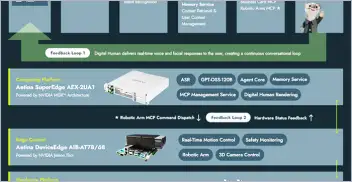
Edge computing gives AI agents the processing power to turn instructions into…
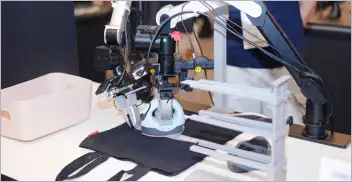
Daimon-TWM world model debuts for the public
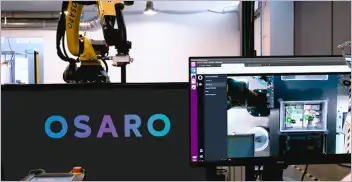
Platform helps robots adapt to complex tasks
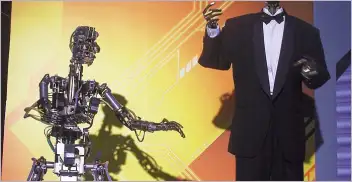
Look beyond the headlines for the latest in humanoid robots