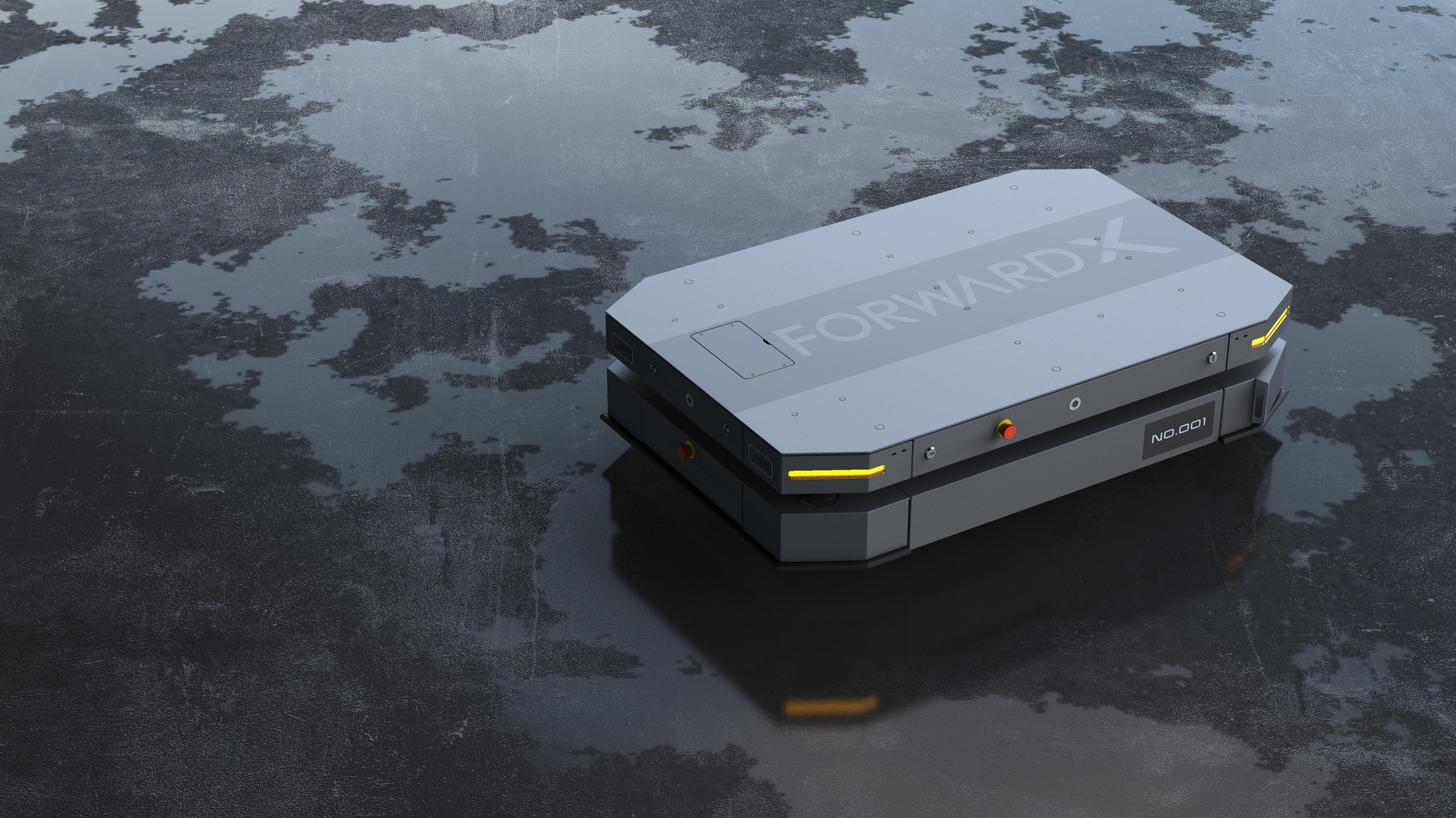
ForwardX Robotics
ForwardX is offering its AMRs through a RaaS model.
Get news, papers, media and research delivered. Sign up for our free newsletters.
Stay up-to-date with news and resources you need to do your job. Research industry trends, compare companies and get weekly market intelligence with Robotics 24/7.
ForwardX Robotics
ForwardX is offering its AMRs through a RaaS model.
ForwardX Robotics Inc. today announced it will offer its collaborative mobile robots through a robotics-as-a-service, or RaaS, model. While the Beijing-based company will also offer outright sale and renting options, the RaaS subscription-based model aims to encourage supply chain operations to upgrade their facilities without the large upfront investment usually associated with automation projects.
“The pressure on supply chains to deliver is growing with every day that passes, and we know how much of an impact our solutions can have on facilities and their processes,” said Paul Qian, vice president of sales at ForwardX Robotics. “With our mission to empower operations to be at their best, introducing RaaS as an option is a no-brainer."
"Organizations have been going out of their way to keep the public satisfied during this time, so we want to make sure they have access to the best tools available,” he said.
In a survey last year, the Economist Intelligence Unit found that 56% of high-level decision makers considered "hard" automation, such as physical robots, to be a "high" or "essential" priority.
Since the pandemic began, two main predictions on how investment plans might be affected have emerged among supply chain and automation experts. The first follows the intuitive idea that cashflow problems will limit a company’s ability to invest and, therefore, adoption should be expected to slow down significantly.
However, the second and more fascinating prediction forecasts that, while cashflow may pose problems, innovation will simply move higher up the priority list, leading to continual growth in adoption.
In either case, the RaaS subscription-based model offers a number of benefits over purchasing or even leasing robots. For cash-strapped operations, RaaS lowers the investment cost necessary to begin a project by moving the cost from capital expenditure (capex) to operational expenditure (opex) budgets and allows for almost instant return on investment (ROI).
For companies prioritizing innovation, RaaS represents a lower-risk option and a far easier implementation process, said ForwardX.
“The opex versus capex tradeoff is now relatively common amongst RaaS providers, but the market now expects more than a simple financial twist,” declared Remy Glaisner, research director at IDC and lead for its Worldwide Robotics and Drones Strategies practice. “RaaS is primarily a transaction-based model for which each ‘transaction’ should reflect the creation of tangible business value for the user."
"ForwardX is an excellent illustration of that new generation of robotic solution providers eager to innovate by balancing deep technological expertise with an open market mindset," he added. "It perfectly aligns with the rapid evolution of demand throughout sectors."
"Enterprise users are not abandoning continuous improvement efforts, but will almost exclusively sustain their spending only if solutions can immediately support their business’s ability to cope with highly volatile market conditions,” asserted Glaisner.
ForwardX Robotics claimed that its RaaS model will offer logistics and manufacturing facilities materials handling automation aimed at improving core processes. The company said it designed its Flex and Max autonomous mobile robots (AMRs) to optimize goods movement across the receiving, putaway, replenishment, picking, packing, and shipping processes in warehouses.
The AMRs can also serve in as raw material delivery, work-in-progress (WIP) movement, and finished goods movement in manufacturing plants, said ForwardX.
The company said its customers, such as SF DHL China, ITOCHU Logistics, and TCL, have seen 200% to 300% increases in productivity, as well as 50% labor cost reductions.
“We know that the role of automation will continue to grow across the supply chain, but investing upwards of $5 million on a system with limited flexibility just won’t cut it in a post-pandemic environment,” said Nicolas Chee, founder and CEO of ForwardX. “Our customers come to us looking for something better-suited to their business and operational goals, and we’re determined to help them meet those goals. RaaS is the next logical step to better align us with the needs of the market.”
With over 11,000 square meters of floor space, SF DHL's Beijing warehouse provides B2B distribution services to one of China's largest coffee retailers. Using manual picking and sorting methods, the distribution center suffered from low picking productivity, frequent sorting errors, and rising labor costs. After careful consideration, SF DHL chose to implement a ForwardX solution consisting of Flex AMRs and our advanced f(x) Fleet Manager software.
GENISOM AI makes ICRA debut at conference in Vienna
World's first omni-modal evaluation including tactile sensing for…

Ultrasonic sensing enhances robotics perception
Cybernetix Ventures’ event kicks off Robotics Tech Week 2026 slate of events