Locus Robotics
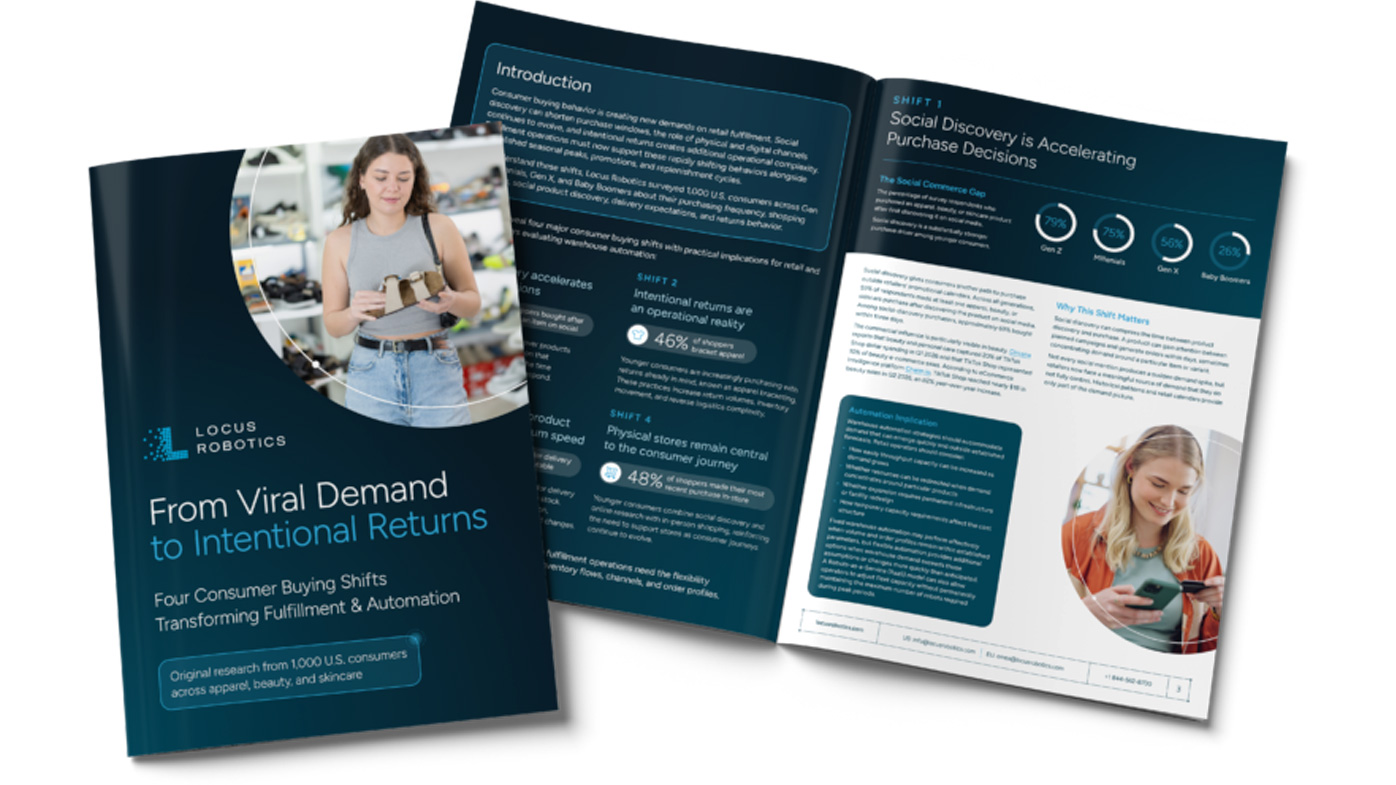
A new report from Locus Robotics, "From Viral Demand to Intentional Returns," found that generational gaps are driving different retail purchasing habits, and affecting order fulfillment operations.
Get news, papers, media and research delivered. Sign up for our free newsletters.
Stay up-to-date with news and resources you need to do your job. Research industry trends, compare companies and get weekly market intelligence with Robotics 24/7.
Locus Robotics
A new report from Locus Robotics, "From Viral Demand to Intentional Returns," found that generational gaps are driving different retail purchasing habits, and affecting order fulfillment operations.
Locus Robotics released new research showing that younger shoppers are reshaping purchasing and returns behaviors across apparel, beauty, and skincare in ways that are creating new fulfillment requirements.
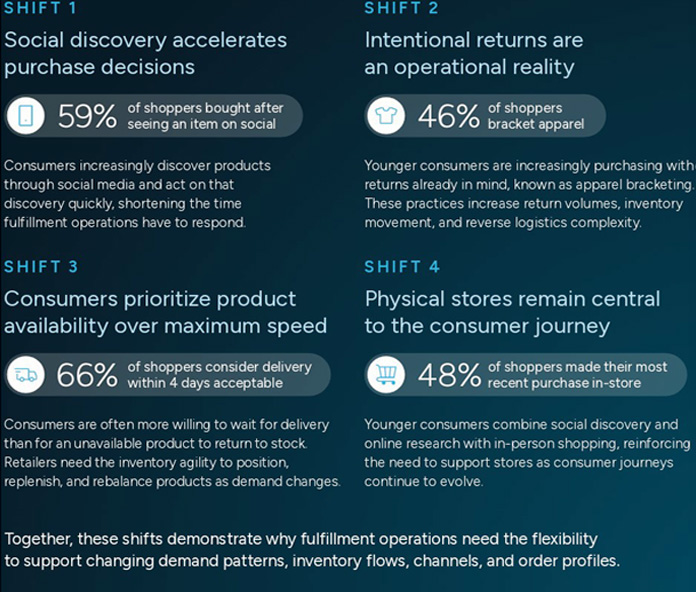
The company's research found that, notably, 61% of Gen Z apparel shoppers "bracket" their purchases, buying multiple sizes or styles to keep just one, compared to only 15% of Baby Boomers. Younger shoppers are also far more likely to discover products through social media and purchase them quickly after discovery.
For retailers in these categories, Locus Robotics said that those generational behaviors reinforce the need for flexible automation systems that can adapt as volume, order profiles and channels change.
Locus Robotics provided the following key findings in its new study:
“Retail fulfillment operators are facing an entirely new reality, where demand patterns can change in hours and days, not seasons,” said Rick Faulk, CEO of Locus Robotics. “We’re seeing this firsthand with a record number of peak robot requests to help retailers around the world respond to demand surges. The generational shifts underscore why warehouses need automation that can flex with volume, adapt across workflows, and evolve as consumer behavior and business needs continue to evolve.”
Apparel, beauty, and skincare remain among retail's most important categories. According to Circana, U.S. beauty sales grew 7% across both prestige and mass retail channels during the first half of 2026, with skincare among the strongest-performing categories.
The report said that this growth is heavily propelled by creator marketing; YouGov data shows 41% of Gen Z shoppers discover new products via influencers, with apparel and skincare leading the brands they consider.
At the same time, Locus Robotics said that returns continue to represent a significant operational and financial challenge. The National Retail Federation (NRF) and Happy Returns highlight this tension, noting that 82% of consumers view free returns as a critical consideration when shopping online, effectively forcing e-commerce brands to absorb heavy reverse-logistics margins to maintain loyalty.
Click here to download the full report.
Autonomy Mobile Robots Industrial Automation Collaborative Robots Robot Arm Components Grippers Sensors Cameras Lidar Software Cloud and Edge Data Management Fleet Management News Press Release Delivery Service e-commerce Fulfillment Inventory Locus Robotics Order Fulfillment Research Reverse Logistics
Enjoyed this article? Add Robotics 24/7 as a preferred source in Google Search.
Edge computing gives AI agents the processing power to turn instructions into…
Daimon-TWM world model debuts for the public

Platform helps robots adapt to complex tasks

Look beyond the headlines for the latest in humanoid robots