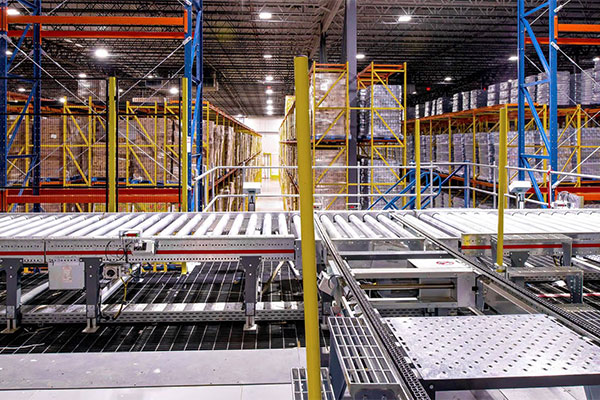
Image courtesy of Swisslog.
Get news, papers, media and research delivered. Sign up for our free newsletters.
Stay up-to-date with news and resources you need to do your job. Research industry trends, compare companies and get weekly market intelligence with Robotics 24/7.
Image courtesy of Swisslog.
The logistics industry faces constant disruption—labor shortages, regulatory changes, and unpredictable market shifts are now the norm. Businesses must reduce exposure to these risks while maintaining operational excellence. Automation is emerging as the foundation for resilience, helping organizations protect their people, stabilize operations, and adapt to change with confidence.
Manual tasks in high-volume or cold environments create exposure to injuries and high turnover. Automating repetitive work reduces dependence on volatile labor markets and creates safer, more attractive workplaces.
Employees can shift into higher-value tasks while technology handles repetitive work. This dual benefit supports retention and strengthens operational stability, keeping the workforce engaged and productive.
Downtime and disruptions can cripple a business. Automated orchestration software, such as Swisslog’s SynQ, help ensure consistency and reduce human error. Resilient systems keep operations running even when unexpected challenges occur.
Solutions like ASRS and shuttle systems provide predictable throughput and adapt quickly to demand swings. This reliability reduces vulnerability to interruptions and maintains customer service levels.
Industries such as pharmaceuticals and food require strict compliance and traceability. Automation ensures chain-of-custody integrity, logs every action, and supports audits and reporting. This reduces regulatory risk while strengthening customer trust.
At the same time, automated systems streamline operations and minimize costly errors. Companies gain predictable output, improved quality, and financial stability—all critical for sustainable growth.
Markets are unpredictable, and demand can shift quickly. Modular automation allows companies to expand or contract capacity without major infrastructure changes. This flexibility enables businesses to respond effectively to changing customer needs.
Companies that embrace scalable automation are better positioned to absorb market shocks, support service expectations, and sustain long-term growth. Automation becomes not just an efficiency tool, but a strategic safeguard.
Even the best automation systems can fail without proper planning. Selecting proven technology and a reliable partner is essential. Simulation, emulation, and robust service support help ensure systems perform as expected.
Swisslog reduces implementation risk through early validation, lifecycle support, and fast-response service. Most issues are resolved on first contact, giving organizations confidence in their automation investments.
Risks are unavoidable, but their impact can be controlled. By implementing automation, organizations reduce exposure to labor, compliance, operational, and market uncertainties.
The result is a more resilient supply chain that thrives in disruption while preparing for the future.
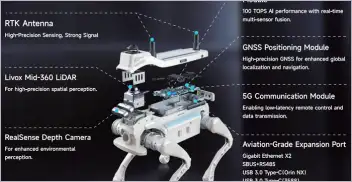
GENISOM AI makes ICRA debut at conference in Vienna

World's first omni-modal evaluation including tactile sensing for…

Ultrasonic sensing enhances robotics perception
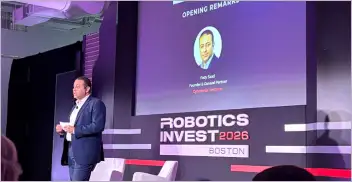
Cybernetix Ventures’ event kicks off Robotics Tech Week 2026 slate of events