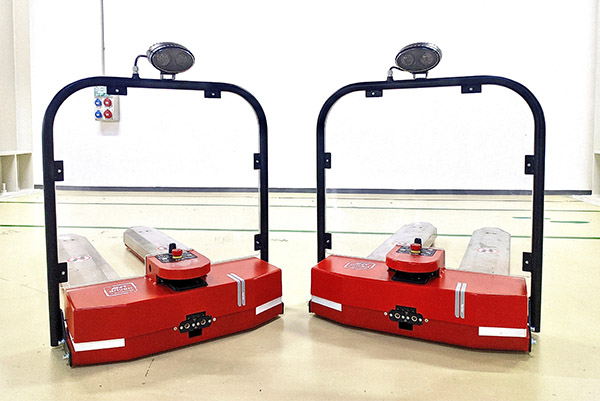
Karter
Karter's Compact AMRs use BlueBotics' ANT system.
Get news, papers, media and research delivered. Sign up for our free newsletters.
Stay up-to-date with news and resources you need to do your job. Research industry trends, compare companies and get weekly market intelligence with Robotics 24/7.
Karter
Karter's Compact AMRs use BlueBotics' ANT system.
Karter yesterday said it has released three new mobile robots targeted at applications for intralogistics, manufacturing, and agriculture. The Hague, Netherlands-based company said they are designed to be agile and transport heavy products and components.
“These Karters are the future of material handling," stated Patrick van Tiel, commercial manager for autonomous mobile robots (AMRs) at Karter, in a release.
"They reduce a company’s reliance on human resources to carry out repetitive, labor-intensive tasks, and they can help lower costs and increase safety, ensuring tasks are carried out predictably and reliably every time," he asserted. "‘Ingenuity through simplicity’ is our claim because that is what Karters deliver!”
Karter's AMRs are designed to move pallets, as well as handle other loads, using safety lasers for navigation and obstacle avoidance. The company is a subsidiary of Weighpack, which provides automated packing systems, inspection systems, and products for loading and unloading heat-treatment furnaces.
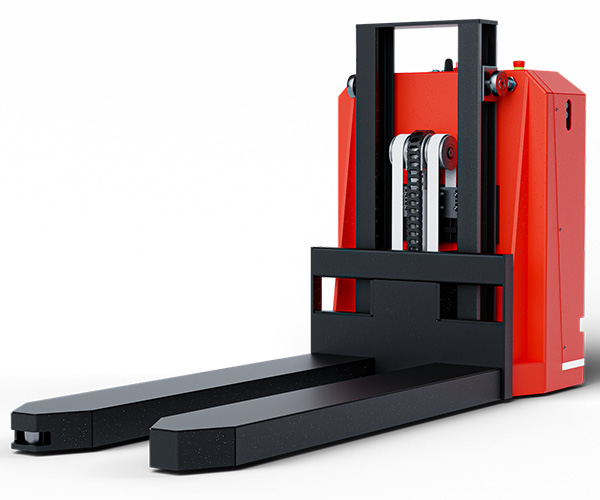
The Karter AMRs are the first result of the company’s close technical partnership with BlueBotics SA. Since these vehicles use BlueBotics' Autonomous Navigation Technology (ANT) natural feature navigation, they do not require any permanent infrastructure changes such as laying magnetic tape or installing reflective targets, noted the companies.
Capable of operating for eight hours after just 10 minutes of charging, Karter claimed that its AMRs are easy to integrate into a site’s existing operations. The Karter AMRs include:
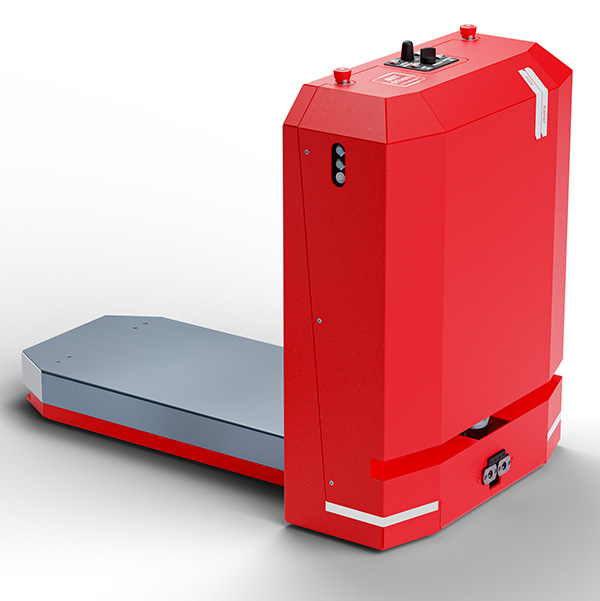
Karter AMRs are also fully interoperable, said the company. They can be used alone or in a full, connected AMR fleet -- even with other ANT-driven vehicles -- using BlueBotics' ANT server software.
ANT server’s API can also connect a Karter installation to a site’s existing warehouse management system (WMS), manufacturing execution system (MES), or enterprise resource planning (ERP) software. BlueBotics said it can also seamlessly interface with equipment such as automatic doors and elevators.
“These Karters bring a new level of flexibility and agility to the AMR market," said Dr. Nicola Tomatis, CEO of BlueBotics. "They are highly compact. They can recharge in no time. And thanks to the ANT navigation technology inside them, they are accurate, reliable, quick to commission, and immediately fleet-ready.”
St-Sulpice, Switzerland-based BlueBotics said it "is the reference in natural feature navigation and has the mission to help companies meet the challenge of vehicle automation." With 20 years of industry experience, the company said its ANT and expert support enable customers to to bring their automated guided vehicles (AGVs). AMRs, or automated forklifts successfully to market.
BlueBotics said that more than 4,000 ANT-driven vehicles are in operation worldwide.
How is an ANT driven vehicle installed? Whether it's a AGV, AMR or automated forklift, the process is the same. This guide explains the 5 simple steps involved.
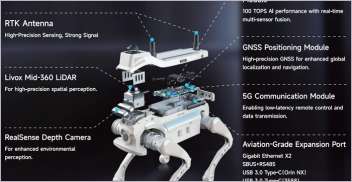
GENISOM AI makes ICRA debut at conference in Vienna
World's first omni-modal evaluation including tactile sensing for…
Ultrasonic sensing enhances robotics perception

Cybernetix Ventures’ event kicks off Robotics Tech Week 2026 slate of events