Cainiao
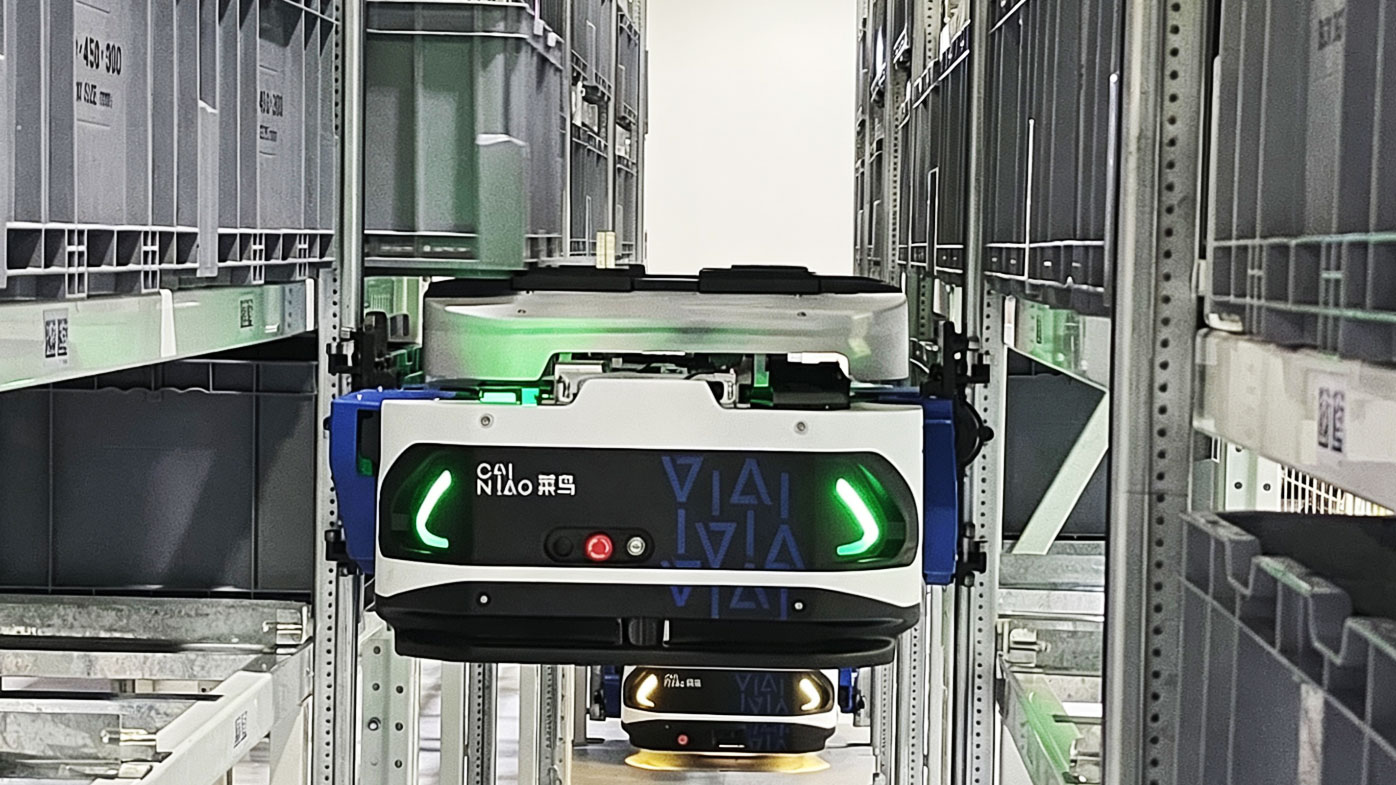
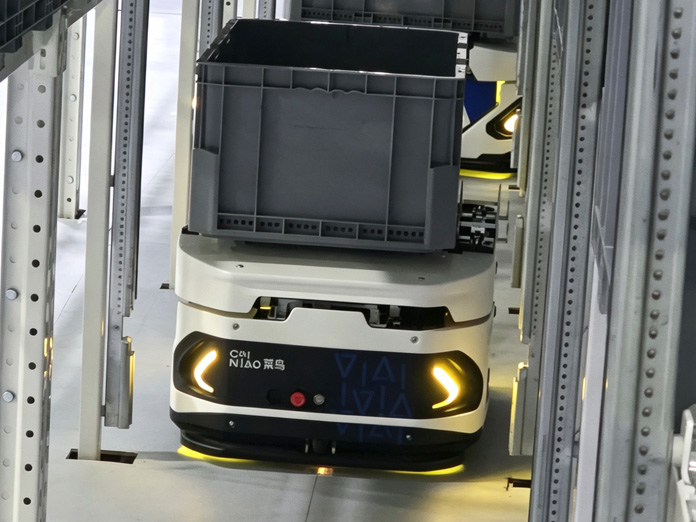
Cainiao released the ZeeBot rack-climbing warehouse robot at MODEX 2026.
Get news, papers, media and research delivered. Sign up for our free newsletters.
Stay up-to-date with news and resources you need to do your job. Research industry trends, compare companies and get weekly market intelligence with Robotics 24/7.
Cainiao
Cainiao released the ZeeBot rack-climbing warehouse robot at MODEX 2026.

Global e-commerce logistics and logistics technology provider Cainiao launched the ZeeBot at MODEX 2026.
The company said that ZeeBot is its first self-developed rack-climbing warehouse robot.
Cainiao said that the first warehouse project powered by ZeeBot has been delivered and is now operating in Guangdong, China.
The company said that results from the deployment show that the new robot has increased storage and retrieval productivity by 100%, with ZeeBot able to climb the height of a five-level rack in as little as 10 seconds.
“Logistics workflows are long and complex. Traditional automation can deliver major efficiency gains at individual steps, but the end-to-end process is often fragmented, leaving gaps in the automated flow,” said Bi Jianghua, vice president of Cainiao Group and general manager of logistics technology. “As a key product designed to connect multiple operational links, ZeeBot will help warehouses move beyond point automation to a new phase of AI-scheduled, end-to-end multi-robot collaboration.”
Cainiao said that ZeeBot represents a milestone in the company’s in-house development of core logistics technology and highlights the industry’s shift from software-enabled, point automation toward AI-driven, end-to-end intelligent operations.
The company said that ZeeBot was purpose-built for warehouse environments and is designed to solve a common limitation in automated facilities: horizontal movement and vertical storage are often handled by separate systems, and the handoffs between them can restrict throughput.
Cainiao said that ZeeBot combines both functions in a single robot. It travels quickly through ultra-narrow aisles on the warehouse floor, then climbs racking to retrieve and put away totes. Coordinated through fleet-level scheduling, the company said that its system increases storage density and improves overall flow. It also delivers system-level flexibility because robots are not tied to a fixed aisle, and instead, they can be dispatched in parallel to wherever capacity is needed.
Enjoyed this article? Add Robotics 24/7 as a preferred source in Google Search.
Edge computing gives AI agents the processing power to turn instructions into…
Daimon-TWM world model debuts for the public
Platform helps robots adapt to complex tasks

Look beyond the headlines for the latest in humanoid robots