Ouster
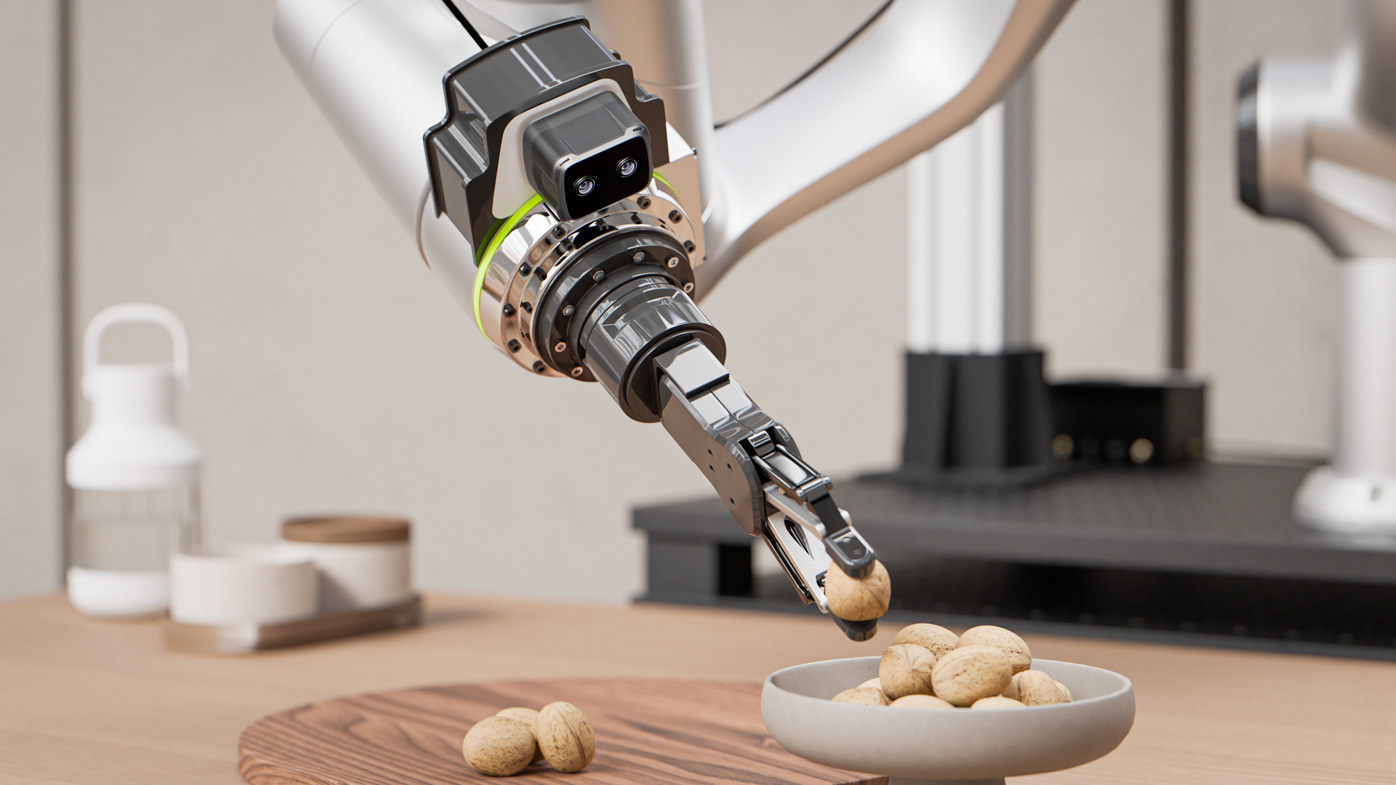
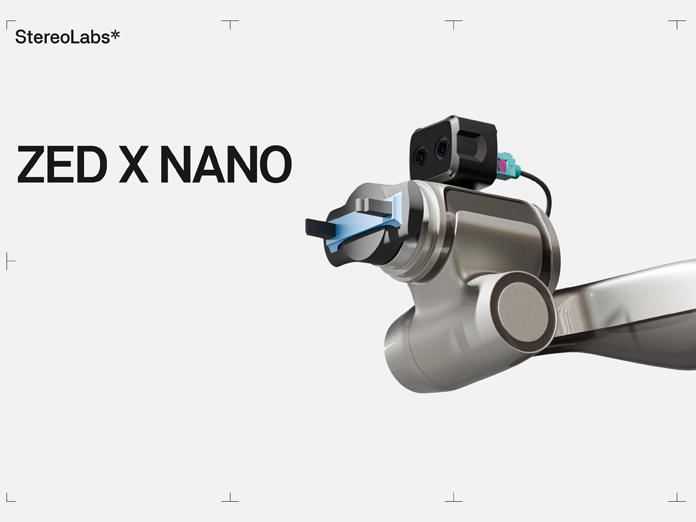
Ouster released the Stereolabs ZED X Nano stereo vision camera at MODEX 2026.
Get news, papers, media and research delivered. Sign up for our free newsletters.
Stay up-to-date with news and resources you need to do your job. Research industry trends, compare companies and get weekly market intelligence with Robotics 24/7.
Ouster
Ouster released the Stereolabs ZED X Nano stereo vision camera at MODEX 2026.

Sensor and perception for physical AI company Ouster released the Stereolabs ZED X Nano at MODEX 2026.
The company said the new offering is a compact wrist-mount stereo camera engineered for robotic manipulation, imitation learning and high-throughput data collection in the physical AI era.
As robotics teams scale imitation learning and reinforcement learning for manipulation tasks, Ouster said that RGB image quality and end-to-end capture latency have become critical bottlenecks. Legacy cameras rely on USB connectivity, capture low-resolution 720p RGB and depth and require CPU-mediated pipelines that limit throughput and add latency.
The company said that the Stereolabs ZED X Nano was designed from the ground up to solve these problems.
“Building on Stereolabs leadership in AI vision and perception solutions, the ZED X Nano allows us to go deeper into the industrial and robotics markets to win new sockets that require smaller form-factor placements,” said Angus Pacala, CEO of Ouster. "The future of Physical AI depends on massive amounts of high-quality, low-latency image data collected at the edge. With the ZED X Nano, we're giving roboticists a major upgrade to their vision systems, enabling machines to sense, think, act, and learn with unprecedented precision."
Measuring 40% smaller in height than comparable offerings, Ouster said that the camera mounts directly onto robotic wrists and end-of-arm tooling where every millimeter matters. It utilizes the same 1920×1200 global shutter sensor trusted across the flagship ZED X camera line, capturing high-resolution RGB and depth images at up to 120fps for training data and manipulation.
Ouster said that the heart of the ZED X Nano is an ultra-low-latency capture pipeline with a fully zero-copy path from sensor to GPU, with frames flowing directly into NVIDIA hardware encoders and AI inference pipelines simultaneously.
For data collection teams, Ouster said that this means higher-throughput dataset capture at full resolution.
And for deployment teams, Ouster said that it means running perception, segmentation and policy networks in parallel on the same frames with more GPU headroom for the models that matter.
Click here to learn more about ZED X Nano, including its native NVIDIA integration capabilities.
Enjoyed this article? Add Robotics 24/7 as a preferred source in Google Search.
Edge computing gives AI agents the processing power to turn instructions into…
Daimon-TWM world model debuts for the public
Platform helps robots adapt to complex tasks
Look beyond the headlines for the latest in humanoid robots