By
Tim Culverhouse
September 19, 2024
ProGlove
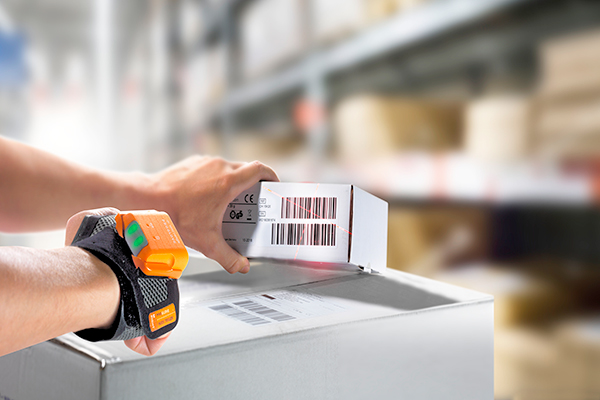
The ProGlove Index Trigger and MARK2 Multi Range in a warehouse.
Get news, papers, media and research delivered. Sign up for our free newsletters.
Stay up-to-date with news and resources you need to do your job. Research industry trends, compare companies and get weekly market intelligence with Robotics 24/7.
ProGlove
The ProGlove Index Trigger and MARK2 Multi Range in a warehouse.
The needle in the haystack. The twists and turns of a maze. The buried treasure on the map where X marks the spot.
Industrial warehouses flush with items sprawled across shelves and aisles can also seem like a never-ending maze. As associates take thousands of steps to cover the space for scanning and picking as part of the logistics process, they need a way to ensure that the picks are correct and they’re headed in the right direction.
Enter ProGlove.
While the question above can seem like a loaded question, it was one that ProGlove founders Thomas Kirchner, Paul Günther, Jonas Girardet and Alexander Grots wanted to tackle. A 2014 “Intel Make it Wearable” contest in Silicon Valley served as the creative impetus for the company.
But, where do you start?
“As a human, what do you bring into this workforce? It's your hand-eye coordination,” said Patrick Blitz, principal product manager at ProGlove. “You have brains. You have hands. There’s all this stuff that humans can bring into the warehouse. Let's augment the hands. Let's make them as good as possible.”
A decade, several scanner iterations and a Guinness Book of World Records record later, ProGlove is taking the human experience in a highly automated sector and using the data at hand to improve the worker experience.

A MARK 3 scanner with Index Trigger. Source: ProGlove
“The hand was always set, this was always where we wanted to go,” Blitz said. “Over a couple of iterations, the founders realized that the thing people need most is data capturing. Barcodes already do a lot of things. They're very important. You need to scan a lot of barcodes, so let’s make that as good and as easy as possible.”
The company name of ProGlove stems from its earliest product versions, but now the focus is on the wearable scanner technology and the data captured from the workforce to improve warehouse operations.
ProGlove produces five different scanners under two lines. The Leo scanner - the starter - can handle approximately 4,000 scans in one battery charge.
The MARK line of scanners has four different options for customers. Each MARK is roughly the same rectangular shape and size:
Regardless of the screen on the MARK Display line, each ProGlove scanner provides feedback for the wearer and generates troves of valuable data for the warehouse operator.
“What I always get is feedback on the device,” Blitz said. “The device will tell me if the pick was right or wrong by colors, haptic and audio feedback. There's lights, colors and a bit of movement in the device. With all the devices, no matter if it has a display or not, I have this type of feedback.”
Along with the scanners, ProGlove customers are able to access and ingest this data through a phone/tablet application. Warehouse workers wearing a MARK or Leo without a display can confirm their picking selection and next destination on the app. MARK Display wearers can receive a message, albeit with small text and screen space, with this same information.]
ProGlove scanners utilize Bluetooth to send the data associated with scans to the app. Using this technology, compared to WiFi, allows for a shorter and easier integration window for customers, according to Blitz. Whereas WiFi transceivers would drain battery life faster, Bluetooth, and further enhancements to that technology, have enabled ProGlove to focus on other sensor elements on its scanners.
“Our scanners have all of these kinds of sensors to really make the environment as worker-friendly as possible and get that information to both the worker and the supervisor on the shop floor to get a better understanding of what's happening,” Blitz said.
Think of each scanner as a mobile data platform. The orange or blue ProGlove scanner takes the information associated with the barcode or SKU from an item on a shelf in a warehouse and sends that data to the other systems.
“There are so many WMS and WES that do route optimization and warehouse management pretty well,” Blitz said. “We see our job, besides making the life of the worker as good and as efficient as possible, is really about surfacing this information and giving you this understanding of what's actually happening right now in my warehouse.”
Once warehouse managers obtain and analyze the data from ProGlove scanners, they can grasp the true nature of the work taking place every day. Were the picks per hour down in one sector? Was someone’s step count higher today compared to last week? ProGlove provides the data that leads the proverbial horse to water, but then the onus is on the operation to understand what changes to make with this information to improve labor productivity.
“We don't presume that we can actually fix things ourselves,” Blitz said. “But we try to really empower the supervisors and the people on the shop floor to make the right decisions with that data.”
Want to learn more about data management in robots? This article was featured in the September 2024 Robotics 24/7 Special Focus Issue titled “Robots as mobile data platforms.”

Tim is the Editorial Director of Robotics247.com. His mission is to provide valuable information and insights to robotics professionals and decision-makers, and to help them solve business challenges. He is a creative, deadline-driven, and detail-oriented storyteller. In addition, he is a sports broadcaster and public address announcer.
Enjoyed this article? Add Robotics 24/7 as a preferred source in Google Search.
Edge computing gives AI agents the processing power to turn instructions into…
Daimon-TWM world model debuts for the public
Platform helps robots adapt to complex tasks
Look beyond the headlines for the latest in humanoid robots