By
Kenneth Wong
November 20, 2020

Get news, papers, media and research delivered. Sign up for our free newsletters.
Stay up-to-date with news and resources you need to do your job. Research industry trends, compare companies and get weekly market intelligence with Robotics 24/7.
In early 2000, Dr. Karthik Ramani experimented with a shape-based search system that allows engineers to use visual references to identify and search for mechanical objects, but it soon became clear to him the computing power was insufficient.
Twenty years later, with far more computing power at his disposal, he revived the project, applying machine learning (ML) to crawl through a database of gearboxes, bearings, brakes, clutches, motors, nuts, bolts, and washers. The outcome is an open-source annotated database of more than 58,000 3D mechanical parts.
Ramani, a Distinguished Professor in Mechanical Engineering and Professor of Electrical and Computer Engineering, Purdue University, said, "Deep learning is data hungry. It needs a lot of examples for the computer to learn what humans mean and how things relate to each other. That means we needed a lot of 3D models of parts, which also required an underlying engineering classification.”
The parts the Purdue research team needed came from TraceParts, a digital database of standard parts.
Ramani and his team organized the parts "by establishing a hierarchical taxonomy of 68 classes, based on the International Classification for Standards, a system of technical standards created and maintained by the International Organization for Standardization," according to the announcement from Purdue University.
Applying ML to mechanical parts is a balancing act, capturing both the differentiating geometric features at the micro level and the classifiable similarities at the macro level.
“Now when a computer sees a picture of a seal component, it will know that it fits in the category of dynamic seals and then, more specifically, under composite seals,” Ramani said.
For more on the project, listen to the complete interview.

Kenneth Wong is Digital Engineering’s resident blogger and senior editor. He contributes to Robotics 24/7 too.
Enjoyed this article? Add Robotics 24/7 as a preferred source in Google Search.
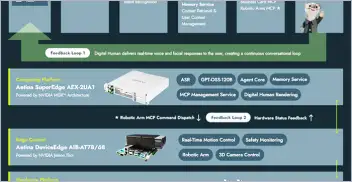
Edge computing gives AI agents the processing power to turn instructions into…
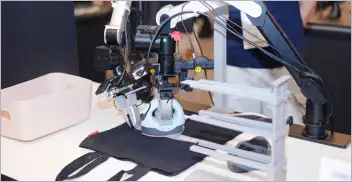
Daimon-TWM world model debuts for the public
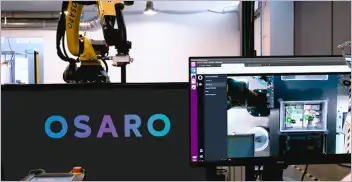
Platform helps robots adapt to complex tasks
Look beyond the headlines for the latest in humanoid robots