By
DE Editors
October 24, 2019
Get news, papers, media and research delivered. Sign up for our free newsletters.
Stay up-to-date with news and resources you need to do your job. Research industry trends, compare companies and get weekly market intelligence with Robotics 24/7.
SAE International has released additive manufacturing (AM) polymer specifications for the aerospace industry. AMS7100: Fuse Filament Fabrication Process and AMS7101: Material for Fused Filament Fabrication reportedly represent the first specifications released under the AMS-AM Additive Manufacturing Non-Metallic (AMS-AM-P) committee, according to SAE International. These standards were created after a request from airlines through the International Air Transport Association (IATA)'s EMG to be able to realize additively manufactured plastic cabin parts.
"Both additive manufacturing users and producers will benefit from implementing AMS-AM standards," says Paul Jonas, director of Technology Development & Programs at the National Institute for Aviation Research (NIAR) and AMS-AM-P Chair. "These standards help define a consistent set of materials and process limits that both the user and producer agree to in support of part procurement activities. AMS-AM standards support the promotion of knowledge, standardization of practice and advancement of commerce in the emerging AM aerospace industry."
The AMS7100 specification establishes the controls and requirements to produce reliable, repeatable, reproducible aerospace parts by Fused Deposition Modeling (FDM) or other material extrusion production. This procedure creates guidelines that FDM System users will follow to approve new machines, processes and materials. Specifically, this new specification covers the configuration of the machine, operating software, machine calibration, machine and build parameters, and testing methodology required to create certified additively manufactured aerospace parts.
The AMS7101 specification establishes the certification requirements for materials to be used in FDM or other material extrusion additive manufacturing production for aerospace components. This specification outlines the technical information, production guidelines and documentation requirements for FDM material manufacturer.
"Following the success and momentum of the SAE AMS-AM Metallic Materials committee, the swift efforts of the AMS-AM-P committee helped bring these groundbreaking, aerospace-grade AMS specifications to the global stakeholder community," says David Alexander, director, SAE Aerospace Standards Program.
SAE International's AMS-AM committee collaborates with regulatory bodies in the aerospace industry, material and machine manufacturers, AM suppliers, and users to develop standards that support certification and qualification of aerospace hardware and address gaps in aerospace industry standards. The AMS-AM has published four AM Metals specifications in 2019—totaling nine AMS-AM-M Standards—with plans to release additional AMS-AMA-M and AMS-AM-P Polymer specifications in the future.
Sources: Press materials received from the company and additional information gleaned from the company’s website.

DE's editors contribute news and new product announcements to Digital Engineering 24/7 and the Robotics 24/7 sites. Press releases may be sent to them via [email protected].
Enjoyed this article? Add Robotics 24/7 as a preferred source in Google Search.

Edge computing gives AI agents the processing power to turn instructions into…
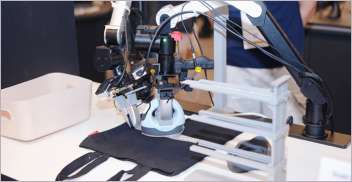
Daimon-TWM world model debuts for the public

Platform helps robots adapt to complex tasks

Look beyond the headlines for the latest in humanoid robots