Vecna Robotics
Vecna Robotics raised $31 million which the company said is to meet growing demand for its flexible dock-to-dock automation.
Get news, papers, media and research delivered. Sign up for our free newsletters.
Stay up-to-date with news and resources you need to do your job. Research industry trends, compare companies and get weekly market intelligence with Robotics 24/7.

Vecna Robotics
Vecna Robotics raised $31 million which the company said is to meet growing demand for its flexible dock-to-dock automation.
Vecna Robotics announced a $31 million funding round to meet increasing demand across the business.
The company said that the round was led by Unless, with participation from existing investors Drive Capital, Tiger Global, Highland Capital Partners and Tectonic Ventures.
Vecna Robotics said that demand for flexible automation continues to grow as warehouse and manufacturing operators look to increase productivity, reduce non-value-added travel and automate material movement without the constraints of fixed infrastructure. The company said that it is seeing that momentum across its portfolio, with demand for CaseFlow more than doubling year over year since its 2025 launch and continued adoption of its autonomous forklift and tugger technologies expanding the range of workflows customers can automate.
The company said that its growth comes as the North American robotics landscape is taking on greater strategic importance. Vecna Robotics said that recent FCC action on connected robots is bringing greater attention to the long-term supportability and sourcing of automation technology, adding to the importance of choosing a robotics platform built to evolve with customers’ operations.
“Customers aren't looking to automate a single task in isolation. They're looking for flexible ways to improve the automated flow of work broadly across their operations,” said Karl Iagnemma, CEO, Vecna Robotics. “We're seeing that opportunity in the rapid growth of CaseFlow as well as demand across our entire fleet. This investment gives us additional capital to scale what's working today while accelerating the capabilities that will allow our customers to automate even more of their material movement with a trusted, U.S.-based robotics platform they can rely on for the long term.”
Vecna Robotics said that it will use the capital to scale its deployment teams, expand go-to-market initiatives and accelerate the development of new capabilities that extend automation across the movement of cases and pallets.
The company said that it designs, manufactures and leads support of its AMRs from Massachusetts, positioning Vecna Robotics as a U.S.-based source of robotics technology, innovation and expertise at a time when the provenance and long-term supportability of automation platforms are becoming increasingly important.
“High-mix, high-volume operations need automation that can improve productivity quickly and adapt as conditions change, and that’s exactly what Vecna Robotics has built,” said Trevor Zimmerman, co-founder and managing partner of Unless. “Vecna combines intelligent orchestration, proven robotics and U.S.-based manufacturing in a platform built to perform in real warehouse and manufacturing environments. As the robotics landscape evolves, that combination of proven technology, domestic manufacturing and long-term supportability is becoming increasingly important. This investment will help the company scale its proven solutions while extending its AMRs to more warehouse workflows across the country.”
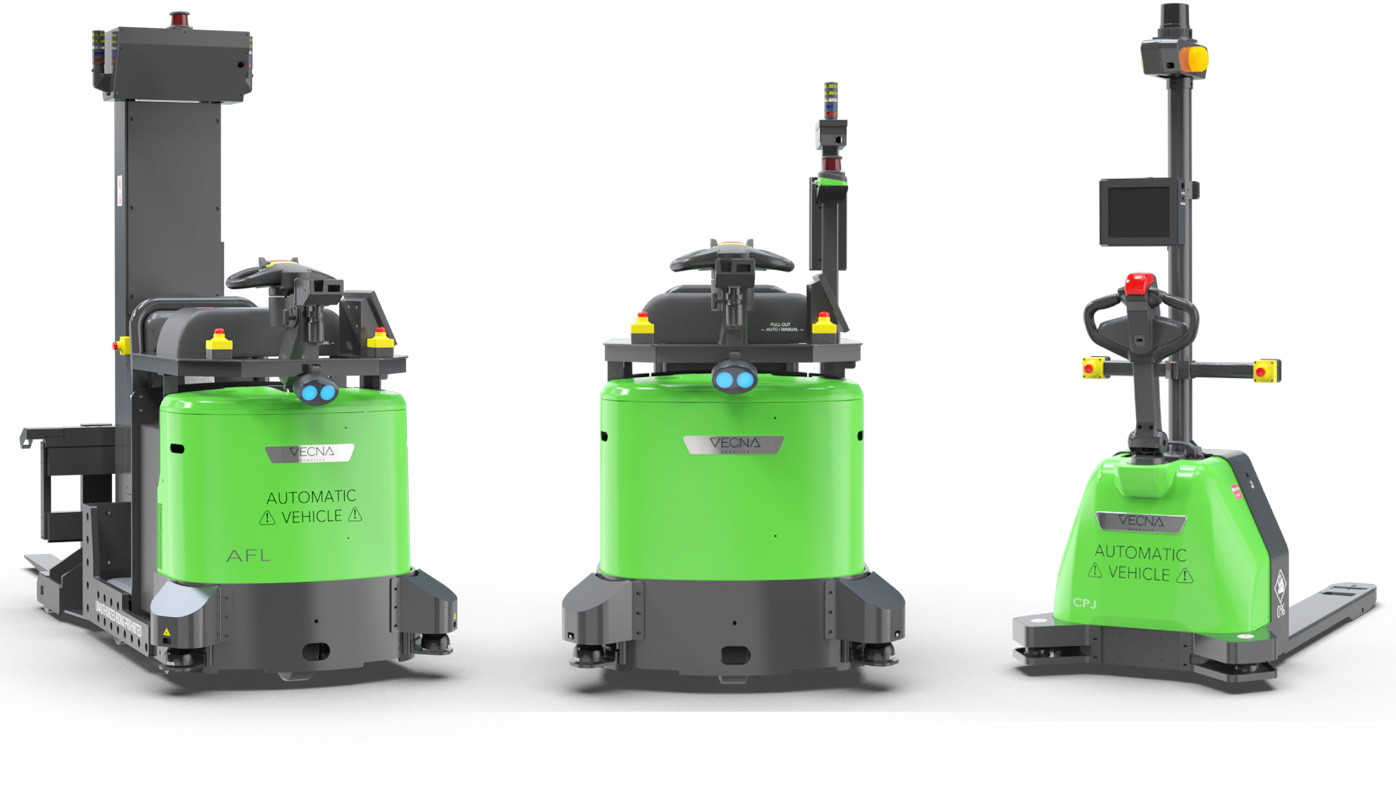
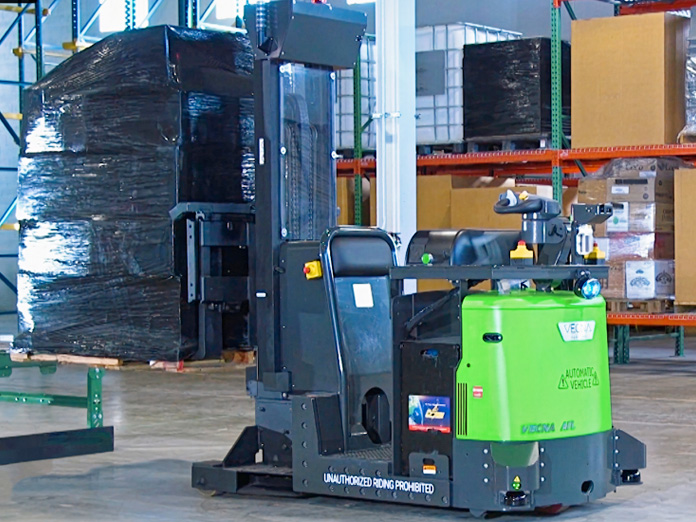
Vecna Robotics said that its fleet spans case picking, pallet movement and material transport, with its CPJ Co-bot Pallet Jack, Autonomous Forklift and Autonomous Tugger coordinated through the company’s Pivotal orchestration platform.
The company said that CaseFlow demonstrates the impact of that approach: a recent Modern Materials Handling System Report detailing the deployment at GEODIS found that CaseFlow doubled picking throughput, while increasing safety and reducing training time.
“We’re picking twice as much as we did on manual pallet jacks,” said Steve Elsbury, senior operations manager, GEODIS. “New pickers working with the robots typically start at a performance level of 200%, compared with the previous setup. Their training starts with the robot system itself, versus requiring employees to first learn how to drive the equipment, navigate the facility, and use the WMS interface. Along with everything else, the new setup increased the safety of our teammates on the floor.”
Enjoyed this article? Add Robotics 24/7 as a preferred source in Google Search.
Edge computing gives AI agents the processing power to turn instructions into…
Daimon-TWM world model debuts for the public
Platform helps robots adapt to complex tasks

Look beyond the headlines for the latest in humanoid robots