RGo Robotics
Get news, papers, media and research delivered. Sign up for our free newsletters.
Stay up-to-date with news and resources you need to do your job. Research industry trends, compare companies and get weekly market intelligence with Robotics 24/7.
RGo Robotics
In April 2019, Elon Musk famously told attendees at Tesla's Autonomy Day that LiDAR is a "fool's errand" — and that anyone relying on it is "doomed." Today, the debate continues.
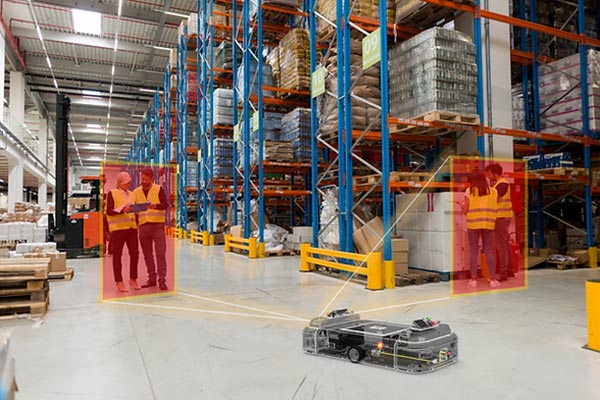
Recently, the same debate has emerged in the mobile robot market where traditional 2D LiDARs have been the prevailing navigation sensor for decades. Autonomous mobile robot (AMR) manufacturers including Canvas Technology (acquired by Amazon) and Seegrid have developed AMRs with varying degrees of vision-based navigation. The trend towards vision is being driven by the need for:
Ultimately, to achieve truly intelligent autonomous behavior, navigation systems need to deliver human-level, 3D visual perception. For example, because they can detect texture and color, cameras are able to distinguish between the edge of a surface or line. This can create significant safety advantages for many types of robots because the robot can use this visual information to precisely navigate along a marked path, just the way a human would. This capability is useful in warehouses and manufacturing facilities where pedestrian paths are often defined with lines and floor markings.
Camera-based systems can read signs and symbols that can alert both humans and robots to temporary closures, wet floors, and detours. Using object recognition techniques, they can find, validate, and precisely engage pallets and other loads. And vision-based navigations systems are also able to work in both indoor and outdoor environments – opening up new use cases and applications. These are just a few examples of the benefits of true, 3D perception.
Enjoyed this article? Add Robotics 24/7 as a preferred source in Google Search.
Edge computing gives AI agents the processing power to turn instructions into…
Daimon-TWM world model debuts for the public
Platform helps robots adapt to complex tasks
Look beyond the headlines for the latest in humanoid robots