By
MMH Staff
May 10, 2019
Get news, papers, media and research delivered. Sign up for our free newsletters.
Stay up-to-date with news and resources you need to do your job. Research industry trends, compare companies and get weekly market intelligence with Robotics 24/7.
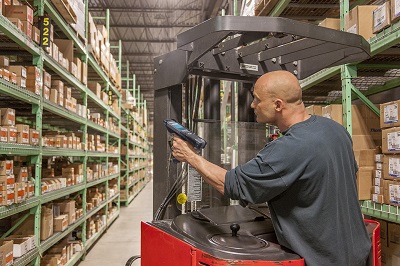
Zebra Technologies Corporation is celebrating its 50th anniversary, half a century after the inception of its first printing prototypes in the late 1960s.
“We are proud to celebrate our half century milestone with our customers across the retail/ecommerce, manufacturing, transportation and logistics, healthcare, government and other industries,” said Anders Gustafsson, CEO, Zebra Technologies. “While Zebra has changed its stripes over the years, we are well-positioned to accelerate our strategy. With our network of specialized partners, we will continue to deliver industry-tailored solutions at the enterprise edge where there is an amazing amount of new growth and opportunities.”
According to a release, an increasing amount of Zebra’s innovation stems from advances in software and data services. In particular, the Zebra DNA™ suite of applications, development tools and utilities powers the printers, scanners and mobile computers within its portfolio. Plus the Savanna® platform underpins both Zebra’s intelligent edge solutions and a new category of cloud-enabled applications developed by Zebra partners.
With more than 4,400 U.S. and international patents issued and pending based on organic innovation, Zebra has also increased its investment in disruptive technologies, bolstered by several acquisitions in recent years that include Motorola Solutions’ Enterprise business, Xplore Technologies Corporation and Temptime Corporation. Zebra Ventures, the company’s strategic investment arm, continues to invest in early stage companies such as the most recent example: Locus Robotics.
Multiple industry leading organizations have recognized Zebra. For example, this year Gartner recognized Zebra as a Visionary in the Magic Quadrant for Indoor Location Services, Global for the second consecutive year. In addition, Zebra has received top international product design honors including the recent iF Design Award for the ZC100/300 series card printers. 2019 also marks Zebra’s fourth straight year on Forbes’ 2019 list of “America’s Best Employers.” And for the third year in a row, CRN has given Zebra a 5-Star rating in its 2019 Partner Program Guide, recognizing the strongest, most successful partner programs in the channel today.
As part of its philanthropic efforts, Zebra is paving the way for future science and technology leaders through its support of FIRST® (For Inspiration and Recognition of Science and Technology). For more than 20 years, Zebra employees have mentored robot-building teams. This year, the company also provided one of its location solutions, Dart to gather real-time data on robot movements to optimize FIRST robot competition gameplay and enhance the spectator experience.
News Data Capture Locus Robotics Mobile Mobile Computing Retail Zebra Technologies
Enjoyed this article? Add Robotics 24/7 as a preferred source in Google Search.
Edge computing gives AI agents the processing power to turn instructions into…
Daimon-TWM world model debuts for the public
Platform helps robots adapt to complex tasks
Look beyond the headlines for the latest in humanoid robots