AiM Medical Robotics
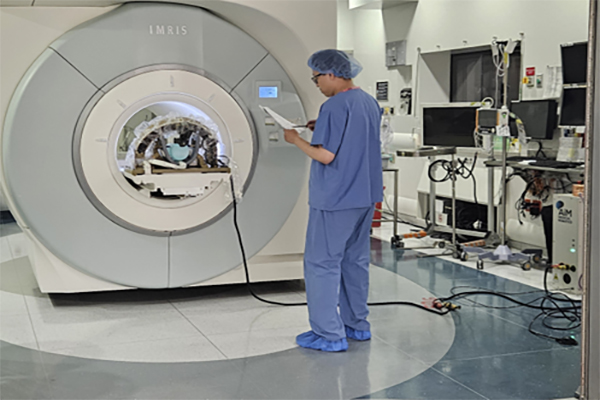
AiM Medical Robotics secured over $8 million in funding, pushing forward development of the company's MRI-compatible robotic surgical system.
Get news, papers, media and research delivered. Sign up for our free newsletters.
Stay up-to-date with news and resources you need to do your job. Research industry trends, compare companies and get weekly market intelligence with Robotics 24/7.

AiM Medical Robotics
AiM Medical Robotics secured over $8 million in funding, pushing forward development of the company's MRI-compatible robotic surgical system.
Massachusetts-based MRI-compatible surgical robotic systems company AiM Medical Robotics (AiM) announced the successful closing of its $8.1 million Series A financing round.
The round was led by IQ Capital and 1540 Ventures, with further participation from new and returning strategic investors.
AiM said its technology enables surgeons to perform precise neurosurgical procedures directly within an MRI - addressing intraoperative shift and eliminating the need to move patients between operating rooms and imaging suites.
"This investment marks the beginning of the next chapter for AiM as we prepare to bring our transformative technology to patients," said Dr. Gregory Fischer, co-founder and CEO of AiM Medical Robotics. "With first patient enrollment on the horizon, we are eager to demonstrate the profound clinical and commercial impact of AiM’s platform - not only in Parkinson’s disease but across a broad spectrum of cranial procedures, including tumor biopsy, cancer and epilepsy ablation, and targeted intracranial drug delivery that will support the burgeoning field of stem cell and gene therapy."
The company’s neurosurgery system utilizes real-time intraoperative MRI coupled with robotic guidance to ensure precise placement of neurostimulation leads for Parkinson’s disease patients. AiM said its robotic surgery platform also extends to a wide range of cranial procedures, including biopsy, tumor ablation and targeted intracranial delivery of novel therapeutics. The company said this integration offers to make procedures faster, safer and consistently more accurate while reducing patient risk and healthcare costs.
“AiM is advancing neurosurgery with a novel robotic platform that integrates seamlessly into existing workflows and provides surgeons with real-time imaging to achieve safer, more precise, and more consistent outcomes for patients,” said Alex Wilson, partner at IQ Capital. “We’re excited to support the company as it moves toward first-in-human trials and clinical adoption.”
With an initial close in June 2025, the Series A totaled $8.1 million, including $3.75 million in notes converted into equity. To date, AiM has raised over $11.3 million in investment, further bolstered by significant federal grant support for the underlying technology.
Enjoyed this article? Add Robotics 24/7 as a preferred source in Google Search.
Edge computing gives AI agents the processing power to turn instructions into…
Daimon-TWM world model debuts for the public
Platform helps robots adapt to complex tasks

Look beyond the headlines for the latest in humanoid robots