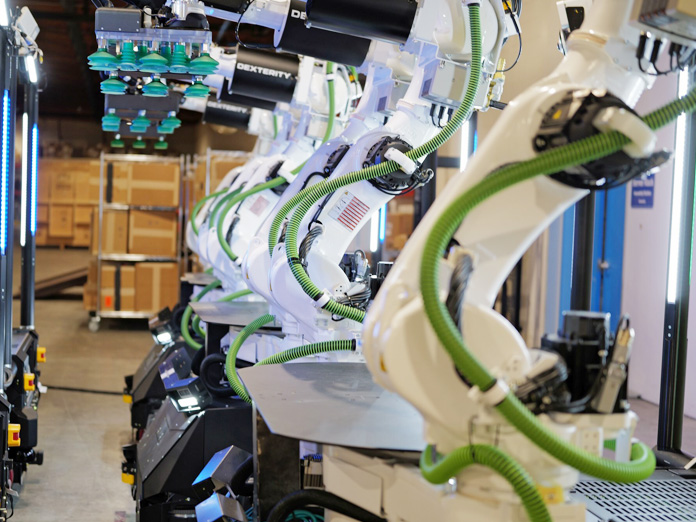
Dexterity and Kawasaki Robotics
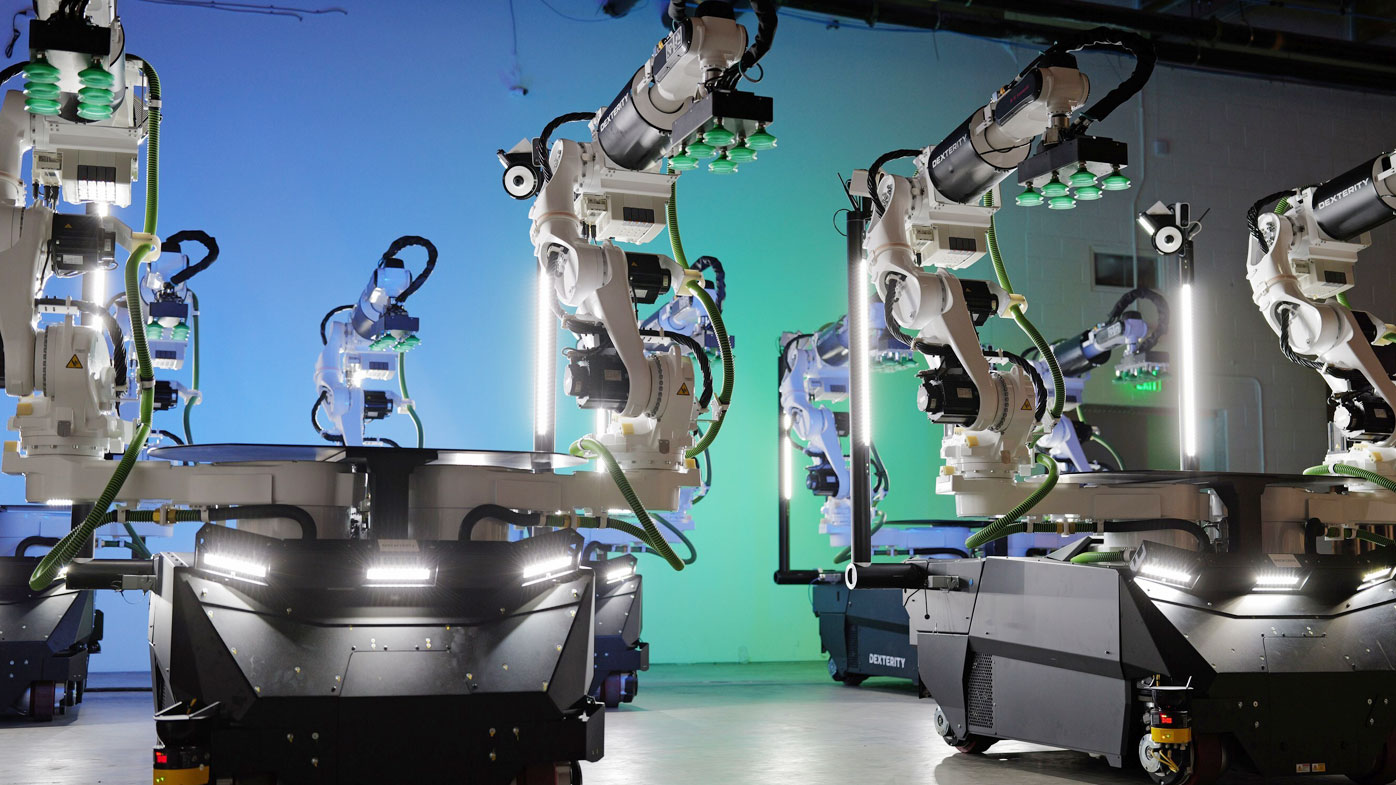
Dexterity’s Mech robots use the RL030N 8 DoF (degrees of freedom) robot arms for warehouse logistics operations such as trailer loading and trailer unloading.
Get news, papers, media and research delivered. Sign up for our free newsletters.
Stay up-to-date with news and resources you need to do your job. Research industry trends, compare companies and get weekly market intelligence with Robotics 24/7.
Dexterity and Kawasaki Robotics
Dexterity’s Mech robots use the RL030N 8 DoF (degrees of freedom) robot arms for warehouse logistics operations such as trailer loading and trailer unloading.

At Automate 2026 in Chicago, Kawasaki Robotics and Dexterity announced an expanded collaboration around Kawasaki Robotics' RL030N 8 DoF robot arm platform and Dexterity's Mech “superhumanoid” robots for warehouse logistics.
Kawasaki showcased the new RL030N 8 DoF robot arm platform at its booth during Automate.
Dexterity said that it is expanding production and scaling Mech deployments using the RL030N for warehouse logistics applications, including trailer loading and trailer unloading. Dexterity said that Mech’s design and warehouse logistics requirements shaped the arm; Kawasaki Robotics and Kawasaki Heavy Industries brought precision engineering and manufacturing expertise to turn those requirements into a production-ready 8 DoF robot arm platform. The companies said that the arm has demonstrated strong reliability in real logistics environments, a critical requirement for warehouse automation at scale.
Together, the companies said that they are combing Kawasaki Robotics' industrial robot arm technology with Dexterity's Mech hardware and full physical AI software stack, featuring the Foresight World Model, to support high-throughput warehouse operations where traditional automation has been difficult to scale.
Dexterity and Kawasaki Robotics said that warehouse logistics is fundamentally different from traditional factory automation. Factories are designed around precision, repeatability, fixed workcells, controlled material flow and minimal unexpected contact. Logistics operations are more variable: packages arrive in different sizes, weights, shapes, orientations and conditions; boxes shift, fall, deform, and stack unpredictably; and contact with packages, containers, conveyors, walls or surrounding equipment is part of normal operation.
"Physical AI requires robot arms that combine industrial reliability with dexterity, reach, lightweight construction, and openness to real-time orchestration," said Paul Marcovecchio, director - general industries at Kawasaki Robotics. "Our collaboration with Dexterity has helped sharpen the requirements for AI-driven automation in real warehouse environments."
The companies said that Dexterity's Mech design defined the need for a robot arm that is lightweight, dexterous, long-reaching, reliable and robust enough for unavoidable contact. The RL030N 8 DoF robot arm platform adds an articulation axis for confined and variable workflows and is powered by Kawasaki Robotics' open KRNX real-time control API for external AI software, ROS environments and third-party orchestration systems.
Dexterity said that it combines the RL030N with Foresight World Model, Mech hardware and its production software stack.
"In a warehouse environment, packages vary, boxes move unpredictably, and contact is part of the job. Kawasaki Robotics' RL030N gives Mech the physical foundation for that environment," said Keshav Prasad, SVP of product engineering and operations at Dexterity. "By combining RL030N with Foresight World Model, Mech hardware and Dexterity's production software stack, we can bring physical AI into warehouse operations where traditional automation has not been able to scale."
GENISOM AI makes ICRA debut at conference in Vienna
World's first omni-modal evaluation including tactile sensing for…
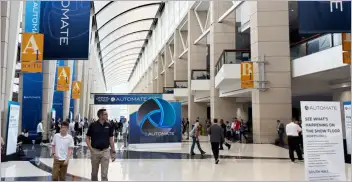
North America’s largest robotics and automation event winds down

Automate’s largest day ever draws huge crowds to McCormick Place