Robust.AI
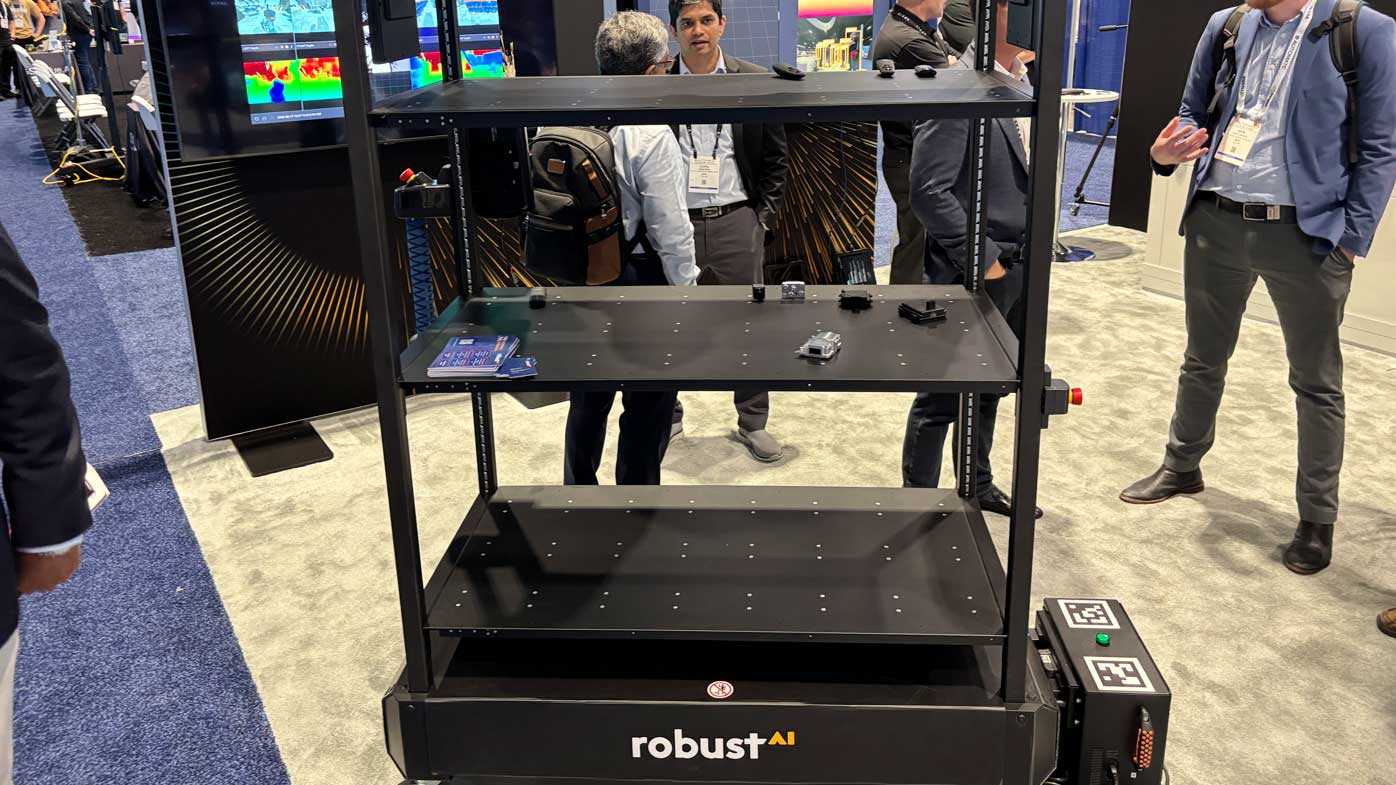
At Automate 2026 in Chicago, Robust.AI selected Aptiv Perception, powered by PULSE, for its gen 3 Carter robot.
Get news, papers, media and research delivered. Sign up for our free newsletters.
Stay up-to-date with news and resources you need to do your job. Research industry trends, compare companies and get weekly market intelligence with Robotics 24/7.
Robust.AI
At Automate 2026 in Chicago, Robust.AI selected Aptiv Perception, powered by PULSE, for its gen 3 Carter robot.

At Automate 2026 in Chicago, Aptiv announced that Robust.AI has selected Aptiv’s intelligent perception offerings, including AI and machine learning based sensor fusion powered by the Aptiv PULSE sensor for its Gen 3 Carter collaborative mobile robot.
The companies said that the selection builds on the companies’ existing collaboration to combine Aptiv’s technologies with Robust.AI’s robotics human-centered design to accelerate scalable, AI-powered robotic workflows, while also establishing the foundation for Performance Level d - or PL(d) - certification across relevant industrial safety use cases.
Carter and other technologies from the companies was on display at Aptiv’s booth during Automate.
For the Gen 3 Carter, Robust.AI said that Aptiv fuses radar and vision using AI/ML on raw sensor detections delivered by the PULSE sensor. The company said that early fusion of sensor inputs enables Aptiv to efficiently support depth map creation and occupancy grid population for navigation and functional safety.
Further, Robust.AI said that by combining a surround-view camera with ultra-short-range radar, PULSE enables reliable 360-degree sensing while reducing blind spots, cost and system complexity.
Paired with Robust.AI’s vSLAM and AI perception technologies, the company said that this technology delivers reliable performance for the complex environmental applications in which the Carter robot is designed to operate.
“Scale adoption of robotics requires safety critical perception that spans the dynamic conditions experienced in the real world,” said Jay Bellissimo, senior vice president and president, intelligent systems, software and services, Aptiv. “By bringing PULSE to the Gen 3 Carter robot, we’re helping enable a more comprehensive and scalable approach to warehouse automation, while supporting a path toward the functional safety requirements increasingly demanded by these applications and the broader market of physical AI.”
For robotics and industrial automation applications, reliability across operating environments such as warehouses, manufacturing floors and cold storage is critical. These environments are dynamic and frequently contain obstructions, dust, glare, moisture changes and reflective surfaces that can degrade conventional perception systems. By combining the strengths of radar and vision, Robust.AI said that Aptiv enables better decision making and reliability when operating around people, equipment and other obstacles.
“Carter is built to work with people in real warehouse and manufacturing environments, so perception quality, system reliability and ease of deployment matter enormously,” said Anthony Jules, co-founder and CEO at Robust.AI. “Aptiv’s PULSE sensor brings a differentiated camera-and-radar approach that further enables Carter to drive market leading performance and productivity in complex environments.”
As part of this next phase of collaboration, Robust.AI said that Aptiv is advancing towards PL(d) certification for PULSE across relevant industrial safety use cases. PL(d), part of the ISO 13849-1 standard, is a high-reliability safety classification used for hazardous robotics applications. Robust.AI said that functional-safety certification is paramount as robots operate with higher degrees of automation near people and equipment. This means devices must not only deliver safe operation in practice, but also support recognized safety frameworks.
Artificial Intelligence Machine Vision Machine Learning Autonomy Mobile Robots Industrial Automation Collaborative Robots Components Sensors Cameras Lidar Software Fleet Management News Press Release Aptiv Automate Cold Storage Mobile Robots Obstacle Detection Perception Robust.AI Safety
GENISOM AI makes ICRA debut at conference in Vienna
World's first omni-modal evaluation including tactile sensing for…

North America’s largest robotics and automation event winds down

Automate’s largest day ever draws huge crowds to McCormick Place