DEEP Robotics
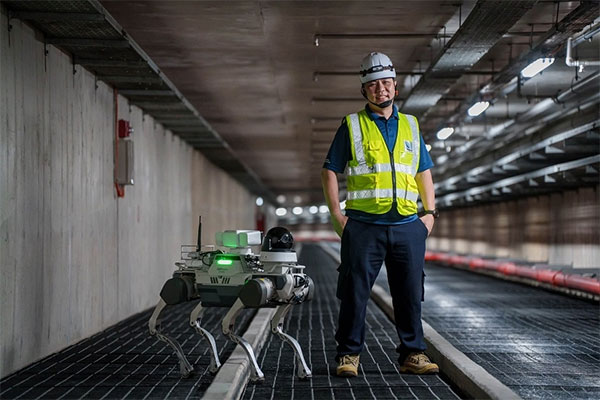
The DEEP Robotics X30 quadruped robot, nicknamed SPock, was deployed in a Singapore power transmission tunnel for robotic inspection.
Get news, papers, media and research delivered. Sign up for our free newsletters.
Stay up-to-date with news and resources you need to do your job. Research industry trends, compare companies and get weekly market intelligence with Robotics 24/7.

DEEP Robotics
The DEEP Robotics X30 quadruped robot, nicknamed SPock, was deployed in a Singapore power transmission tunnel for robotic inspection.
DEEP Robotics, a China-based developer of quadrupedal robotics, announced the deployment of its industrial-grade quadruped robot, the X30.
The robot, nicknamed “SPock” within Singapore’s SP Group, is now operational in the country’s extensive underground power transmission cable network, making it the first Chinese quadruped robot to be deployed to an overseas power system.
The company said the partnership with SP Group represents a major step forward in DEEP Robotics’ global expansion and demonstrates the growing importance of emerging technologies such as robotics and digitization in infrastructure maintenance.
SPock, adapted from the X30 model launched by DEEP Robotics, has been patrolling sections of a 40-kilometer underground power transmission tunnel, as part of a pilot project designed to ensure the security of Singapore’s electricity supply.
Equipped with high-resolution cameras, thermal imaging sensors and advanced perception algorithms, the robot autonomously navigates the tunnels, screening for defects such as cracks, water seepage and other anomalies.
The robot generates real-time reports at the close of each inspection, allowing maintenance staff to prioritize repairs and mitigate risks effectively.
SPock’s capabilities extend beyond routine inspections, according to DEEP Robotics. It serves as a first responder during emergencies, assessing situations and providing real-time updates without requiring human entry into potentially hazardous zones.
The company said this development not only enhances safety but also significantly reduces operational costs, enabling frontline inspectors to focus on critical data analysis and repairs.
Following the success of the pilot, SP Group plans to apply SPock on a wider scale. This commitment toward greater efficiency and cost savings is expected to save 480 hours of manual inspection annually for the group.
In deploying SPock in Singapore, DEEP Robotics address unique challenges posed by the local environment. Unlike China’s power infrastructure, Singapore’s underground tunnels feature different layouts and cable placements, necessitating customized technologies.
“We had to adjust SPock’s sensors, algorithms, and navigation logic to adapt to Singapore’s specific requirements,” said Hank Cheng, senior sales manager at Deep Robotics. “Localization is essential for international success.
The team conducted extensive safety assessments and adjusted SPock’s software over several months to ensure optimal performance. DEEP Robotics said that this project’s success highlights the company’s ability to tailor its technology to diverse conditions, reinforcing its readiness for expansion into broader markets.
In addition to transforming the traditional mode of cable tunnel inspection, SPock’s deployment has also fostered a collaborative environment within SP Group.
Rather than replacing human workers, the robot complements their efforts, allowing teams to focus on higher-value tasks and prepare themselves for a more technology-oriented future workplace.
In the meantime, SP Group’s inspectors continue to train SPock by feeding the robot images of defects and simulated scenarios, enhancing its ability to detect anomalies. This iterative process ensures the robot can stay ahead of evolving challenges and foster further human-machine collaboration.
DEEP Robotics’ quadruped robots, including the X30 and its smaller counterpart, the X20, along with the off-terrain Lynx and Lite3, have demonstrated their versatility in various industries, including power generation, emergency response, and industrial inspections. The company said their ability to navigate complex environments and perform high-risk tasks makes them indispensable in scenarios requiring precision and reliability.
The SPock project has strategic implications for DEEP Robotics’ plan to go global. By proving the effectiveness of its technology in Singapore, DEEP Robotics hopes to attract interest from other markets.
“Singapore’s adoption of our robot could inspire similar initiatives in other regions, creating new opportunities for our company,” Cheng said.
As DEEP Robotics continues to further expand its footprint, the company remains committed to advancing the capabilities of its robots. With a growing portfolio of robots, including its Dr. 01 humanoid, the compay said it is poised to set new standards in automation and smart maintenance worldwide.
“Our products have already demonstrated their value in China, and we’re confident they will become benchmarks globally,” Cheng said.
Artificial Intelligence Deep Learning Machine Vision Machine Learning Autonomy Mobile Robots Industrial Automation Collaborative Robots Components Sensors Cameras Software Cloud and Edge Data Management Fleet Management Robot Operating System News Press Release DEEP Robotics Deployment Inspection Localization Maintenance Navigation Quadruped
GENISOM AI makes ICRA debut at conference in Vienna

World's first omni-modal evaluation including tactile sensing for…

Ultrasonic sensing enhances robotics perception

Cybernetix Ventures’ event kicks off Robotics Tech Week 2026 slate of events