GFT Technologies
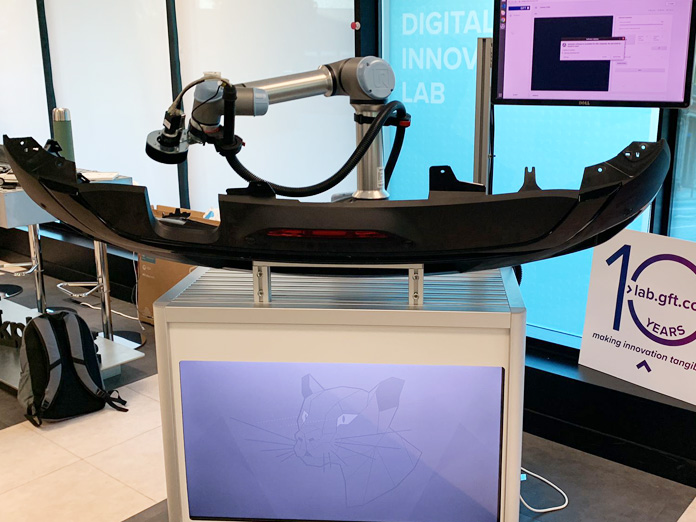
GFT Technologies unveiled a new line of AI-powered robots that detect and remove defective parts from the automotive assembly line.
Get news, papers, media and research delivered. Sign up for our free newsletters.
Stay up-to-date with news and resources you need to do your job. Research industry trends, compare companies and get weekly market intelligence with Robotics 24/7.
GFT Technologies
GFT Technologies unveiled a new line of AI-powered robots that detect and remove defective parts from the automotive assembly line.
AI-centric global digital transformation company GFT Technologies announced the launch of its new, AI-powered robotic arms that it said are designed for automotive manufacturing.
GFT said that the new robots build on its existing work with Google on AI-powered visual inspection. GFT and NEURA Robotics announced a partnership in July 2025 to build next-generation software for physical AI.
The company added that its new technology can not only detect defective parts, but also physically remove them from the assembly line - helping manufacturers improve quality and keep production moving at full speed.
While many manufacturers have adopted AI for visual inspection, GFT said that most systems stop at detection. Software can flag anomalies, but the company said that human intervention is still required to act on them, creating delays and increasing the risk of defective parts moving further down the line.
GFT said that these stakes are quite high, since a single recalled vehicle can cost manufacturers upward of $500 per unit to remediate, ultimately costing them tens of millions. The company said that closing the gap between insight and action, at the speed of a modern assembly line, has become a critical challenge.
"Auto manufacturers have been asking the same question for years: how do we get AI off the screen and onto the floor? With this launch, that question has an answer,” said Brandon Speweik, head of manufacturing at GFT. “Bringing AI into the physical realm for auto manufacturers requires a partner who understands the intricacies of both the technology and the factory floor. That's been GFT's role for 35 years, and this is the natural extension of it."
GFT said that it is filling this critical gap by stationing three different robots along factories’ assembly lines to ensure components such as car bumpers, doors, pipes and pieces are manufactured accurately.
The first robot uses a camera to verify details on each piece, such as positioning, detecting visual defects and confirming that labels and serial numbers are accurate and readable. This camera is attached directly to the robot's gripper, which GFT said means the robot can move the camera around to capture different angles, ensuring every part of the component is checked and nothing gets missed.
After inspection, the second robotic arm on the line marks the parts that its previous counterpart identified as defective.
Finally, GFT said that the third robotic arm physically interacts with the line and defective pieces, reducing the need for human intervention. The company said that this includes:
GFT said that every photo the camera takes is automatically sent to the cloud, where it is saved so the factory can review them later, keep a record of every inspection and even use them to improve the system over time.
GFT said that it has incorporated an AI agent into the root cause analysis process, drawing on these images and many other datasets to not only detect a defect, but also automatically pinpoint its source. The company said that this ensures intervention occurs before additional defective parts are produced. Together, GFT said that the robotic arms, agentic AI and cloud technology keep production running quickly, without sacrificing quality or the ability to improve over time.
The company said that a large, U.S.-based auto manufacturer has already begun to put this technology to work across its operations.
GFT said that this launch builds on the company’s 35+ years of experience helping auto manufacturers - including Ford - modernize their legacy systems and unlock the value of their operational data. GFT said that by combining its knowledge of manufacturing workflows with its experience in AI systems integration, the company continues to push the boundaries of what AI can do beyond the digital realm.
GENISOM AI makes ICRA debut at conference in Vienna
World's first omni-modal evaluation including tactile sensing for…
Ultrasonic sensing enhances robotics perception
Cybernetix Ventures’ event kicks off Robotics Tech Week 2026 slate of events