HeroWear
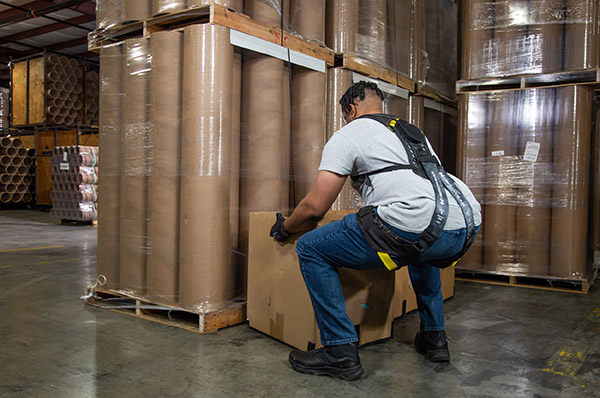
The Apex 2 exosuit is designed to alleviate worker strain while bending and lifting heavy objects.
Get news, papers, media and research delivered. Sign up for our free newsletters.
Stay up-to-date with news and resources you need to do your job. Research industry trends, compare companies and get weekly market intelligence with Robotics 24/7.
HeroWear
The Apex 2 exosuit is designed to alleviate worker strain while bending and lifting heavy objects.
Back injuries and related musculoskeletal disorders cost U.S. companies $225.8 billion per year, according to the Centers for Disease Control, for an average of $1,685 per employee every year. The 2022 Liberty Mutual Safety Index ranked strains from moving heavy objects as the No. 1 source of injuries, accounting for one out of every five workplace injuries. HeroWear LLC yesterday announced Apex 2, the latest version of its back-assist exosuit.
"When we launched the Apex in 2020, we just wanted to help people do their jobs without sacrificing their bodies, so they could go home with more energy and less pain," stated Karl Zelik, co-founder and chief scientific officer of HeroWear. “We accomplished this with the original Apex. It's impacting people's lives, on and off the job. We've seen it in the data, and we hear it from long-time users."
"But also we listened and learned from these users and identified areas to improve the suit," added Zelik, who is also an associate professor of mechanical engineering at Vanderbilt University. "We obsessed over the minute design details that make a huge difference in user experience. Now we're excited to bring these latest innovations to workers around the world."
Founded in 2019, HeroWear has developed the Apex and SABER wearables, which it said "combine the application of science with a focus on comfort." The devices are designed to reduce strain and fatigue and reduce the risk of injury for those who frequently bend and lift at work, said the Nashville-based company.
“It’s encouraging to see how the Apex has evolved how work is done and to hear stories about how the suit has already improved the lives of workers,” said Mark Harris, co-founder and CEO of HeroWear. “We’ve been working with some of the largest logistics companies in the world, major auto manufacturers, the U.S. military, food producers, and hundreds of other customers — all with the shared goal of protecting people and improving the lives of workers, while delivering a positive impact to the companies’ bottom lines.”
HeroWear said it collected data from its large and diverse range of workers to improve its exosuit. The result has been multiple patent-pending innovations to enhance the wearability, usability, fit, effectiveness, and longevity of the exosuit, all of which are critical for long-term user acceptance, the company noted.
“An exosuit needs to provide assistance and needs to be comfortable, but it also needs to be easy to use,” said Matt Yandell, co-founder and chief innovation officer at HeroWear.
“Productivity is important, so we doubled down on our user-centered approach and looked for every opportunity to make the suit easier to use," he said. "The goal is for the user to forget they have it on and move how they normally would, but with less fatigue and injury risk.”
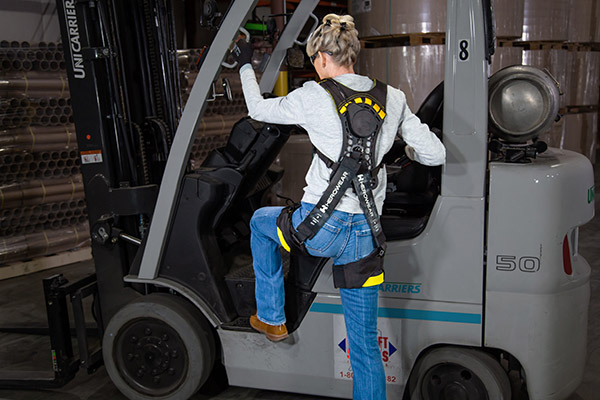
The Apex 2 weighs less than 3 lb. and can take 75 lb. of strain off a typical worker’s back with every lift, according to HeroWear. It can reduce muscle strain and fatigue by up to 40% without motors or batteries, it said.
The device is designed to comfortably provide assistance for people who frequently perform demanding movements. By assisting with bending and lifting, the Apex 2 reduces a person’s risk of a back injury without restricting their freedom of movement, claimed the company. Some of the improvements in the exosuit include the following:
HeroWear launched Apex 2 this week via a virtual stream (see below). The company plans to take the Apex 2 on tour, allowing people in select cities to experience the suit in person at industry trade shows, as well as at private and public events.
The suit will be available to ship worldwide this summer, and pre-orders are already underway. HeroWear will also offer the exosuit as a service in a model similar to robotics as a service (RaaS).
HeroWear launched its Apex 2 exosuit for back assistance.
From geometry preparation to AI-assisted analysis, integrated CFD workflows…
North America’s largest robotics and automation event winds down
Automate’s largest day ever draws huge crowds to McCormick Place

North America’s largest robotics and automation event kicks off