By
Tim Culverhouse
September 24, 2025

IEEE
"A Pathway Study for Future Humanoid Standards" was written by over 70 industry experts to discuss challenges with industry-wide standards and humanoid robots.
Get news, papers, media and research delivered. Sign up for our free newsletters.
Stay up-to-date with news and resources you need to do your job. Research industry trends, compare companies and get weekly market intelligence with Robotics 24/7.
IEEE
"A Pathway Study for Future Humanoid Standards" was written by over 70 industry experts to discuss challenges with industry-wide standards and humanoid robots.
The Institute of Electrical and Electronics Engineers (IEEE) released A Pathway Study for Future Humanoid Standards.
The report, which is available for download on ResearchGate, was developed by over 70 robotics experts to highlight critical elements that make humanoid robots unique, and how they’re currently operating outside current standards.
The authors of the study highlight why new standards are needed to ensure safety with humanoid deployments.
The study lays out the reasons why industry-wide standards are necessary for humanoid robots. Adaptability across industries is often highlighted as one of the main selling points for humanoids, but this characteristic also creates a challenge for uniformity.
Industry-wide standards aren’t available yet for humanoids, but this study looks to further the conversation about humanoid development and generate a roadmap to standardized processes to certify the safety of human-robot interactions.
Aaron Prather, who serves as the lead of IEEE’s Humanoid Study Group and recently participated in the Facility & Inventory Monitoring & Management session of the 2025 Robotics Applications Conference (RAC 25) hosted by Robotics 24/7, said in the study’s abstract:
“For those developing humanoids, these findings are a roadmap to broader acceptance. Manufacturers need clear criteria to prove that their robots are safe and effective. Customers need assurance that the robots they adopt will function reliably in their intended environments. Regulators require standards that are precise enough to be applied consistently, yet flexible enough to support innovation.”

Tim is the Editorial Director of Robotics247.com. His mission is to provide valuable information and insights to robotics professionals and decision-makers, and to help them solve business challenges. He is a creative, deadline-driven, and detail-oriented storyteller. In addition, he is a sports broadcaster and public address announcer.
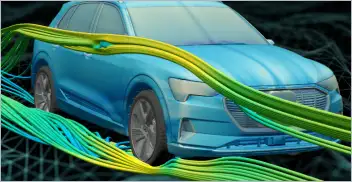
From geometry preparation to AI-assisted analysis, integrated CFD workflows…
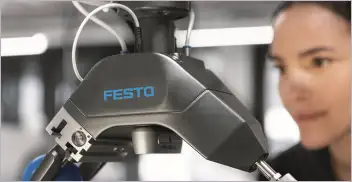
Software-based GripperAI manages mixed picking through basic geometry

Safety, communication and motion control components enable smooth operation
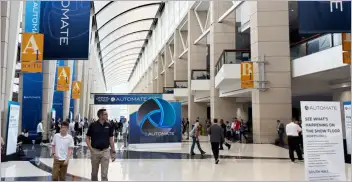
North America’s largest robotics and automation event winds down