InOrbit
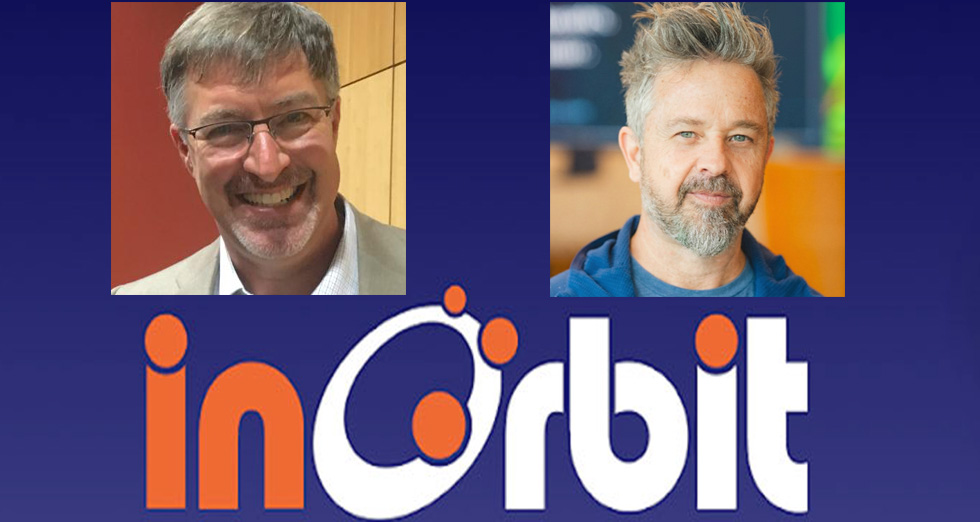
Stanford Robotics Center executive director Steve Cousins (left) was named to the Board of Directors for InOrbit. The company, with founder and CEO Florian Pestoni (right), also announced the launch of the OpenRobOps open-source fleet manager platform.
Get news, papers, media and research delivered. Sign up for our free newsletters.
Stay up-to-date with news and resources you need to do your job. Research industry trends, compare companies and get weekly market intelligence with Robotics 24/7.

InOrbit
Stanford Robotics Center executive director Steve Cousins (left) was named to the Board of Directors for InOrbit. The company, with founder and CEO Florian Pestoni (right), also announced the launch of the OpenRobOps open-source fleet manager platform.
InOrbit.AI announced the upcoming availability of OpenRobOps (ORO) as an open-source platform for robot operations.
The company also announced Steve Cousins, executive director of the Stanford Robotics Center and a founding board member of the Open Source Robotics Foundation (OSRF), was named to its Board of Directors.
InOrbit said that these strategic moves are designed to standardize the foundational layer of robot connectivity, accelerating deployment of smart robots and resolving the fragmentation that currently stalls enterprise fleet deployment.
The company said that the robotics industry historically faced a "build vs. buy" dilemma, forcing developers to choose between building proprietary fleet management tools or sacrificing control.
InOrbit said it is resolving this by contributing OpenRobOps to the open-source robotics community. Built on InOrbit’s platform, which has managed thousands of robots, the company described OpenRobOps as a full-fledged fleet management and robot operations offering. It will be offered under a permissive, full open-source software license later in 2026.
“Robot researchers used to reinvent the wheel until ROS came along and provided the core building blocks,” said Brian Gerkey, CTO at Intrinsic (an Alphabet company). “Now OpenRobOps will bring similar building blocks to fleet management."
Ahead of the general release, InOrbit said it is already collaborating with partners across academia, industry and service providers, allowing ecosystem players to begin integrating and contributing to the platform immediately. The company said that ORO will provide developers with a transparent, self-hostable foundation for robot observability and management, democratizing access to the common infrastructure needed to operate robots at scale.
"I’ve talked to too many founders in robotics who are reinventing the wheel and failing to scale," said Florian Pestoni, founder and CEO of InOrbit and a member of the Robotics 24/7 Executive Advisory Board. "By open-sourcing the core operations layer, we empower developers to own their data and infrastructure. End users can more easily orchestrate robots across vendors by using InOrbit Space Intelligence, our award-winning, AI-powered platform."
InOrbit said that developers who prefer a fully managed cloud platform can opt for InOrbit Ground Control, a commercial implementation of the OpenRobOps standard with advanced functionality and support. This allows teams to start with the open-source core and upgrade as scaling needs grow, or go from hosted to self-managed without changing their underlying data architecture.
“OpenRobOps fills an important role within the open-source robotics ecosystem, providing a fleet manager with native support for ROS and Open RMF,” said Geoffrey Biggs, CTO at Open Robotics.
InOrbit said that Cousins's appointment to its Board of Directors stems from his leading voice in academia, and his instrumental development and spread of the Robot Operating System (ROS) during his tenure as CEO of Willow Garage. Cousins was among the first to commercialize ROS as the founder of Savioke.
"InOrbit is doing for fleet operations what ROS did for robot development," he said. "Savioke was an early InOrbit customer, so I saw firsthand the value of the platform. I joined the board because I see the need in the broader robotics community: standardizing the common infrastructure is necessary to unlock the next wave of innovation and scale."
Enjoyed this article? Add Robotics 24/7 as a preferred source in Google Search.
Edge computing gives AI agents the processing power to turn instructions into…
Daimon-TWM world model debuts for the public
Platform helps robots adapt to complex tasks
Look beyond the headlines for the latest in humanoid robots