Locus Robotics
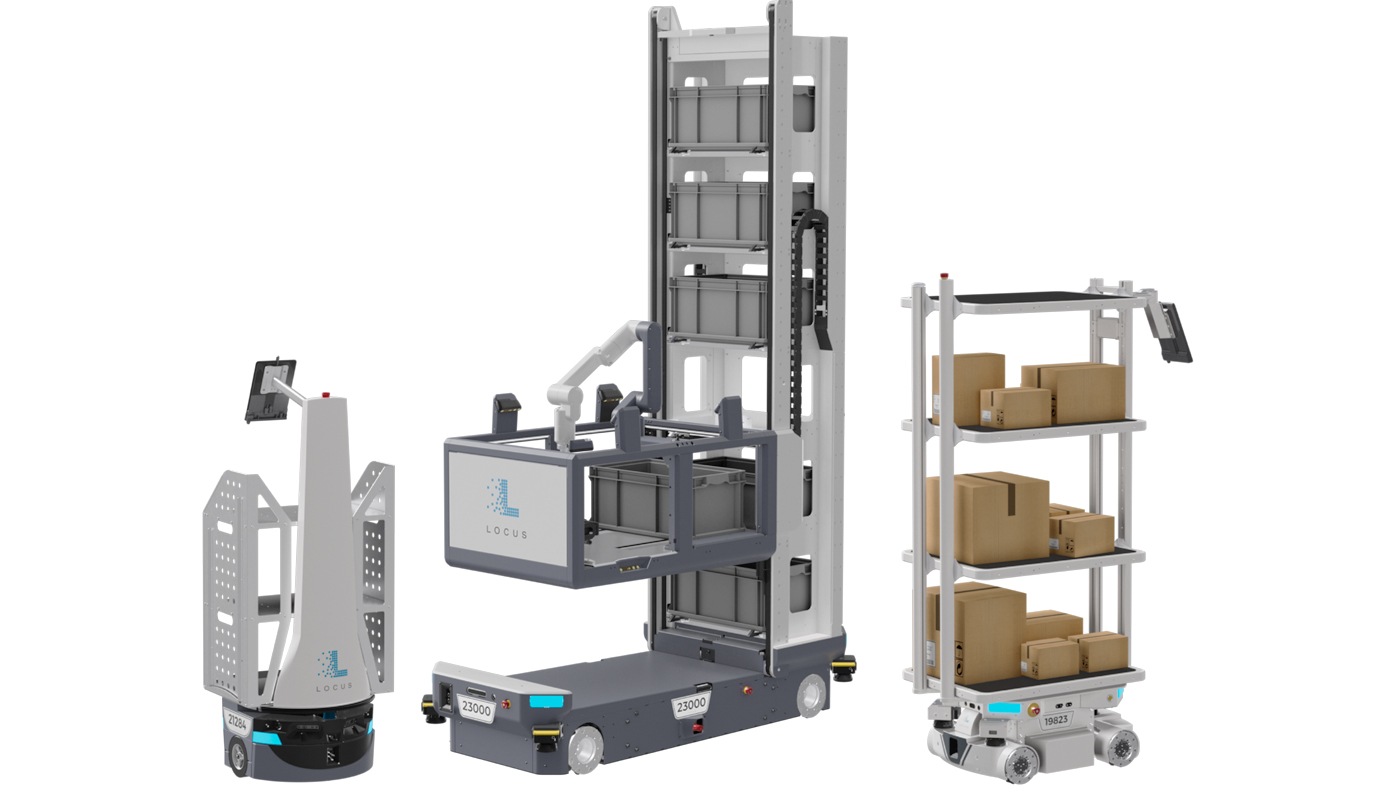
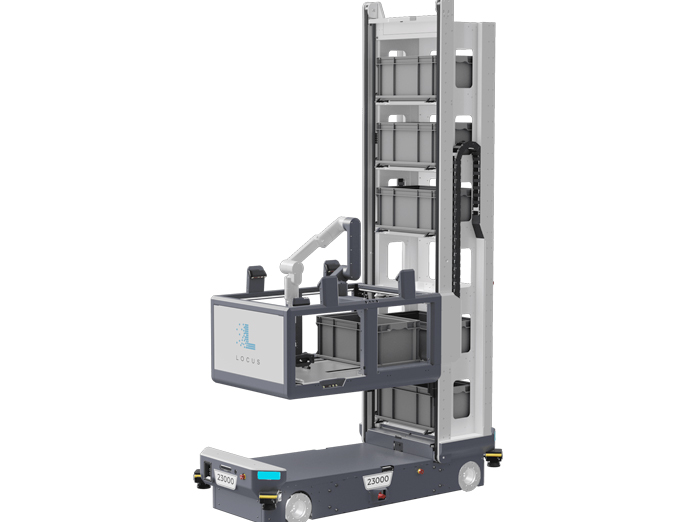
Locus Robotics introduced the "Robots-to-Goods" platform, Locus Array, at MODEX 2026.
Get news, papers, media and research delivered. Sign up for our free newsletters.
Stay up-to-date with news and resources you need to do your job. Research industry trends, compare companies and get weekly market intelligence with Robotics 24/7.

Locus Robotics
Locus Robotics introduced the "Robots-to-Goods" platform, Locus Array, at MODEX 2026.

ATLANTA – At MODEX 2026, Locus Robotics launched Locus Array.
The company said it is a fully autonomous fulfillment system that combines mobile robotics, an integrated robotic picking arm and AI-powered perception with autonomous execution to complete end-to-end workflows without manual intervention.
The company showcased live demos of the platform at MODEX, and said that deployments are already underway with early access customers in North America.
Locus said that it is also preparing to scale Locus Array globally across Europe and APAC to meet accelerating demand for fully autonomous fulfillment.
Among early access customers with Locus Array in live operations is DHL Supply Chain, a long-standing global customer.
“The launch of the Locus Array marks a pivotal moment in DHL’s Accelerated Digitalization journey, moving us beyond traditional assisted picking into a new era of high-density, autonomous fulfillment,” said Sally Miller, global chief information officer, DHL Supply Chain. “At DHL, we believe an idea is only as good as its ability to scale, and our partnership with Locus Robotics has consistently proven that we can turn cutting-edge concepts into global operational standards.
Locus Robotics said that Array enables operators to achieve:
“By being the first to deploy Locus Array, we are not just addressing today’s labor and capacity challenges; we are actively engineering a more agile supply chain,” Miller added. “This innovation allows us to maximize vertical space and dramatically reduce manual touches, ensuring that we continue to provide our customers with the speed and reliability they expect from the world’s logistics leader.”
Together, Locus Robotics said that these capabilities introduce a new category of warehouse automation: Robots-to-Goods (R2G). In this model, intelligent robotic systems, like Locus Array, go directly to inventory and execute fulfillment tasks within the aisle. By embedding multiple workflows directly into the robot, Locus Robotics said that R2G expands automation beyond assisted processes to become fully autonomous.
“For years, autonomous fulfillment has been more hype and promises than reality - until now,” said Rick Faulk, CEO of Locus Robotics. “Warehouse operations are facing increasing pressure from labor constraints, rising costs, and constant variability that traditional systems can’t absorb. Locus Array brings autonomy into real-world operations at scale, introducing a fundamentally different, system-level approach designed to solve these challenges at their core.”
Unlike traditional systems that move inventory through fixed processes, the company said that robots like Locus Array are dynamically assigned to tasks in real time. This minimizes travel and maintains continuous SKU availability, while also enabling higher storage density within existing warehouse layouts.
Powered by LocusONE, the AI-driven orchestration platform, the company said that Locus Array operates as part of a unified fleet alongside Locus Origin and Locus Vector.
LocusONE dynamically assigns work based on real-time demand, coordinating robots, workflows and inventory movement as a single system that scales and adapts with operations over time. Locus Robotics said that this enables automation to extend across all fulfillment workflows, delivering consistent performance and the operational confidence required to outperform in an uncertain environment.
Enjoyed this article? Add Robotics 24/7 as a preferred source in Google Search.
Edge computing gives AI agents the processing power to turn instructions into…
Daimon-TWM world model debuts for the public
Platform helps robots adapt to complex tasks

Look beyond the headlines for the latest in humanoid robots