By
Tim Culverhouse
February 21, 2025
Chew, CC BY 4.0 via Wikimedia Commons
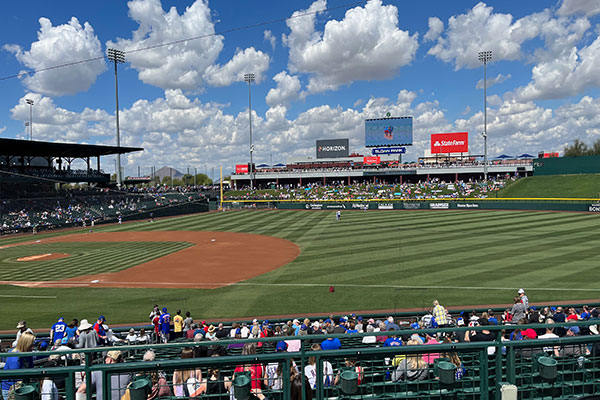
Sloan Park in Arizona, shown above, is one of a host of MLB Spring Training stadiums that will test the Automated Ball-Strike system (ABS), or "robo umps" for balls and strikes.
Get news, papers, media and research delivered. Sign up for our free newsletters.
Stay up-to-date with news and resources you need to do your job. Research industry trends, compare companies and get weekly market intelligence with Robotics 24/7.

Chew, CC BY 4.0 via Wikimedia Commons
Sloan Park in Arizona, shown above, is one of a host of MLB Spring Training stadiums that will test the Automated Ball-Strike system (ABS), or "robo umps" for balls and strikes.
Robotics have made their way to Major League Baseball.
In approximately 60% of MLB Spring Training games in Florida (Grapefruit League) and Arizona (Cactus League), the league will test its Automated Ball-Strike (ABS) system, more commonly referred to as “robo umps.”
ABS has been in use across the various levels of Minor League Baseball since 2021, but this will mark the first occasion that it will be incorporated into MLB games.
Stadiums across the Grapefruit and Cactus Leagues are equipped with a Hawk-Eye pose-tracking system of cameras equipped with computer vision to track pitches. The number of cameras in each Spring Training stadium for the test varies.
ABS also generates a strike zone for each hitter to determine if the pitch is a ball or a strike. MLB measured each player (without shoes) before their first Spring Training game, to create an individualized strike zone for each batter, according to the Associated Press.
With data gathered from each player and motion control from each ball thrown, ABS then calculates if a given pitch is a ball or strike.
Balls and strikes will still be called on the field by the home plate umpire, but pitchers, batters and catchers are allowed to “challenge” the ruling through the ABS system.
When a challenge is initiated, the in-stadium scoreboard displays the pitch tracker and identifies if the pitch is a ball or strike. The technology is similar in concept to the ball-tracking technology in professional tennis.
Major League Baseball has tested various forms of ball-strike technology since its initial foray in 2019 via the independent baseball Atlantic League. The current ABS system has been used in affiliated baseball for the last five seasons, but MLB players have been hesitant to adopt the system.
MLB has adopted more instant replays for close calls on the basepaths, fair or foul balls in play and potential fan interference on balls near the outfield wall. The ABS represents the first time that balls and strikes can be challenged at the Major League level.
Home plate umpires are still employed in Minor League Baseball, but ABS has been used with its human counterpart to make immediate judgment calls on pitches. Considering the speed at which MLB players have pushed back against ABS inclusion, it doesn’t seem like robot umpires will remove humans from behind the plate any time soon.

Tim is the Editorial Director of Robotics247.com. His mission is to provide valuable information and insights to robotics professionals and decision-makers, and to help them solve business challenges. He is a creative, deadline-driven, and detail-oriented storyteller. In addition, he is a sports broadcaster and public address announcer.
From geometry preparation to AI-assisted analysis, integrated CFD workflows…
North America’s largest robotics and automation event winds down

Automate’s largest day ever draws huge crowds to McCormick Place

North America’s largest robotics and automation event kicks off