TerraFirma
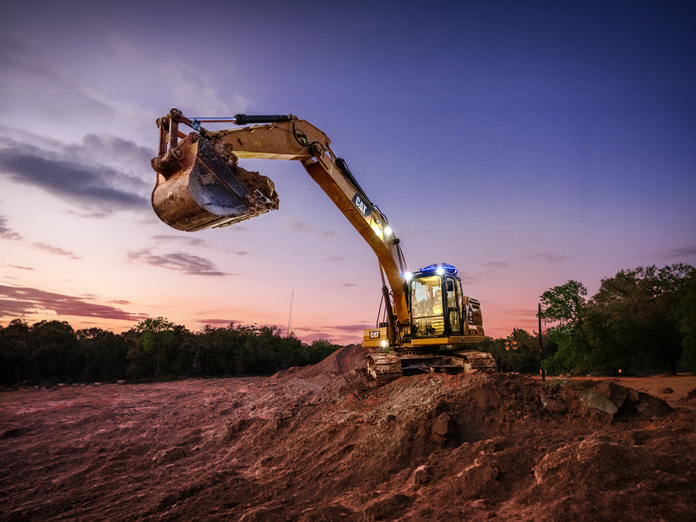
TerraFirma’s semi-autonomous excavator at work.
Get news, papers, media and research delivered. Sign up for our free newsletters.
Stay up-to-date with news and resources you need to do your job. Research industry trends, compare companies and get weekly market intelligence with Robotics 24/7.

TerraFirma
TerraFirma’s semi-autonomous excavator at work.
Tech-enabled, vertically integrated construction company TerraFirma announced that it has raised approximately $115 million, including a $100 million Series A led by Kleiner Perkins, with participation from Bain Capital Ventures, Glade Brook Capital Partners, BANNER VC, Saga Ventures, Trust Ventures, Definition, PEAK6, Magnetar Capital and Ravelin Capital.
Angel investors include founders, executives and engineers from companies including SpaceX, Anduril, Base Power, Shinkei, and Hadrian.
The company, which said that it is focused on critical infrastructure, will use the funding to support the expansion of TerraFirma’s engineering, manufacturing, operations and construction teams, as well as the continued development of its semi-autonomous heavy equipment systems
Terrafirma said that as the construction industry battles labor productivity and labor shortage concerns, the demands for the industry have never been higher.
Additionally, the company added that humanity’s ambitions continue to stretch beyond the atmosphere, with building on the Moon and Mars moving from concept to reality.
“Construction is the foundation everything else is built on, and it’s been going backward for fifty years,” said Noah Schochet, co-founder and CEO of TerraFirma. “America built the transcontinental railroad, the interstate highway system and the Hoover Dam. There's no reason we can’t build at that scale again, and there’s no first-principles reason construction can’t become 10x faster, cheaper, and safer. TerraFirma exists to help America build again and then take that capacity into the cosmos.”
TerraFirma said that it is building the robotic infrastructure stack for modern construction. The company’s full-stack platform combines AI-enabled pre-construction software, a remote command-and-control center and retrofitted semi-autonomous heavy machinery, including excavators, dozers, loaders, rollers, skid steers and more, converted into robots that no longer require an operator in the cab.
Instead, the company said that skilled operators orchestrate entire fleets from screens, using the same intuition and judgment they’ve built over years, now extended across multiple machines at once. TerraFirm said that the result is a system that can make each operator up to 300% more effective, accelerating project execution, reducing costs and creating jobs that are safer and higher-paying than traditional equipment operation.
“It is not about trying to fully automate construction equipment,” said Noah McGuinness, CTO of TerraFirma. “Making construction truly faster and cheaper requires innovating on operations and technology together across the full stack. We believe autonomy is a part of the solution, but driving real change requires building a whole ecosystem of technology that is directly informed by rapid iteration and lessons from the field.”
TerraFirma was founded in 2024 by Schochet and McGuinees, former SpaceX engineers who met at Princeton before working on programs including Starlink, Starshield and Starship. At SpaceX, the duo said that they saw how quickly complex physical systems could be designed, built and deployed when hardware, software and operations were developed together.
“TerraFirma is succeeding at real-world scale, proving the business model works, and securing government and commercial contracts. This is clearly where the industry is headed,” said Josh Coyne, partner at Kleiner Perkins.
TerraFirma said that it is currently working on projects across the housing, energy, transportation, manufacturing and education sectors. The company said that recent commercial projects include site preparation, excavation and grading for a new Starbucks in North Austin, a sports arena in Spicewood and a power substation in New Braunfels supporting power delivery to homes.
TerraFirma added that it is also working with the U.S. government to execute mission-critical international infrastructure and logistics projects in some of the world’s most challenging operating environments.
“The technology that we are building today to solve critical challenges here on Earth will be highly reusable to solve those same challenges on the Moon and Mars,” Schochet said.
Enjoyed this article? Add Robotics 24/7 as a preferred source in Google Search.
Edge computing gives AI agents the processing power to turn instructions into…
Daimon-TWM world model debuts for the public
Platform helps robots adapt to complex tasks
Look beyond the headlines for the latest in humanoid robots