Texas Instruments
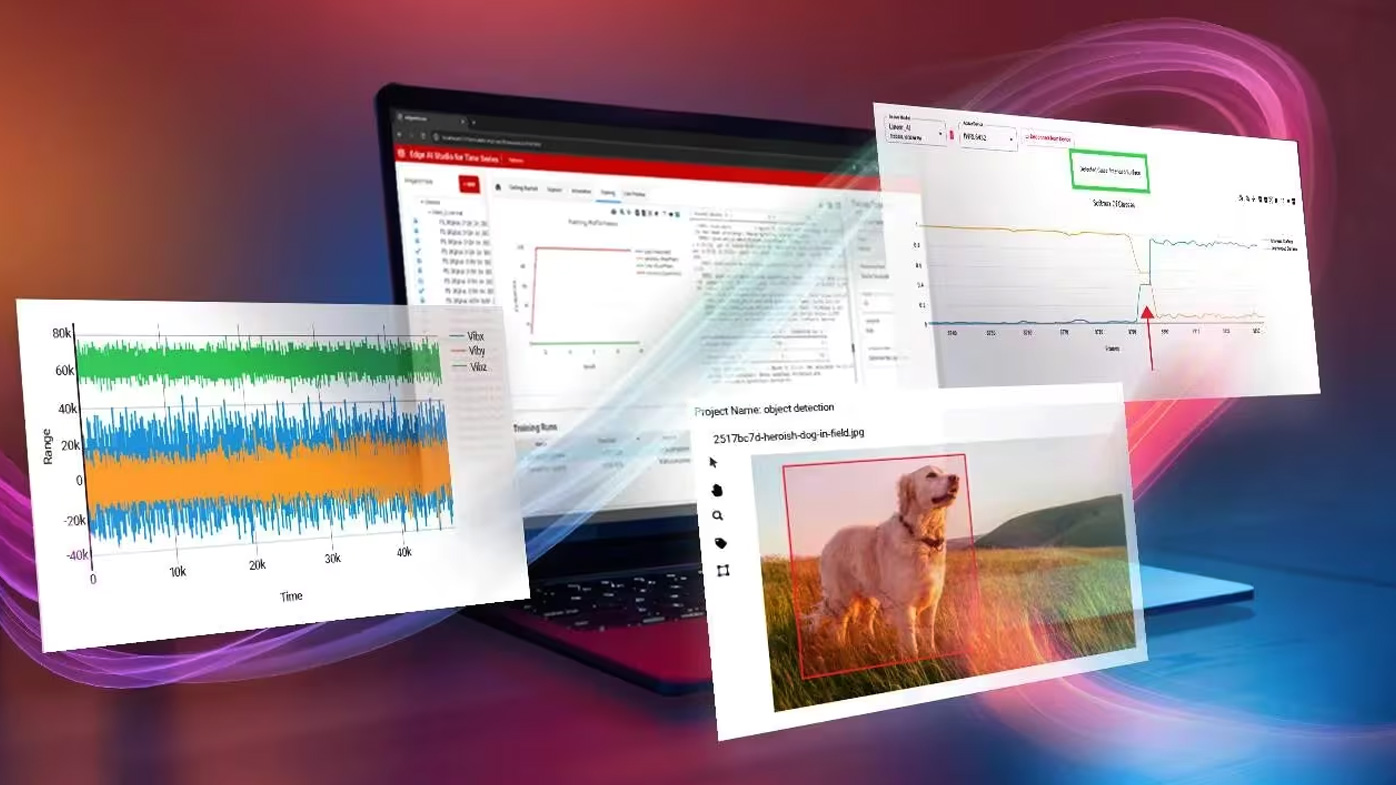
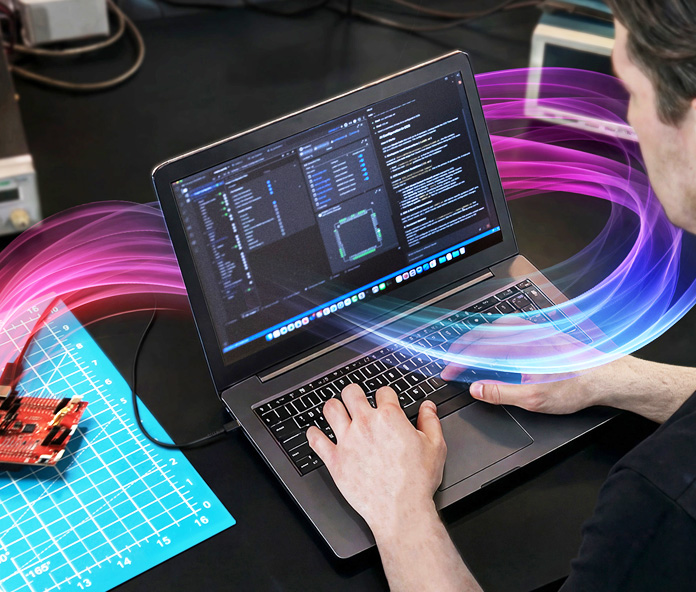
Texas Instruments added agentic AI capabilities to its CCStudio ecosystem.
Get news, papers, media and research delivered. Sign up for our free newsletters.
Stay up-to-date with news and resources you need to do your job. Research industry trends, compare companies and get weekly market intelligence with Robotics 24/7.

Texas Instruments
Texas Instruments added agentic AI capabilities to its CCStudio ecosystem.
Texas Instruments announced significant enhancements to its CCStudio ecosystem, strengthening its agentic artificial intelligence (AI) capabilities to streamline embedded software development across microcontroller (MCU), wireless connectivity and radar applications.
Moving beyond generative code assistance toward autonomous development, the company said that CCStudio ecosystem’s agentic AI framework injects device-specific knowledge directly into the AI tools engineers already use, enabling them to accelerate complex design tasks from months to days and focus on system-level design and innovation.
TI said that it is showcasing these innovations at electronica 2026, Nov. 10-13, in Munich.
For the last two years, TI said that generative AI tools have been helping engineers write code faster. However, the company said that they often struggle to complete complex embedded development tasks given the lack of hardware-specific context. TI said that its CCStudio development ecosystem has been augmented with an agentic AI framework to address this challenge.
Through context engineering, the company said that the framework injects device-specific knowledge, including software development kits (SDKs), pin configurations and peripheral data, directly into the workflow through Model Context Protocol (MCP) servers. TI said that grounding AI models in data improves accuracy, reduces hallucinations and produces implementation-ready outputs. The architecture retrieves and delivers only the most relevant technical context to the model, reducing latency and token costs.
“Embedded software development is an incredibly manual and time-consuming process that has been significantly changing over the last few years with agentic AI,” said Amichai Ron, senior vice president, Embedded Processing and DLP Products at TI. ”TI was one of the first semiconductor companies to enable agentic AI workflows in our development ecosystem, and over the last several months, we have been strengthening its capabilities to enable significantly better productivity. Device migration, system configuration, and debugging are all integrated with agentic AI built on TI’s embedded expertise. Our goal is to give developers a more efficient and accurate development experience so they can spend more time innovating.”
For example, TI said that its CCStudio integrated development environment (IDE) exposes its core capabilities to industry-standard AI agents, allowing them to generate code, configure peripherals, build the application, flash it to the device and debug it autonomously. The company said that engineers can use simple language to move through the full development workflow in CCStudio IDE or CCStudio for VS Code, all without switching tools or rebuilding context.
TI said that this first-of-its-kind migration skill transforms what has historically required months of manual effort into a workflow completed in days, or even hours. When a developer prompts their preferred AI tool to migrate code from a competing device to a TI device, the company said that the model invokes TI’s skill to autonomously navigate the full migration process, while preserving the developer’s existing software investment.
The company said that specialized subagents each handle a distinct phase of code migration automatically: analyzing the source project, configuring peripherals, updating code and API calls and iterating through build errors to resolution.
By offloading repetitive, time-consuming aspects of migration to this specialized skill, TI said that engineers can focus on high-level innovation, including system architecture and unique application features.
TI said that agentic AI capabilities in the CCStudio ecosystem are currently available across its general-purpose and real-time MCUs, wireless connectivity devices, and radar systems-on-chip. With a modular architecture that spans task-specific skills, MCP server integrations and context injection, the company said that its CCStudio tools are designed to continuously expand support for new devices, updated SDKs and emerging edge AI development workflows.
Texas Instruments added that the need for these embedded processing semiconductors is continuing to grow, spurred by the proliferation of autonomous, connected and AI-enabled systems. As demand continues, TI said that the strength of its broad MCU portfolio and continued investment in building dependable capacity across its 300mm manufacturing footprint give customers confidence that they can scale with the portfolio they are designing in today and rely on well into the future.
Enjoyed this article? Add Robotics 24/7 as a preferred source in Google Search.
Edge computing gives AI agents the processing power to turn instructions into…

China's Office of the Working Mechanism for Foreign Investment Security…

President Trump orders a review of robotics imports over national security…
Platform helps robots adapt to complex tasks