
Cybernetix Ventures
Cybernetix Ventures, an early-stage investment firm in Boston, is led by (L-R) Fady Saad and Mark Martin.
Get news, papers, media and research delivered. Sign up for our free newsletters.
Stay up-to-date with news and resources you need to do your job. Research industry trends, compare companies and get weekly market intelligence with Robotics 24/7.

Cybernetix Ventures
Cybernetix Ventures, an early-stage investment firm in Boston, is led by (L-R) Fady Saad and Mark Martin.
Long before today's humanoid headlines and mega valuations, my co-founder Mark Martin and I saw a structural gap in the robotics industry: early-stage robotics companies lacked investors with the experience to help build and scale these businesses. Without capital that understands deployment cycles, hardware-software complexity, and the difference between a demo and a deployable product, promising companies risked stalling out before they reached the factories, hospitals, and warehouses that needed them.
With decades of combined experience building and scaling robotics companies, we recognized the industry was about to enter a defining phase, but one where execution, not just innovation, would separate the winners.
So in 2021, we started Cybernetix Ventures to close that gap.
The robotics venture landscape in 2026 looks markedly different from what it did even two years ago. The most visible shift is the influx of generalist and crossover capital at scale. Firms that spent the last decade focused on SaaS - and a wave of multi-stage funds new to hardware - have moved into robotics post-2023, drawn by the narrative that AI had finally solved the hard part. It hasn’t, but the capital has followed, compressing seed valuations and raising expectations at Series A in ways that challenge disciplined early-stage investing.
The second shift is more structural. Corporate venture arms have evolved from passive participants to active co-investors and, in some cases, primary deal drivers. SoftBank, Hyundai, NVIDIA, and Amazon are no longer just customers or acquirers; they’re showing up on cap tables at the seed and Series A stages. While they bring clear strategic value, they’re also reshaping term dynamics, exit pathways, and founder incentives in ways financial investors need to evaluate carefully.
Together, these forces have made robotics one of the most competitive categories in venture, raising the stakes for specialized investors who actually understand what they're buying.
Today's venture environment asks investors to pay more to take on more risk, especially at the seed stage. Specialized expertise built from years of technical, operational, and relational depth in this sector helps mitigate that risk. Robotics isn't SaaS, and it isn't deep tech either. It is its own investment category, with its own set of rules and bar for maturity. A working demo is not enough. Real validation is a pilot customer who places a second purchase order, showing that the product holds up on the actual factory floor.
Investors trained on SaaS often default to familiar pattern recognition:
Applied to robotics, that lens distorts more than it reveals. A robotics company at the same stage as a SaaS company will look slower, more capital-intensive, and less efficient on paper - not because it's underperforming, but because the problem is fundamentally different.
SaaS companies ship code; robotics companies ship integrated hardware and software systems in real-world environments. The unit economics, sales cycles, and milestones simply map out differently.
But robotics isn't deep tech in the biotech sense either. The companies we back aren't waiting on a scientific breakthrough or a decade-long regulatory pathway. They're solving engineering challenges against known physics, with realistic valuations, multiple revenue streams, and defensibility that compounds as systems get deployed. Customer churn is low because rip-and-replace is genuinely hard once a robot is integrated into a workflow - the inverse of SaaS.
That’s exactly what makes robotics underwriteable and what gets missed by investors applying the wrong template. The stakes of that mismatch are rising. As more capital enters robotics, founders need investors who understand industry timelines, GTM realities, procurement cycles, and the physics of adoption.
So what does early-stage robotics investing actually look like? We look for companies with a 10-year vision and 10-month discipline. We back industry-shaping companies whose value will build over a decade, with a team disciplined enough to hit the milestones that matter quarter by quarter. We prioritize founders who've spent years inside the industry they're now trying to automate, with co-founders whose skills both complement and compound. The founding teams at Rugged Robotics, Raise Robotics, and Dash Bio are good examples - each spent years inside their target industries, building expertise and networks before starting their ventures.
As of May 2026, Cybernetix Ventures has made 31 investments in 18 portfolio companies:
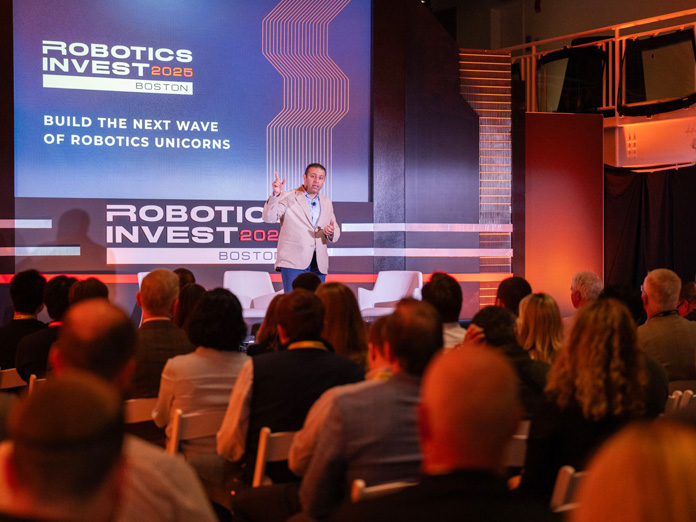
Capital alone isn’t enough. Robotics also needs dense, regional ecosystems built around the founders doing this work. Founders need peers, shared lessons, and communities that help them navigate long, complex build cycles. Even in today’s remote-work environment, founders building in isolation face more friction than those in active ecosystems. Efforts like Robotics Invest reflect the broader need for industry-wide collaboration, bringing together founders, investors, and operators, forging the future of robotics.
Our bet has never been on humanoids or foundational robotics models. While much of the capital entering this space is chasing the most speculative end of the market, we've stayed focused on specialized robotics solving specific, high-value industrial problems with clear buyers and measurable ROI. The companies we've backed are deploying in real facilities, signing repeat contracts, and building operational track records that compound over time. The hype cycle will sort itself out. What will remain are the companies and the investors who understood from the beginning that the most important robotics revolution is already underway in the real-world environments shaping the economy.
Artificial Intelligence Deep Learning Machine Vision Machine Learning Autonomy Mobile Robots Industrial Automation Collaborative Robots Robot Arm Components Controllers Processors Motion Control Motors and Drives Sensors Cameras Lidar Software Cloud and Edge Simulation Soft Robotics News Features Editors Pick Opinion Agriculture Construction Cybernetix Ventures Funding Humanoid Investment Robotics Invest Robotics Tech Week
From geometry preparation to AI-assisted analysis, integrated CFD workflows…
GENISOM AI makes ICRA debut at conference in Vienna
North America’s largest robotics and automation event winds down

Automate’s largest day ever draws huge crowds to McCormick Place