By
George Kokoris
April 23, 2020

Get news, papers, media and research delivered. Sign up for our free newsletters.
Stay up-to-date with news and resources you need to do your job. Research industry trends, compare companies and get weekly market intelligence with Robotics 24/7.
A: Over the course of the past decade, autonomous mobile robots (AMRs) became accepted as a proven technology for increasing throughput and productivity for a wide range of materials handling applications. Looking ahead, we anticipate that there will be 4 million robots in 50,000 warehouses by 2025. To reach that scale, the next decade will be spent rapidly deploying AMRs in the real world and orchestrating their activities with other automation solutions alongside human workers.
A: Vecna Robotics’ Pivotal™ technology safely transforms OEM material handling equipment into fully-autonomous self-driving vehicles, orchestrates tasks across resources for optimized workflow efficiency, and employs the power of AI to create a machine learning feedback loop for systemwide continuous improvement. By leveraging the best strengths of autonomous robots, intelligent AI systems, real-time data, and human creativity, Vecna Robotics’ solutions turn rigid workflows into dynamic and flexible operations.
A: Interoperability is the key to the advancement of the industry as a whole. Automation companies are working together in pre-competitive collaboration to create greater efficiencies for their customers. To that end, we will start to see a shift and a tremendous increase in added value from self-driving vehicles much like we saw with computers and, later, smart phones, when they began to run apps and software developed by other companies.
A: In addition to the work we’re doing with the MassRobotics consortium to establish interoperability standards, we’re scaling with some of the world’s largest OEM manufacturers and field support partners. Through these relationships, we can have robots up and running four weeks from order; deploy them remotely; and support our customers with 24/7 live, US-based support. To date, we have proven 99% uptime for our autonomous mobile robots.
Enjoyed this article? Add Robotics 24/7 as a preferred source in Google Search.
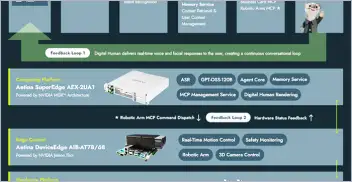
Edge computing gives AI agents the processing power to turn instructions into…
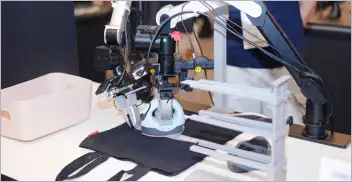
Daimon-TWM world model debuts for the public
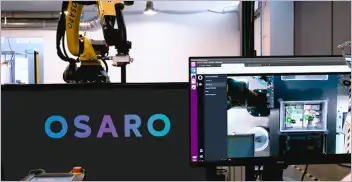
Platform helps robots adapt to complex tasks

Look beyond the headlines for the latest in humanoid robots