Get news, papers, media and research delivered. Sign up for our free newsletters.
Stay up-to-date with news and resources you need to do your job. Research industry trends, compare companies and get weekly market intelligence with Robotics 24/7.
Volocopter GmbH and Near Earth Autonomy Inc. today announced that they are partnering to test Near Earth Autonomy's autonomous flight technology on Volocopter's electric vertical takeoff and landing (eVTOL) VoloDrone aircraft. The companies said they will combine their expertise to advance urban air mobility (UAM) and demonstrate their progress in a beyond visual line-of-sight (BVLOS) demonstration in Munich next year.
“We are very excited to work together with the leading player in the aerial autonomy industry,” stated Christophe Hommet, chief VoloDrone engineer at Volocopter. “Near Earth Autonomy has years of experience, shown real results, and is going to help our VoloDrone stay ahead of the curve with autonomous capabilities.”
“Volocopter’s track record, unique safety design, and vision have established it as the leader in the eVTOL industry," said Sanjiv Singh, CEO of Near Earth Autonomy. "We look forward to proving autonomy systems for their aircraft. Our shared vision of the future, and safety as an integral part of it, makes this an ideal partnership.”
Founded in 2011 by Stephan Wolf and Alexander Zosel, Volocopter has been developing air taxi services using fully electric eVTOL aircraft, with more than 1,000 test flights to date. The Bruchsal, Germany-based company said it is working with partners in infrastructure, operations, and air traffic management to build the ecosystem necessary to "Bring urban air mobility to life."
In 2011, Volocopter claimed it performed the first-ever crewed flight of a purely electric multicopter and has since demonstrated numerous public flights with its full-scale aircraft. They include public test flights at Singapore’s Marina Bay in October 2019 and the "world’s first autonomous eVTOL flight" in Dubai in 2017.
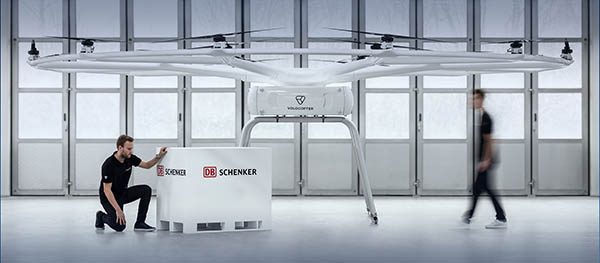
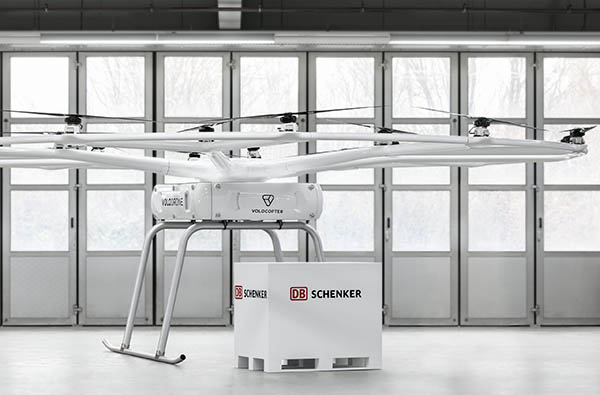
The company's heavy-lift VoloDrone is designed to safely transport cargo where conventional ground-based transport is limited because of topography, regulations, or traffic congestion. Volocopter has 300 employees in offices in Germany and Singapore and has raised a total of €322 million ($392 million U.S.) in equity from investors including Daimler, Geely, DB Schenker, BlackRock, and Intel Capital.
Near Earth’s technology allows aircraft to autonomously take off, fly, and land safely, with or without GPS. The Pittsburgh-based company said its systems enable aerial mobility and drone inspections for the commercial and defense sectors. Near Earth said it bridges the gap between aerospace and robotics with systems that can improve efficiency, performance, and safety for aircraft ranging from small unmanned aircraft systems (sUAS) to full-size helicopters.
Near Earth Autonomy said it has conducted 3,500 flights lasting more 2,000 flight hours with various aircraft types, sizes, and environments in the past eight years. It has already integrated its BVLOS autonomy systems with helicopters in both piloted and remotely piloted configurations.
The partners said they will integrate Near Earth's autonomy systems with Volocopter's eVTOL architecture while addressing the challenges of weight, power, and cost. To start, the partners will use subscale testbeds equipped with Near Earth’s technology and Volocopter’s control systems to test the BVLOS capabilities in a controlled environment.
After adapting BVLOS capabilities on the smaller subscale platform and testing them with the Volocopter-specific flight characteristics, the same technology will be used on a full-sized VoloDrone to prepare for fully autonomous logistics flights.
The VoloDrone can carry a 200 kg (440 lb.) payload up to 40 km (25 mi.) and will offer sustainable business-to-business transport over difficult terrain, said Volocopter. BVLOS capabilities would help VoloDrones achieve autonomous aerial cargo transport, added the company, which estimated the potential market for VoloDrone services at about $120 billion by 2035.
Volocopter is preparing for the commercial launch of its UAM services within the next three years. It said its service ecosystem will include the VoloCity and VoloConnect electric air taxis, the VoloDrone electric heavy-lift drones, the VoloPort infrastructure, and the VoloIQ digital connective platform.
The VoloDrone is an unmanned, fully electric, heavy-lift utility drone capable of carrying a payload of 200 kg (440 lbs) up to 40 km (25 miles).
Autonomy Drones Software News Press Release Autonomy BVLOS Drones Near Earth Autonomy Volocopter
Enjoyed this article? Add Robotics 24/7 as a preferred source in Google Search.
Edge computing gives AI agents the processing power to turn instructions into…
Daimon-TWM world model debuts for the public
Platform helps robots adapt to complex tasks
Look beyond the headlines for the latest in humanoid robots