Cybernetix Ventures
Fady Saad, founder and general partner of Cybernetix Ventures, joined the Robotics 24/7 podcast to describe investment and funding in the robotics industry in 2026.
Get news, papers, media and research delivered. Sign up for our free newsletters.
Stay up-to-date with news and resources you need to do your job. Research industry trends, compare companies and get weekly market intelligence with Robotics 24/7.

Hello everyone, and welcome to a special edition of the Robotics 24/7 podcast. This is Tim Culverhouse, Editorial Director of Robotics 24/7 at Peerless Media, and today we'll be discussing another layer of the robotics industry. Now we've seen a massive influx in robotics company launches, product developments, and deployments over the last decade. But how do these organizations secure the funding necessary to create these innovations?
Today's podcast dives into the funding and investment side of robotics, and I'm thrilled to welcome my guest to the program to discuss the role of venture capital in the robotics industry and the economics of robotics.
Fady Saad is the founder and general partner of Cybernetix Ventures, a leading venture capital firm investing in early-stage robotics and physical AI. Headquartered in Boston, the firm is led by Fady Saad and Mark Martin, who have 50 years of combined robotics technologies, operating, and investing experience.
Cybernetix invests in industry-critical opportunities across North America and Europe. Focus vertical markets include advanced manufacturing, logistics, construction, healthcare, agriculture, energy infrastructure, defense, dual-use, and space. Fady, thanks so much for joining me today and discussing the economics and the venture capital side of robotics. I'm thrilled to have you on board.
FS: Thank you, Tim. It's my pleasure.
TC: So Fady, as we jump into the conversation today, the first question that I have for you is, how does Cybernetix Ventures find prospective organizations to invest in? And then, as a follow-up to that, what's the timeline look like from the initial interest from Cybernetix to the investment portion of the contract in the program?
FS: Thank you for the question, Tim. We have been very fortunate that we have been in the robotics space for a long time.
We actually organically came out of the robotics community because we saw the need and the gap for early-stage funding for robotics companies. This is even before robotics became mainstream, as we are seeing today. So we were very fortunate to have a very established network within key players, key organizations in the robotic space, and also an established brand and credibility that basically created an inbound dynamics.
We have founders, and we have co-investors who reach out to us. But, we also maintain a very strong network with key organizations, incubators, accelerators and key people in the community. For example, we invested in Raise Robotics out of the West Coast, and a short little story here.
We learned about Raise from Jeff Burnstein, the president of A3. Jeff came and vouched for the company and the founder and said, "You know what? Gary is a great guy. He knows a lot about the space and I would love for you to meet with him." And it happened that we were at an event on the West Coast, and Jeff kind of facilitated an introduction. I met Gary and Conley, and we hit it off. A couple of months later, we invested in Raise Robotics, and the company is doing very well.
Another company here in Boston, Dash Bio, they are automating lab and clinical trials. The way we learned about the company, they featured in an article in the Wall Street Journal, and one of our team members was a contributor to the article. So, we asked for an introduction, the reporter made the connection, and we have also been investing in Dash Bio. They have been doing very well.
Realtime Robotics and other companies, I've known the founders since my time at MassRobotics, when I co-founded the organization back in 2014. So those are teams that I have seen coming to MassRobotics and kind of growing their team, using the facility, and they stayed in touch. So I have a deep kind of relationship and understanding of those teams.
Enigma Aerospace, for example, Reese and VJ, they founded American Robotics before that, and they were probably the earliest resident at MassRobotics. They had a successful exit for American Robotics. So I've known those folks since 2017. And when they were starting Enigma, they came to us. We had a discussion, and we were among the early investors in the company.
This is basically how it kind of happens. We have a relationship with Harvard and the companies that spin out from the lab. We have good relationships with folks at WPI, Northeastern, MIT, and also beyond that, at CMU and the West Coast, and even all the way to Germany and Switzerland.
TC: One thing that we get, and I get the opportunity to write about a lot, is kind of that initial funding element from something that an organization says that Cybernetix Ventures has invested in or just anybody in the robotic space. And I'm curious from your side of the table, Fady, how Cybernetix kind of tracks, and I want to use the word progress here, but I don't know if that's the right term, but how are you monitoring during the progress of the organizations that you've invested in? What are some of the things that you're looking for in terms of that investment to ensure that it's being used in the way that it will help develop and navigate all of the things that you're looking for as part of your role in the venture capital side of the organization?
FS: I mean, early-stage investment is definitely very different from late-stage investment. And the reason is, when a company is still young, it's very fragile, and very small decisions could make a huge impact on the future of the company. So, that's why staying close to those companies is important. We, because of our deep knowledge about the robotic space, the formula for building and scaling success for robotic companies is not yet widely known. That's why we invest the time to write down and publish the "Robotics Startup Playbook," which you can find on our website.
But this was a modest attempt to codify all that we have known about the robotic space and the many data points and many companies that we have seen over the last two decades or so, and what it takes to build and scale a successful robotic company. Our model, Mark and I, we decided from the beginning that in order to make successful investments in the space, not only do we have to select good companies, but we also want to make them great.
And in order to do that, we need to stay close. We need to be hands-on; we take board seats, we take observer seats, and even if we don't have any representation on the board, we stay close, we have regular calls with the teams at least quarterly. We have an internal tracking tool for what we call the vital signs of the company.
Head count, revenues, cost, runways, this kind of churn, this kind of data that gives us a sense of how the company is doing in terms of optimizing the use of their capital. And also that kind of selling and scaling their product, and so forth.
When you go to a doctor, and they get your vital signs. The vital signs are the vital signs. You need someone to make sense of that. What does it mean? What kind of indication could this be pointing to? And this is what we do. That's why we have weekly meetings for portfolio follow-up. Internally, we look at the vital signs. We, Mark and I, and the rest of the team, update each other about what's happening because we assign the portfolio to each partner, so that there is some sort of accountability.
We update each other about what's going on and try to think about, okay, what can we do, maybe one or two things, that will dramatically help the company and improve the performance and the odds of them being successful. Out of these meetings, we think about the larger network, the Cybernetix Collective, which is the internal platform we have for service providers and corporates. How can we utilize that to help our portfolio companies? And then every quarter, we have a Cybernetix Collective call.
This is a call where we bring the founders, we bring our advisory board - phenomenal people with tons of experience in the space - and then we also bring the corporates and the service providers. We bring everyone together. We update each other about what's going on, and then we pick a topic that's relevant for the founders that we discuss. Sometimes it's fundraising, other time is pitching, and then go-to market strategies. And sometimes it's more personal. How to become an effective CEO.
One of the calls, we invited Ray Stata, the founder and former CEO of Analog Devices. He came and shared his wealth of experience on how to become a CEO and how to be effective in what you're doing. So this is what we're doing. We like to build that relationship with the founders. We do believe founders are the souls of their companies. It's very important to nurture that and take care of that.
TC: I heard the word relationship are used a lot in your conversation there, Fady, and it makes sense from that collaborative element, where it's not just an investment and then to check back in. It seems like, from what Cybernetix Ventures is doing, there really is not hand-holding necessarily, but that back and forth open door policy where you're maintaining the relationships with these organizations. As soon as that investment starts, and even going off of the examples that you used before, before any investment happens, it seems like it's a very symbiotic opportunity from both the Cybernetix side in the name of the organizations that you've invested in.
FS: It is true. The other thing we do is, both Mark and I, we are not the typical venture capitalists. We are operators. I mean, Mark spent 30 years at Analog Devices running different business units and he was like acquiring companies, spinning out companies, and investing in companies.
I started my career working in large corporations like Siemens and Nokia. Then I co-founded companies and worked in mid-sized companies. So, we both have seen what it takes to build and scale a company. We rely a lot on this kind of experience, and I think many of our founders find that it's very useful in the kind of day-to-day decisions they make.
Relationships are definitely important. The whole kind of venture building and investing is a heavy relationship business.
TC: So we're recording this podcast in the middle of May 2026. And as of now, Cybernetix Ventures, you've made 31 investments and 18 different portfolio companies. We listed some of the target areas and industries that Cybernetix is involved in and investments from, such as advanced manufacturing, logistics, construction, etc.
You discuss a lot in the article that will coincide with the release of this podcast about the "Defining decade of robotics." And I'm curious how, or I guess what types of technology companies or even technology in general, Cybernetix Ventures is focused on for the remainder of 2026 in the near future?
FS: So Tim, when we created the fund, we had certain convictions. Back in 2019 and 2020, we knew that labor shortage is an issue.
We knew that increased consumer demands for kind of customized products and deliveries, and even medication, vaccines and surgeries, and all of that. And the fact that there are trillions of dollars of problems out there that we cannot solve. There's no way that we can solve these problems manually. I mean, from water to housing to climate, you name it.
There's no doubt that the demand is there and the need is there. So the question was, if robotics is happening no matter what, then what makes sense to invest in? It's a question of size, and it's a question of timing. You want to pick the problems that are large enough to justify investment. And you also want to invest in problems that timing-wise you are not too early, and you are not too late.
And when you think about that, you need to always time yourself around what's going on around you. I mean, there is AI. There are data centers. There are space activities. Developments are happening in quantum. Geopolitical activities are happening. There are food and nutrition shortages.
When you think about these kinds of things, you start thinking, "Okay, where are we in terms of products and in terms of companies that are being formed to solve some of these problems?" And then, when you think about it, you realize that, "Okay, some of these big problems, in order to be solved, you need to have machines that have the intelligence that can handle these kinds of things efficiently." And in order to build intelligence, everyone knows that we need the data.
So, then data collection technologies for smart machines become very important. We have the web for the kind of language and knowledge, but we don't have the robotics web. We don't have this physical world data yet.
However, vertically focused companies and robotic companies are accumulating this data, and that's why I think there's a huge data play for those companies in the future because they have access to data that no other platforms would have for physical data. And then, assuming that you have the data, eventually you want robots to move from a single purpose to maybe a multi-purpose one.
Then, you want to create some sort of foundational robotics model. This is the holy grail that many people are working on. I mean, getting to a general-purpose foundation model might be a little bit tricky, but I think we can have a multi-purpose one. I think the jump from a single purpose to a general purpose is a big jump. I think we can jump from a single purpose to a multi-purpose one.
Considering the challenges we have in terms of the data and the kind of understanding of some of these physical problems, and then you realize that many of the manual problems now are manual because they require a high degree of dexterity, and this has been an issue in this space.
The human hand is a phenomenal creation with flexibility, with sensing, and with intelligence. We can sense coins in our pocket and decide which one we want, right? Without even seeing them, just all kinds of tactile sensing. So dexterity is definitely one of the big problems in robotics, and there are tons of companies trying to solve this problem with different approaches.
These are some of the areas that we have been looking at when you think of a technology. In terms of verticals, I mentioned some of the verticals that we're looking at just because of the demand. You also need to read the verticals and which markets and industries are pulling. For example, defense in the last few years has been pulling a ton of robotics activities.
Cybersecurity is something very interesting for us, and we actually made an investment in a company called Corsha. They're a phenomenal company because having cybersecurity for robotics is very different than any other cybersecurity. Now you can have machine-to-machine cybersecurity and you have to minimize the exposure of your network as you deploy into your infrastructure.
Humanoids, obviously, I mean, we have been kind of watching the space cautiously. There are definitely different schools of thought. We have not made any investments in humanoids yet. We have been monitoring this space, but it's definitely a trend. We are not ignoring them. And we keep an eye on what's happening there.
TC: Without giving out too many state secrets, I greatly appreciate the in-depth answer and the strategy that Cybernetix follows, and from our side of the table, again, following the news from the funding and the organizations that you've already secured the investment with. It's interesting to kind of hear that forward-looking approach, Fady. So thank you so much.
Another question that I had for you, and this is related to a portion of the article that you wrote again, to call it the venture capital and investment view from inside robotics defining decade. We’ll have a link to it in the podcast transcript here, but you mentioned some involvement from major, major organizations around the world, the Amazon’s, the NVIDIA's, Google's, SoftBank's, Hyundai's of the world.
I'm curious, how their involvement in the investment side has changed Cybernetix Ventures' approach to early-stage investment? Or, I guess the other part of that question is, does this change your approach to early-stage investment with some of these global multi-billion dollar, possibly trillion dollar organizations getting involved in early-stage robotics investment?
FS: I wouldn't say it really changed our investment approach, at least yet. But those are big companies and leaders in their sectors that we stay informed about the activities of those companies. We keep monitoring their investments, their acquisitions, and their announcements. We have internally a very strong systematic way of keeping an eye on what's happening.
And we have a lot of relationships with key people in those companies, decision makers, and we meet regularly at events and special meetings we hold. And we compare notes about what's happening in the space, the appetite, what are the things they're looking at, what are some of the strategies they are looking at.
This informs our investment activities and also feeds into the guidance and feedback we give to our portfolio companies about sectors they should be looking at. Like just to give you an example, Rugged Robotics, one of the companies we invested in out of Houston, Texas, developed this robot that goes and prints construction layouts on the floor. I mean, phenomenal technology and kind of huge efficiency in doing this work.
And the company started performing services in the construction space. And while they were doing that, they figured out that there are huge opportunities in the warehouse construction and data center construction. So, it's still construction, but it's some sort of variation of the space.
And as you can imagine, those are huge market opportunities, and with a slight pivot, they managed to capture lots of opportunities there. Without mentioning which companies they were involved in, it's some of the big companies in the space. And suddenly, you are unlocking a multi-million dollar market opportunity.
This is how you monitor the kinds of activities happening from the movers and shakers in terms of large corporations, and you can direct your companies, or at least give them feedback, to adapt their strategies and pivot into some of these evolving market opportunities.
TC: The last question that I have for you today, Fady, and again, for Peerless and Robotics 24/7 located outside of Boston, and Cybernetix headquartered in downtown Boston, we're coming up on, I believe, my third attendance at Robotics Invest.
That'll be May 26th and 27th in Boston and then also Robotics Invest as part of Robotics Tech Week, which will be from May 26th through 29th in and around Boston, featuring demos, tours of Mass-based robotics organizations, and all the different sessions that are coming up with that.
As we make our way into Robotics Invest 2026, and then as a part of Robotics Tech Week, how has the event changed? How was it expanded to become a full week of different things that Cybernetix is involved in? And how would you say the conversations have changed since the first Robotics Invest to where we are now in 2026?
FS: So, just going back a few years, when we started Robotics Invest, the genesis was very simple. When we started Cybernetix Ventures, we looked around, we said "Okay, where can we find founders and investors, and how can we compare best practices and ways to build and scale successful robotic companies? Where does this group come together?”
We looked around and we couldn't find any event out there. There are great events happening. RoboBusiness, the Robotics Summit, Automate and MODEX. These are all great expos and shows. They show the technology and the products. But, they don't discuss investment. They don't discuss venture building. They don't discuss how to really build and scale a successful robotics company.
I do believe that this is a need. When you look at the history of humanity, I mean, in order to create a repeatable, successful generation of companies and industry, people need to come together on a regular basis and compare notes. I mean, this is sociology. This is how civilization and this is how successful groups of humans come together and build something meaningful.
So we took it upon ourselves. We said, "You know what? Let's design an event that does exactly that."
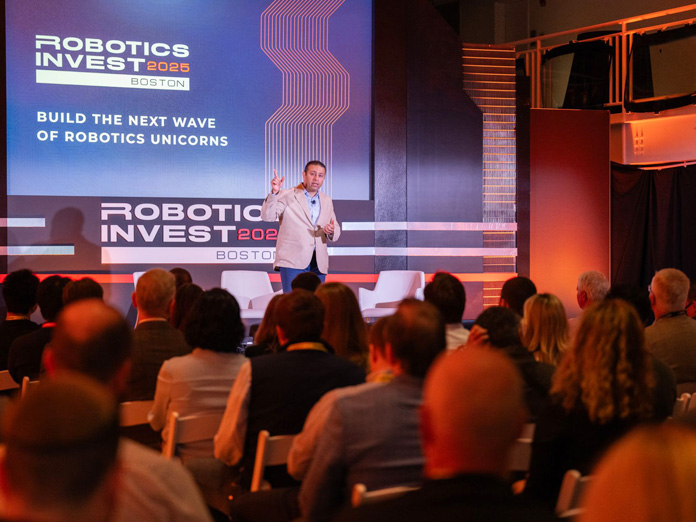
And we said we want it to be small. We want to invite the right people. We want people to be focused on the goal, which is how we can build and scale the next generation of robotics unicorns. This is spelled out on the Robotics Invest website.
And, we also wanted to make it clear that this is not a Cybernetix annual meeting. It's not our annual general meeting for our portfolio companies, LPs, and so forth.
We don't shy away from leading it, but we also invite other investors. We invite other organizations to join forces with us and create this experience. We pay very close attention to the topics and who to invite.
We wanted to invite people who had successful exits, successful companies, and successful experiences in the space, and give them the stage time because those are the people that we want to hear from. And unfortunately, many times, those folks get buried in more kinds of product marketing presentation sessions. There's nothing wrong with that, but if you want to build a generation of successful robotics companies, you want to get the people who made it and the investors who backed them up and listen to what the key decisions were and how they managed to do that.
The first event, we had the founders of Kiva. They had a huge exit, one of the first successful exits in the robotics industry. We had Mick Mountz and Peter Wurman. Peter is also one of our advisers at Cybernetix.
And the second year, we had Marc Raibert from Boston Dynamics. They've had multiple acquisitions. We can argue whether this is a successful company or not, but it's definitely a big company and a big name.
And last year we had the CEO of Clearpath, Matt Rendell. They were a phenomenal acquisition by Rockwell Automation.
This year, we are bringing SoftBank to speak about all the acquisitions. They've acquired ABB; they have been acquiring different companies and investing in different companies. They're obviously a big player and a big capital deployer in the space.
We're also inviting Gavin Kenneally, who is the CEO of Ghost Robotics, a company that had a successful exit, but we don't hear a lot about it. It's a unique story.
But those are the kind of companies that we want to hear from, and we want to know what made those companies successful. So this year it will be the fourth year.
Two years ago, we had a debate around humanoids. We had two people pro-humanoids, two people against humanoids. We had a reporter from Forbes moderating this panel, and it was an amazing conversation. So this year, we have some interesting surprises and some interesting discussions scheduled.
We have a panel on the global landscape of robotics. Obviously, what's happening in China, Europe, and other places. We have a panel on the dual use of robotics.
Last year, we said, "You know what, we get a lot of people from outside of Massachusetts to fly to Boston and even folks coming internationally." I mean, we have even folks coming from Japan to come and attend. The event has become a magnet for lots of people who are interested in the topic.
And we said, "You know what? Maybe we can create a full experience, a full week where you not only listen to these conversations and network and have the round table conversations, but you also go out and see successful companies in the area. You get to meet with other VCs and other organizations."
So we said, "Let's create a whole week, the Robotics Tech Week, anchored by Robotics Invest."
Last year, we were hoping that we would have one event every day. We ended up having 17 events. It was phenomenal, and we were very surprised.
This year, we'll probably get close to 20 events or more. And, we are a founding host of the A16Z Tech Week.
There are tons of activities happening in Boston during this week. We are very excited, and we continue to kind of push this forward, and we get a ton of positive feedback from attendees. We try every year to make it better than the previous year.
TC: Well, as an attendee and a journalist who gets the opportunity to see what's going on at Robotics Invest and Robotics Tech Week, it's very exciting to cover it and kind of get those intimate conversations that happen at those events with the folks that are there, the speakers, the attendees, the exhibitors, and I greatly appreciate the opportunity to attend.
But then also to talk to you today, Fady, it was great to have this conversation to dive into some of the nuances related to the investment segment in robotics, diving into some of the writing that you did again for the article that you were so kind to put together.
I greatly appreciate your writing, your time today, and I look forward to continuing to hear of the latest involvements, investments and ongoings related to Cybernetix Ventures, Fady. Thank you so much.
FS: Thank you, Tim. Tank you very much.
TC: And thank you so much for listening to this special edition of the Robotics 24/7 podcast. Don't forget to download and subscribe to the Robotics 24/7 podcast on the podcast platform of your choosing.
I look forward to the next episode of the Robotics 24/7 podcast series. Thanks so much, everybody. Bye-bye.
Artificial Intelligence Deep Learning Machine Vision Machine Learning Autonomy Lift Trucks Mobile Robots Industrial Automation Collaborative Robots Robot Arm Components Sensors Cameras Lidar Software Cloud and Edge Simulation Soft Robotics IoT Media Podcast Cybernetix Ventures Funding Investment Mergers & Acquisitions Robotics Invest Robotics Tech Week
GENISOM AI makes ICRA debut at conference in Vienna
World's first omni-modal evaluation including tactile sensing for…
North America’s largest robotics and automation event winds down
Automate’s largest day ever draws huge crowds to McCormick Place