By
Eugene Demaitre
May 31, 2021
FLIR Systems Inc.
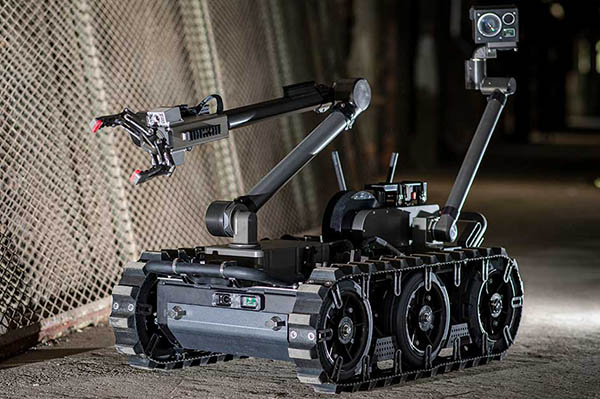
FLIR Systems has received U.S. Army contracts for its Centaur robot and other platforms.
Get news, papers, media and research delivered. Sign up for our free newsletters.
Stay up-to-date with news and resources you need to do your job. Research industry trends, compare companies and get weekly market intelligence with Robotics 24/7.

FLIR Systems Inc.
FLIR Systems has received U.S. Army contracts for its Centaur robot and other platforms.
As the U.S. remembers those who have sacrificed their lives for their country on Memorial Day, now is a good time to review recent robotics developments in defense applications.
Although several groups have expressed concern about fully autonomous weapons platforms and the ethical implications of artificial intelligence on the battlefield, many defense systems are being developed with the goal of relieving human forces from strain or danger. Most mobile robots also include "humans in the loop," with varying degrees of remote control.
In addition to unmanned aircraft systems (UASes) or drones, the U.S. military and governments around the world are actively exploring autonomous vehicles, marine systems, and assistive technologies for missions including explosive ordnance disposal (EOD), surveillance and situational awareness, and materials handling. U.S. funding for robotics has increased, according to Maj. Jeremy Howell, deputy robotics branch chief, G-8.
Contrary to public opinions formed by science fiction or alarmist headlines, most military ground robots are still at a relatively early stage, despite years of development and testing.
In addition, the U.S. Department of Defense has funded both basic and applied research for several areas of robotics, from exoskeletons and small drones to self-driving vehicles of different sizes and legged systems. Self-assembling systems, unified controls, multidomain and integrated units, and more intuitive human-machine interfaces could come out of this research.
At the same time, geopolitical allies such as the U.K. and rivals such as Russia and China are also pursuing semi-autonomous systems, and a new arms race could already be under way. Asymmetrical conflicts have also seen increasing use of technologies such as AI and drones, as demonstrated in Israel's "Iron Dome" air-defense system intercepting six drones during the current hostilities with Hamas.
The global market for military robotics will grow from $11.92 billion in 2019 to $52.16 billion in 2027, predicted Emergen Research. Other industry analysts estimated the market at $21.4 billion in 2019 and forecast a compound annual growth rate (CAGR) of 12.82% between 2020 and 2027.
As with any tool or weapon, the responsibility remains with the people, groups, and governments that choose to wield them. Here are 10 recent developments in ground robots for military use.

Eugene Demaitre was editorial director of Robotics 24/7. Prior to joining Peerless Media, he was a senior editor at Robotics Business Review and The Robot Report. Demaitre has also worked for BNA (now part of Bloomberg), Computerworld, and TechTarget. He has participated in numerous robotics-related webinars, podcasts, and events worldwide.

From geometry preparation to AI-assisted analysis, integrated CFD workflows…
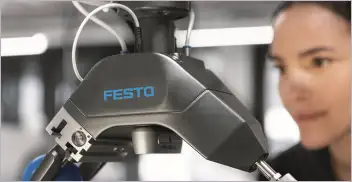
Software-based GripperAI manages mixed picking through basic geometry
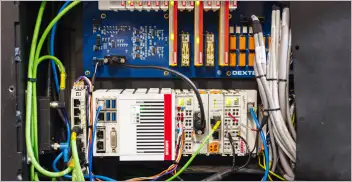
Safety, communication and motion control components enable smooth operation

North America’s largest robotics and automation event winds down