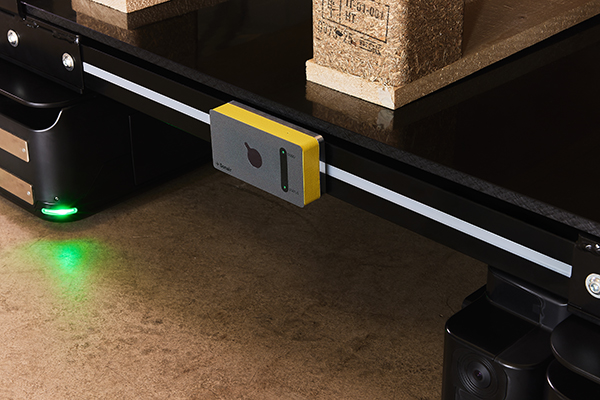
Sonair
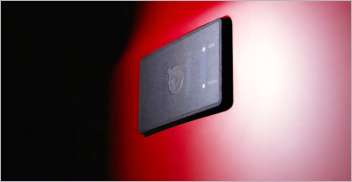
The Sonair ADAR ultrasonic 3D sensor for AMR safety made its debut at Automate 2025 in Detroit.
Get news, papers, media and research delivered. Sign up for our free newsletters.
Stay up-to-date with news and resources you need to do your job. Research industry trends, compare companies and get weekly market intelligence with Robotics 24/7.
Sonair
The Sonair ADAR ultrasonic 3D sensor for AMR safety made its debut at Automate 2025 in Detroit.
Norweigan-based ultrasonic sensor company Sonair will debut ADAR, which the company said is the world’s first safe 3D ultrasonic sensor designed to boost safety in spaces shared by humans and robots, at Automate 2025 in Detroit.
Sonair, which exited stealth mode with a 3D ultrasonic sensor in 2024, was selected from a crowded field of contenders to participate in the the 2025 Automate Startup Challenge.
Sonair will host demonstrations of the ADAR sensor at Booth 4710 during Automate, held May 12-15 in Detroit’s Huntington Place. The company said attendees can experience how they can see themselves - and other objects - through soundwaves in the air.
A typical 2D lidar safety scanner in an AMR only sees a person’s legs in one horizontal plane. In contrast, Sonair said its patented ADAR (acoustic detection and ranging) technology detects people and objects in 3D. A single ADAR sensor provides a full 180 x 180 field of view (FoV), and a 5 meter-range, for the robot’s safety function.
“Safety just got a lot simpler - and better adapted to detect people,” said Knut Sandven, CEO, Sonair. “ADAR enables 3D 360-degree obstacle detection around autonomous mobile robots at a significantly lower cost than the sensor packages used today, enabling AMR manufacturers to build safe and affordable autonomous robots.”
Sonair said the core technology behind ADAR has been in development at the MiNaLab sensor and nanotechnology research center in Norway for over 20 years. The imaging method is called beamforming; it’s the backbone of processing for SONAR and RADAR, as well as in medical ultrasound imaging, and now ready for ultrasound in-air applications.
Sonair is on track to achieve safety certification for ADAR by the end of 2025, which the company said represents an industry-first for 3D ultrasonic sensing in air.
Sonair said more than 20 global companies - including AMR manufacturers, industrial manufacturing conglomerates, automotive technology suppliers, and vendors within the autonomous health and cleaning industries - have quietly validated the ADAR sensor’s effectiveness as part of a successful Early Access Program launched in Summer 2024.
“Sonair combines rapid development capabilities with a flexible mindset," said Koji Kawaguchi, general manager of the innovation promotion department, FUJI Corporation. "Thanks to their cooperation, through comprehensive testing we were able to confirm the high suitability of their sensors for autonomous mobile robots.”
“We see significant potential for Sonair’s ADAR technology in the Japanese robotics market, particularly in applications requiring reliable, safe human-robot interaction,” said Shuhei Monobe, department manager of electronics devices department, Cornes Technologies, a distribution partner for Sonair. “Our early outreach has already generated confirmed interest from leading customers. As a novel approach to 3D sensing, ADAR offers compelling advantages in both performance and cost. We look forward to deepening our collaboration with Sonair and bringing this innovation to more of our clients.”
ADAR is a patented technology by Sonair, which the company said represents a new category of 3D depth sensor. It empowers autonomous robots with omnidirectional depth perception, enabling robots to “hear” their surroundings in real-time 3D - using airborne soundwaves to interpret spatial information.
ADAR is developed according to ISO13849:2023 performance level d/SIL2. The sensor creates a virtual safety shield with a range of five meters, that enables people and robots to share space safely. The development lies in combining wavelength-matched transducers with efficient signal processing for beamforming and object recognition algorithms.
“ADAR is an advanced plug-and-play sensing technology ensuring compliance with safety standards,” Sandven said. “With its small form factor, and low power and compute consumption, it is easy to integrate as part of a combined sensor package. It takes the ‘uh oh’ out of human-robot coexistence and replaces it with an ‘all clear.’”
Sonair added that ADAR is scheduled to be ready for shipment in July 2025.
GENISOM AI makes ICRA debut at conference in Vienna
World's first omni-modal evaluation including tactile sensing for…
Ultrasonic sensing enhances robotics perception

Cybernetix Ventures’ event kicks off Robotics Tech Week 2026 slate of events