LUCID Vision Labs
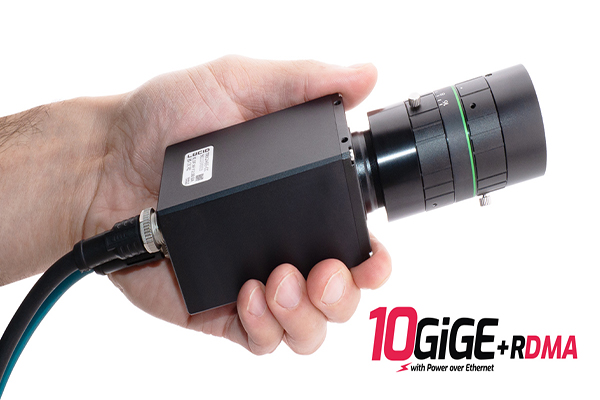
The new Triton10 industrial camera family from LUCID Vision Labs delivers high-speed imaging over a 10GigE interface with RDMA support.
Get news, papers, media and research delivered. Sign up for our free newsletters.
Stay up-to-date with news and resources you need to do your job. Research industry trends, compare companies and get weekly market intelligence with Robotics 24/7.
LUCID Vision Labs
The new Triton10 industrial camera family from LUCID Vision Labs delivers high-speed imaging over a 10GigE interface with RDMA support.
Canadian industrial camera designer and manufacturer LUCID Vision Labs, Inc. announced the launch of its new Triton10 camera family.
Featuring Sony’s latest CMOS sensors ranging from 5.0 MP to 24.5 MP, LUCID said the Triton10 delivers high-speed imaging over a 10GigE interface with RDMA support.
Built on LUCID’s Factory Tough platform, the compact IP67-rated Triton10 is designed for space-constrained environments, offering protection against dust and water along with a 17-pin M12 GPIO. The Triton10 with RDMA support enables zero-copy, high-throughput streaming - up to 1.2 GB/s directly to main memory - bypassing the CPU and OS. LUCID said this significantly reduces latency and CPU load, making it ideal for multi-camera, high-bandwidth applications.
As an active contributor to the GigE Vision standards committee, LUCID supports the integration of RDMA into the upcoming GigE Vision 3.0 standard, which the company said hopes will drive broader adoption of high-speed Ethernet technologies like 10GigE and 25GigE.
“The Triton10 leverages a robust RDMA ecosystem with readily available industrial components,” said Rod Barman, founder and president of LUCID. “It offers a cost-effective and accessible solution for demanding 10GigE Ethernet vision systems, and is ideal for applications such as automated inspection, robotics and high-speed production lines, where performance and reliability are critical.”
All LUCID cameras conform to the GigE Vision 2.0 and GenICam3 standards and are supported by LUCID’s proprietary Arena software development kit (SDK). The Arena SDK provides easy access to the latest industry standards and software tools. It is compatible with Windows, Linux 64-bit and Linux ARM operating systems, and supports C, C++, C# and Python programming languages.
Enjoyed this article? Add Robotics 24/7 as a preferred source in Google Search.
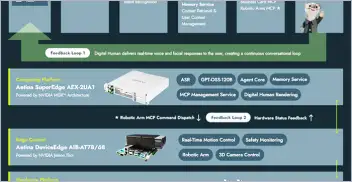
Edge computing gives AI agents the processing power to turn instructions into…
Daimon-TWM world model debuts for the public
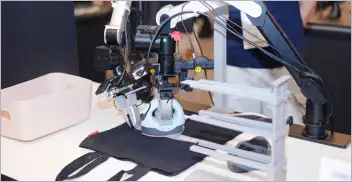
Platform helps robots adapt to complex tasks

Look beyond the headlines for the latest in humanoid robots