SiMa.ai announces Palette 3.0 software release to unlock high performance for physical AI models

Runs complex reasoning through optimized concurrent execution of any physical AI model on a single chip within strict power limits

SiMa.ai

By Robotics 24/7 Staff    November 17, 2026         

SiMa.ai announces Palette 3.0 software release to unlock high performance for physical AI models

SiMa.ai

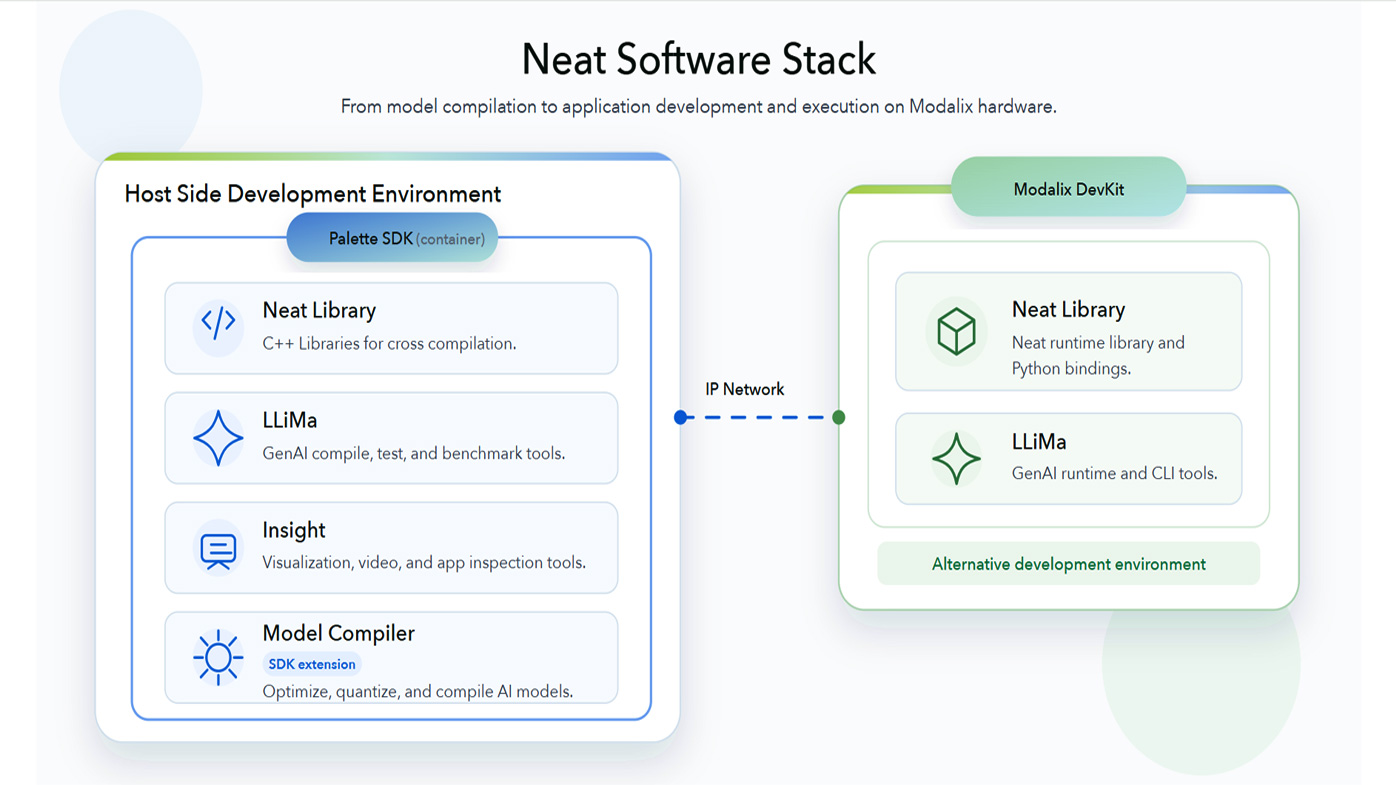
SiMa.ai said that Palette 3.0 runs complex reasoning through optimized concurrent execution of any physical AI model on a single chip within strict power limits.

Email Sign Up

Get news, papers, media and research delivered. Sign up for our free newsletters.

Stay up-to-date with news and resources you need to do your job. Research industry trends, compare companies and get weekly market intelligence with Robotics 24/7.
Robotics 24/7 newsletter
SiMa.ai announces Palette 3.0 software release to unlock high performance for physical AI models

SiMa.ai

SiMa.ai said that Palette 3.0 runs complex reasoning through optimized concurrent execution of any physical AI model on a single chip within strict power limits.

Physical AI company SiMa.ai announced Palette 3.0, a software release that the company said is designed to scale high performance across any physical AI model.

The company said Palette 3.0 builds on its June industry-first Agentic Palette announcement, delivering improved concurrent model execution for machine reasoning and action in the physical world.

Palette 3.0 highlights

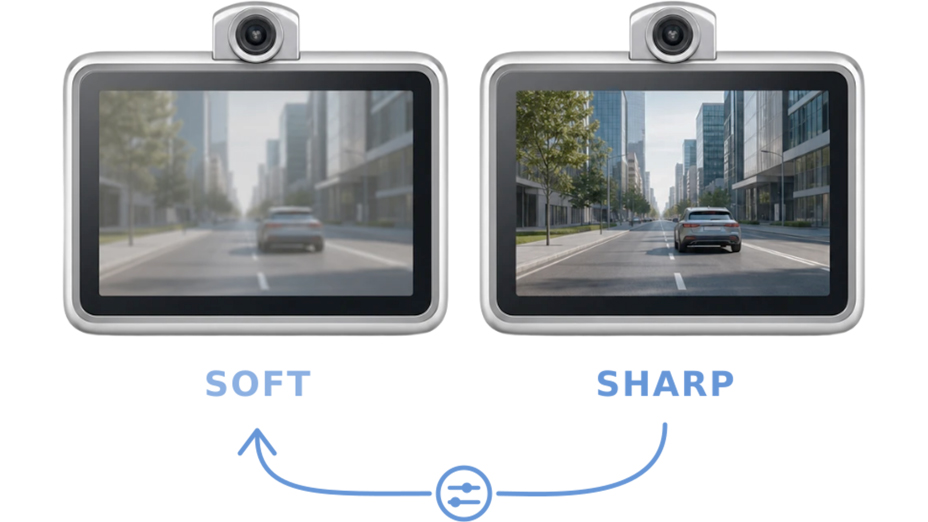
SiMa.ai said that the new release significantly increases model TPS by up to 3.5x within a low power budget, reinforcing SiMa.ai’s performance-per-watt leadership.

"The fundamental bottleneck in Physical AI today is the glaring mismatch between software that evolves monthly and legacy silicon that takes years to adapt. We are breaking that cycle," said Krishna Rangasayee, founder and CEO of SiMa.ai. “Following our industry-first Agentic Palette announcement, Palette 3.0 delivers on our core thesis: hardware at the speed of software. By continuously maximizing superior performance-per-watt for any Physical AI model, we give customers the ability to deploy tomorrow’s breakthrough capabilities on today’s hardware, completely rewriting the roadmap for fully autonomous systems."

SiMa.ai said that its new Model Browser shows Palette 3.0’s performance across all key models, measured within real-world power constraints, behind fully autonomous drones and robotics, among others.

While industry incumbents rely on adapting legacy data center technology, SiMa.ai said that it has built its software and silicon exclusively for the demands of physical AI. The company said that Palette 3.0 gives developers high performance within a low power budget and open-source code they can freely adapt, building on the agentic software that already slashes development time from months to days and hours.

SiMa.ai provided the following Palette 3.0 details:

  • Optimized concurrent model execution: Palette 3.0 enables complex AI reasoning and multimodal workloads to run concurrently on a single Modalix MLSoC while maintaining a low-power profile. By efficiently executing multiple AI models concurrently, including running separate Docker containers on-chip, the company said that the platform enables a broad set of physical AI capabilities such as large language models (LLMs) and vision-language models (VLMs), all within tight power and memory constraints.
  • Supercharged model processing for drones and robotics: Palette 3.0 accelerates the perception, depth and reasoning models that drones and robots depend on, all benchmarked in the Model Browser. Together with ecosystem partners, SiMa.AI said that the platform adds unified sensor fusion, dense neural depth fields and closed-loop digital twin simulation, removing the integration and validation bottlenecks that slow autonomous development.
  • New open-source capabilities for GenAI application development:
    • Building on SiMa.ai’s performance-per-watt leadership, state-of-the-art EAGLE3, DFlash and Gemma 4 MTP speculative decoding algorithms significantly increase model TPS by up to 3.5x, while operating within a low-power budget.
    • Support for running Mixture-of-Experts (MoE) Models with a large number of parameters, such as OpenAI’s GPT-OSS-20B, on SiMa.ai’s Modalix MLSoC 16GB SoM.


Latest in Perception

Latest in Artificial Intelligence

Article Topics

Artificial Intelligence   Deep Learning   Machine Vision   Machine Learning   Autonomy   Drones   Mobile Robots   Components   Controllers   Sensors   Cameras   Lidar   Software   Simulation   News   Press Release   Open Source   Perception   Physical AI  

All topics

Enjoyed this article? Add Robotics 24/7 as a preferred source in Google Search.

Editors' Picks

Jensen Huang resigns as NVIDIA CEO amid affairs scandal

Colette Kress, current EVP and CFO of NVIDIA named interim CEO

SoftBank’s proposed $5.4B acquisition of ABB Robotics blocked by China

China's Office of the Working Mechanism for Foreign Investment Security…

White House targets robotics imports in new national security trade review

President Trump orders a review of robotics imports over national security…
OSARO SightWorks advances AI-powered robotic picking and packing

Platform helps robots adapt to complex tasks