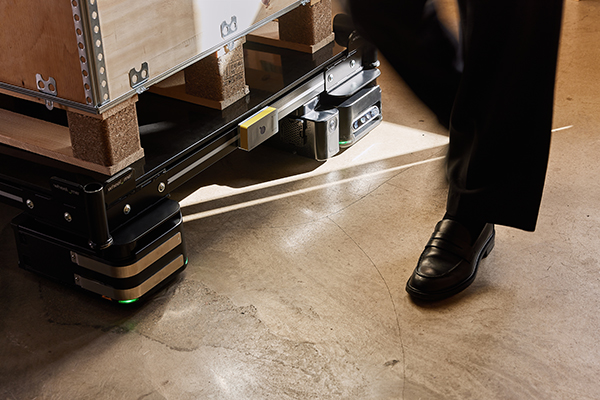
Sonair
Sonair has raised $6 million to further deploy its ADAR 3D ultrasonic sensor for robots.
Get news, papers, media and research delivered. Sign up for our free newsletters.
Stay up-to-date with news and resources you need to do your job. Research industry trends, compare companies and get weekly market intelligence with Robotics 24/7.
Sonair
Sonair has raised $6 million to further deploy its ADAR 3D ultrasonic sensor for robots.
After its debut at Automate 2025, Norwegian-based Sonair announced its ADAR (acoustic detection and ranging) sensor is now shipping to manufacturers in Asia, Europe and North America.
Sonair said the sensor uses sound waves in air to give robots a precise, real-time 3D view of their surroundings, helping them operate safely in shared spaces.
Sonair is safety-certifying to PLd ISO13849 / SIL IEC 61508, which the company said represents an industry-first for 3D ultrasonic sensing. Sonair added that it is now moving fast to meet rising global demand.
To fuel this acceleration, Sonair has raised $6M from a group of existing and new international investors, including Copenhagen-based VC Scale Capital and Norway’s state-backed Investinor.
The round saw continued support from RunwayFBU (part of the Aker Group), SINTEF and ProVenture. With this strengthened shareholder base, Sonair said it now has the capital backing to drive its global rollout and long-term growth.
“For robots to operate alongside humans, safety has to be built in from the start,” said Knut Sandven, co-founder and CEO of Sonair. “ADAR gives manufacturers a straightforward and more affordable way to achieve that.”
Safety sensors at a fraction of the cost of LiDAR
Sonair’s said its patented ultrasound technology provides precise 3D perception at a fraction of lidar’s cost. After testing with over 30 global companies, Sonair said it now targets autonomous mobile robots (AMRs) in logistics and manufacturing, a market set to hit $15.6B by 2030, according to global research firm Interact Analysis.
Increased warehouse automation, labor shortages and new safety regulations are accelerating demand for technologies that enable people and robots to work side-by-side.
Sonair said ADAR’s combination of safe 3D object detection, full vertical views and low computational requirements enables safer robot movement, reducing risk without adding complexity or cost to the machine.
“If a robot can’t operate safely around people, it won’t be widely adopted,” Sandven said. “We’re giving manufacturers a tool they can trust, one that helps them meet the highest safety standards without slowing down innovation.”
One of Sonair’s customers, FUJI CORPORATION in Japan, is building autonomous robots for retail environments.
“Through comprehensive testing we were able to confirm the high suitability of their sensors for autonomous mobile robots,” said Koji Kawaguchi, general manager of the innovation promotion department at FUJI CORPORATION.
Another reference customer, based in Europe, builds cleaning robots for commercial buildings.
In both cases, Sonair said that safety is a top requirement because the robots will operate around humans, making ADAR a valuable component of the processes.
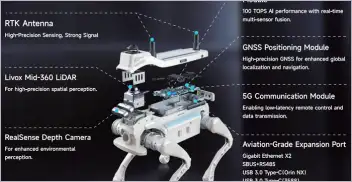
GENISOM AI makes ICRA debut at conference in Vienna
World's first omni-modal evaluation including tactile sensing for…

Ultrasonic sensing enhances robotics perception
Cybernetix Ventures’ event kicks off Robotics Tech Week 2026 slate of events