Unitree Robotics
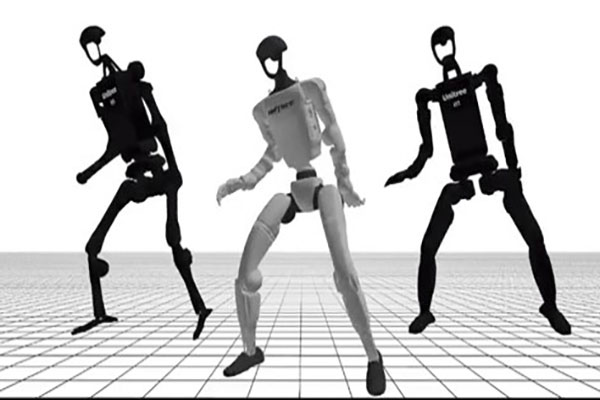
Unitree Robotics has trained its three humanoid robots to dance via motion capture data.
Get news, papers, media and research delivered. Sign up for our free newsletters.
Stay up-to-date with news and resources you need to do your job. Research industry trends, compare companies and get weekly market intelligence with Robotics 24/7.
Unitree Robotics
Unitree Robotics has trained its three humanoid robots to dance via motion capture data.
Unitree Robotics, a China-based global robotics company that develops and sells consumer and industry-level high-performance robots, has updated its humanoid robots with an open-source full-body motion dataset to make them capable of more fluid, natural movement.
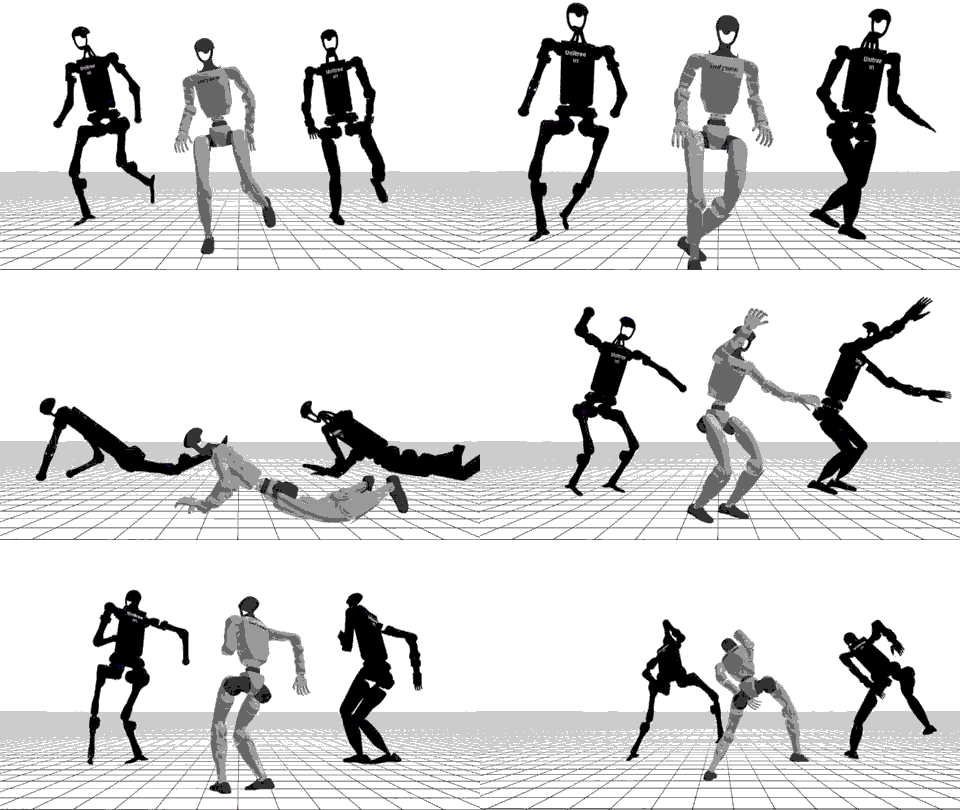
The Unitree H1, H1-2 and G1 humanoid robot models are able to demonstrate new, smoother movement trajectories to dance, breakdance and drop kick.
To make the humanoid robot’s movements more natural, Unitree redirected LAFAN1 motion capture data to all three models of its humanoid robots: H1, H1-2 and G1.
The redirection algorithm combines interactive mesh and inverse kinematics technology, based on optimization implementation, while considering the robot’s end pose constraints, joint position, velocity constraints and more. Unitree said that the redirection only considers kinematic constraints, and does not include dynamic constraints and actuator physical limitations.
Unitree’s H1 and H1-2 humanoid robot models are built for high-power performance. The company said that its H1 set a land speed record last spring at 3.3 meters per second. Unitree Robotics has also claimed a potential movement speed of five meters per second.
The robots feature hollow electrical routing, a high-degree of movement freedom in the robots’ legs, arms and shoulders, and joint motors that can handle powerful performance, agility, speed, load capacity, endurance and more.
The G1 humanoid robot - priced at $16,000 for the base model - is Unitree’s consumer-facing answer to robot researchers and hobbyists looking for an affordable humanoid robot. It is smaller than H1, and highly agile, capable of folding up into a small form factor that an adult human can easily lift. G1 comes complete with many of the same features as H1, and can run almost as quickly at 2 meters per second.
Watch a YouTube video of the humanoids dancing here.
At CES 2025 in Las Vegas, Unitree showcased multiple robots, including its consumer-grade quadrupedal robot Go2 and its new model, the Go2-W wheeled-leg version; the industrial-grade wheeled-leg robot B2-W; and the general-purpose humanoid robots H1 and G1.
The B2-W wheeled-leg robot can carry a load of up to 120kg and reach a speed of up to 20km/h. With its high load capacity and remarkable stability, it can accomplish complex movements such as climbing stairs, overcoming obstacles and even performing handstands.
At CES, Unitree also demonstrated how its consumer-grade quadruped robot Go2 can wave, make heart-shaped motions with its forelimbs and climb stairs. The Go2 also demonstrated how it can execute movements driven entirely by deep reinforcement learning (deep RL).
These include triple backflips, humanoid-style handstands and quickly recovering from extreme disturbances.
Also showcased at CES was Unitree’s latest Go2-W wheeled-leg robot, which excels at challenges like gliding and descending steep slopes, and easily overcomes obstacles as high as 70cm.
GENISOM AI makes ICRA debut at conference in Vienna
World's first omni-modal evaluation including tactile sensing for…

North America’s largest robotics and automation event winds down

Automate’s largest day ever draws huge crowds to McCormick Place