Luxonis
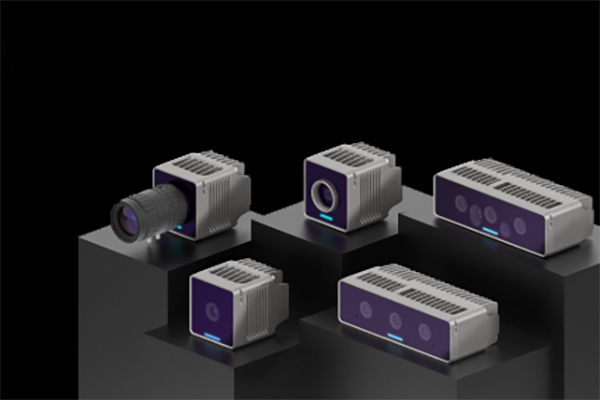
Luxonis said its new OAK 4 computer vision camera system allows AI workloads to run fully on-device, and be managed remotely with no additional hardware.
Get news, papers, media and research delivered. Sign up for our free newsletters.
Stay up-to-date with news and resources you need to do your job. Research industry trends, compare companies and get weekly market intelligence with Robotics 24/7.

Luxonis
Luxonis said its new OAK 4 computer vision camera system allows AI workloads to run fully on-device, and be managed remotely with no additional hardware.
Luxonis, a vertically integrated edge hardware and cloud platform that said its technologies enable machines to perceive the world, announced the launch of its OAK 4 devices - a fully self-contained computer vision camera system that achieves 52 TOPS of AI inference compute all on device.
The company said its spatial AI 'OAK' cameras are used globally in robotics and automation across industrial equipment, smart cities, manufacturing, retail, and logistics, and provide up to 40X the TOPS capabilities as its previous generation
With OAK 4, Luxonis said that AI workloads run fully on-device and can be managed remotely with no additional hardware - reducing server compute costs and eliminating the need to stream video to the cloud.
“After years of sustained engineering investment, OAK 4 represents the most advanced generation of our edge-AI platform to date,” said Bradley Dillon, CEO, Luxonis. “Direct feedback from field deployments has been clear: they need higher-throughput edge compute, expanded multimodal sensing, higher-resolution imaging pipelines, and rugged hardware. OAK 4 delivers on all fronts, integrating next-generation AI acceleration, a richer sensor stack, and improved environmental durability.”
The OAK 4 lineup includes four new OAK devices, each integrating a Qualcomm QCS8550 processor, which Luxonis said is a versatile, heterogeneous onboard processor that integrates a powerful ISP, GPU and NSPU, running Yocto Linux OS.
Luxonis said this positions OAK as the industry’s most advanced spatial-AI sensors that run completely standalone, requiring no external host system or cloud compute. With 52 TOPS of AI inferencing capacity, they can run multiple computer-vision models at high frame rates, including their proprietary Neural Stereo Depth estimation models.
“The launch of OAK 4 and Luxonis Hub marks a pivotal moment for edge AI in robotics and advanced driver-assistance systems,” said Anshuman Saxena, VP & GM, ADAS & Robotics, Qualcomm Technologies, Inc. “By combining rugged, high-performance hardware with a unified cloud platform, Luxonis is addressing one of the biggest challenges in deploying AI at scale: maintaining accuracy and adaptability in real-world environments. This innovation empowers developers and enterprises to build smarter, more resilient systems that can perceive and act with unprecedented precision.”
Luxonis also announced the launch of Hub, a cloud-based platform that the company said enables its hardware to become a complete computer vision platform. Hub enables simple deployment, over-the-air updates and device monitoring.
The company said that model drift is a primary reason why edge AI fails at scale, and Hub addresses this with 'Snaps' by intelligently collecting data on the edge and using it to improve AI models. By connecting standalone hardware with intuitive cloud software - a workflow that once required specialized engineering teams - it can now be completed in just 5 minutes, with limited technical experience required.
From geometry preparation to AI-assisted analysis, integrated CFD workflows…
GENISOM AI makes ICRA debut at conference in Vienna

North America’s largest robotics and automation event winds down

Automate’s largest day ever draws huge crowds to McCormick Place