By
Cesareo Contreras
February 4, 2022

Getty Images
Ice sculptures at Yanqing Longqing Gorge Ice and Snow Festival in Yanqing District in northwest Beijing.
Get news, papers, media and research delivered. Sign up for our free newsletters.
Stay up-to-date with news and resources you need to do your job. Research industry trends, compare companies and get weekly market intelligence with Robotics 24/7.
Getty Images
Ice sculptures at Yanqing Longqing Gorge Ice and Snow Festival in Yanqing District in northwest Beijing.
With the threat of the coronavirus still present around the globe, organizers of the Olympic Games Beijing 2022 are taking advantage of robotics to help keep athletes and attendees safe this year.
An estimated 2,900 athletes are participating, according to the International Olympic Committee.
The event will take place within a “closed-loop” bubble system to help minimize the spread of COVID-19 and to ensure athletes and attendees don’t leave the event’s confines and enter the city.
The Main Media Centre of the venue is decked out with service robots performing a variety of tasks, from disinfecting surfaces and taking temperatures to preparing and serving up meals and alcoholic drinks. The goal is to reduce human-to-human contact. An estimated 60,000 people are expected to attend.
In one area, a robot may drop down a bowl of noodles to a hungry athlete. In another, a customer might scan a QR code with his or her smartphone to lock in an order with one of the many autonomous cooking machines.
During the 2021 Tokyo Olympics, Japanese manufacturers such as Toyota and Panasonic showcased some of their latest robotic developments. Japan is the world's largest exporter of robots, according to the International Federation of Robotics. Japan accounts for 47% of the global supply of robots.
A report from Science and Technology Daily, the official newspaper of the Ministry of Science and Technology in China, said that hundreds of robots will be used during the 2022 Beijing Winter Olympics, but it did not disclose which companies created them.
This isn’t the first time robots have been used in China to help combat the pandemic.
Chinese developers have been building robots for applications such as contactless delivery and enforcement of mask-wearing and social distancing.
China is the largest robotics market in the world and is growing rapidly, according to the International Federation of Robotics.
The sales volume of service robots in China was 22 billion yuan ($3.4 billion U.S.) in 2020, said market and data company Statista. By 2023, the sales value is expected to rise to 61 billion yuan ($9.5 billion).
Chinese companies Alibaba, Meituan, and JD.com said they plan to have more than 2,000 courier robots in use this year between them.
Check out the slideshow (right) for five robots helping to keep people safe at the 2022 Winter Olympics.

Cesareo Contreras was associate editor at Robotics 24/7. Prior to working at Peerless Media, he was an award-winning reporter at the Metrowest Daily News and Milford Daily News in Massachusetts. Contreras is a graduate of Framingham State University and has a keen interest in the human side of emerging technologies.

From geometry preparation to AI-assisted analysis, integrated CFD workflows…
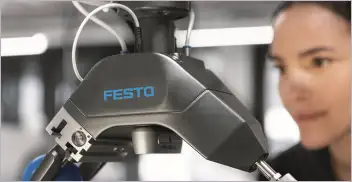
Software-based GripperAI manages mixed picking through basic geometry
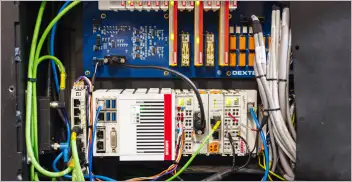
Safety, communication and motion control components enable smooth operation
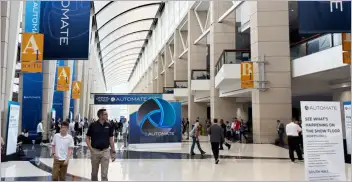
North America’s largest robotics and automation event winds down