Innodata
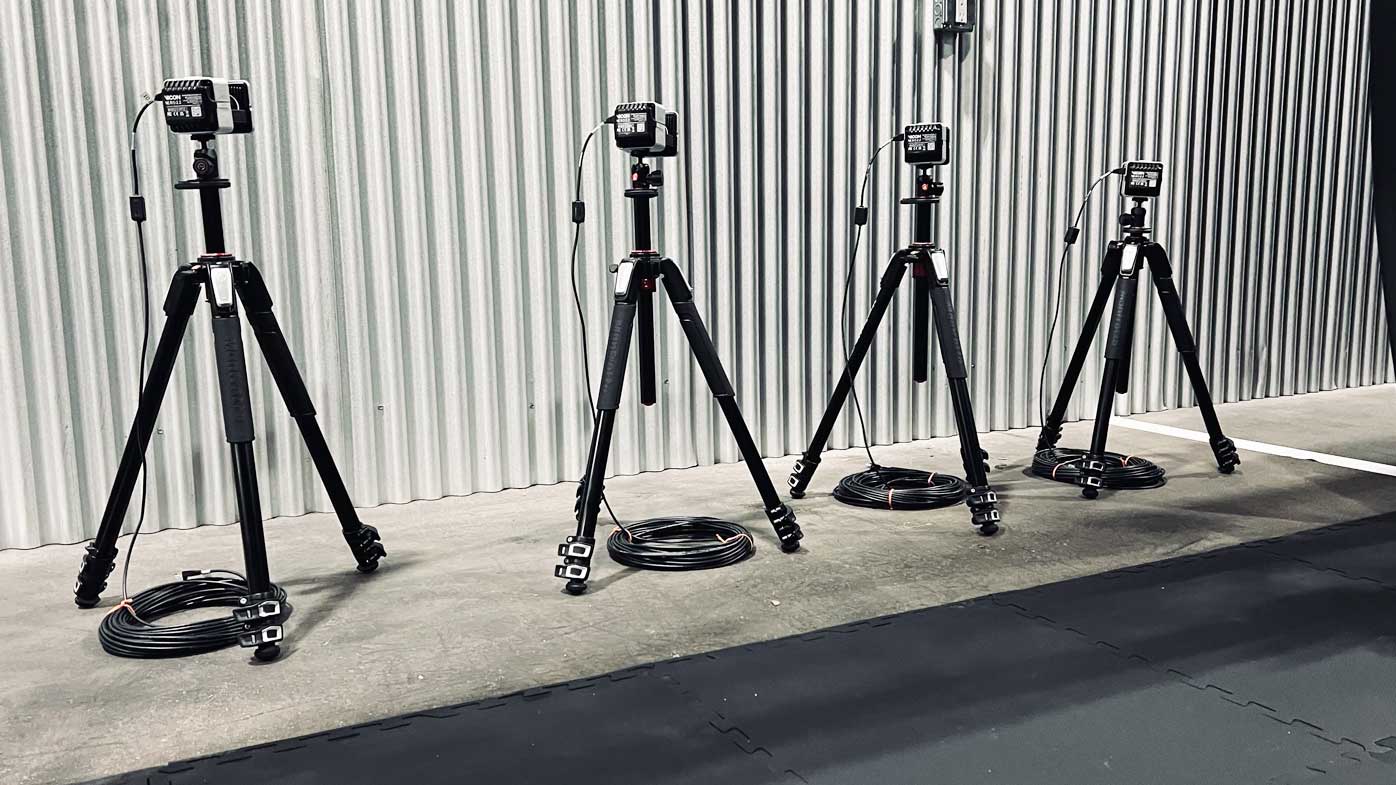
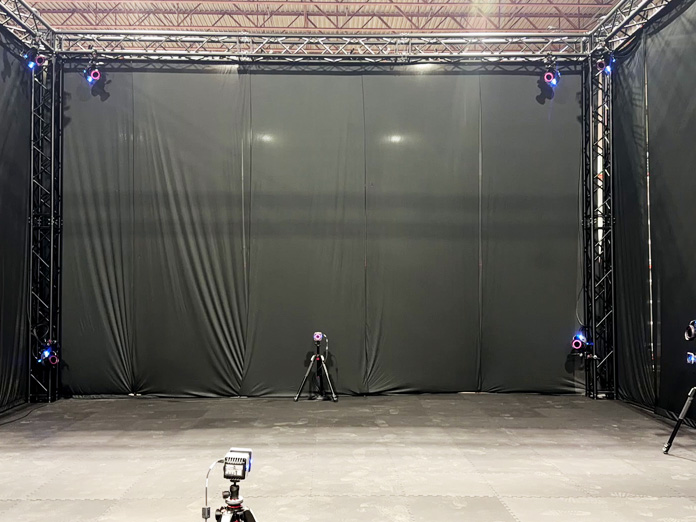
Innodata's new motion-capture AI lab in New Jersey features Vicon optical motion-capture cameras to measure subtle movements with sub-millimeter accuracy to generate data that will train the next generation of humanoid robots.
Get news, papers, media and research delivered. Sign up for our free newsletters.
Stay up-to-date with news and resources you need to do your job. Research industry trends, compare companies and get weekly market intelligence with Robotics 24/7.

Innodata
Innodata's new motion-capture AI lab in New Jersey features Vicon optical motion-capture cameras to measure subtle movements with sub-millimeter accuracy to generate data that will train the next generation of humanoid robots.
Global data engineering company Innodata announced the opening of a new R&D laboratory designed to generate the data needed to train the next generation of human-like robots and independently validate the performance data that robots generate internally.
Innodata said that it developed the lab in collaboration with Vicon, a provider of motion capture technology, which consulted on the lab design and continues to provide technical consulting.
Innodata said that the New Jersey-based lab is equipped with high-precision, low-latency infrared optical tracking cameras that measure movement down to the sub-millimeter level, a degree of accuracy that methods such as wearable inertial measurement unit (IMU) sensors and single-camera (monocular) video analysis typically cannot match.
"There's just no substitute for direct 3D motion capture," said Frank Tanner, vice president of robotics and physical AI at Innodata. "When a computer vision model tries to make sense of a 2D grid of pixels, mistakes inevitably creep in. Our sensors are designed to register the tiniest motion of every joint, which makes training more accurate and efficient. When you're training a humanoid that weighs almost 200 pounds, your readings can't be in the ballpark. They need to be precise. And with this lab, they are."
The company said that the lab addresses an urgent need for high-quality training data for humanoids, industrial robots and other forms of physical AI. While many other data providers infer 3D motion by analyzing 2D video, Innodata said it captures 3D data directly, from the bodies themselves, whether those bodies are human or mechanical.
"Plenty of motion capture companies have discovered humanoid robotics lately. But the teams building the most capable robots keep reaching the same conclusion: if the training data is approximate, the robot will be too," said Andrew Knox, managing director of Vicon. "Vicon sets the standard that motion data is measured against. Our systems capture people, robots and the objects they handle in the same space, with sub-millimeter accuracy and millisecond latency. That gives you independent ground truth, not an estimate. It's why the leading humanoid developers, frontier AI labs and research universities keep choosing Vicon, and why Innodata's lab is well placed to become a reference point for the whole physical AI industry."
Innodata said that its customers can purchase motion-capture data as off-the-shelf packages, or commission custom projects. Innodata added that it can produce training data for a wide range of physical AI platforms and retarget motion data from one platform to another as needed.
"Physical AI is growing faster than any other segment in AI, but every robotics team hits the same wall: there isn't enough real-world interaction data, and what exists is expensive and slow to produce," said Rahul Singhal, CEO of Innodata. "This facility removes that wall. We now offer physical AI companies a complete end-to-end capability - from data collection through model evaluation - that compresses development cycles and gets more capable, safer robots into the world sooner."
The company said that customers can also send in robots for evaluation to confirm they perform to customer specifications. Innodata said that its lab experts can measure a robot's movements and responses in a variety of scripted scenarios, including those in which robots and people interact.
Because the lab's calibrated cameras observe each robot from the outside, the company said that it can provide an external ("exocentric") check on the robot's internal ("egocentric") telemetry, which is often noisy. Innodata said that the resulting measurements can be used to validate a developer's internal data reports or performance claims or to provide independent, third-party benchmarks for trust and safety.
Artificial Intelligence Deep Learning Machine Vision Machine Learning Industrial Automation Collaborative Robots Robot Arm Components Motion Control Sensors Cameras Software Data Management Simulation News Press Release Camera Data Capture Humanoid Motion Control Physical AI Research & Development Training
Enjoyed this article? Add Robotics 24/7 as a preferred source in Google Search.
Edge computing gives AI agents the processing power to turn instructions into…

Colette Kress, current EVP and CFO of NVIDIA named interim CEO

China's Office of the Working Mechanism for Foreign Investment Security…

President Trump orders a review of robotics imports over national security…