Roboworx
Roboworx's new predictive analytics capability moves robot maintenance from a reactive "break-fix" model to a more proactive, data-driven approach, reducing downtime, extending the robot’s useful life and accelerating promised ROI.
Get news, papers, media and research delivered. Sign up for our free newsletters.
Stay up-to-date with news and resources you need to do your job. Research industry trends, compare companies and get weekly market intelligence with Robotics 24/7.
Roboworx
Roboworx's new predictive analytics capability moves robot maintenance from a reactive "break-fix" model to a more proactive, data-driven approach, reducing downtime, extending the robot’s useful life and accelerating promised ROI.
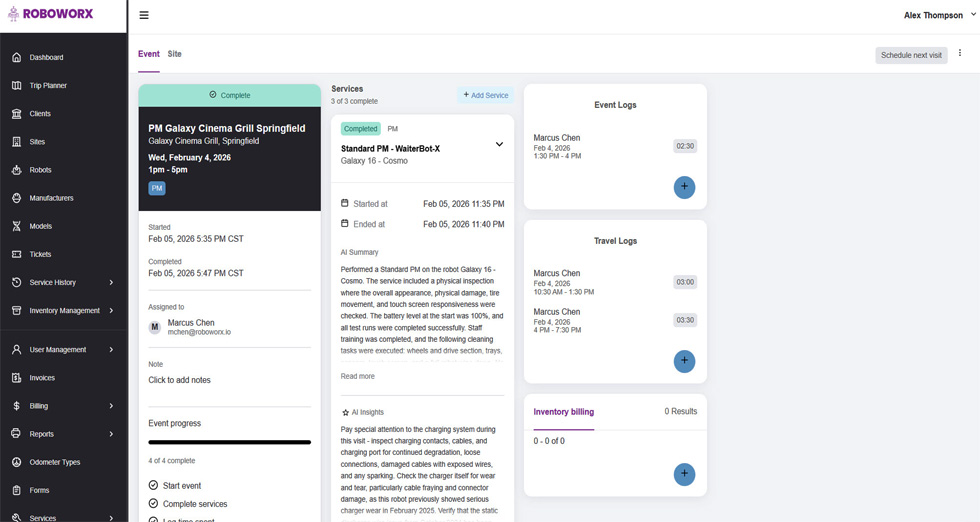
Robot field service organization Roboworx launched advanced AI-powered predictive analytics capabilities for its Robot Service Manager (RSM) software.
The company said that this new predictive analytics capability moves robot maintenance from a reactive "break-fix" model to a more proactive, data-driven approach, reducing downtime, extending the robot’s useful life and accelerating promised return on investment (ROI).
The new RSM AI uses machine learning to analyze historical service data and real-time telemetry, allowing Roboworx to anticipate mechanical failures before they occur and streamline communication between technicians and clients. By combining service history with odometry data such as cycles completed, miles traveled (for AMRs) or units produced, Roboworx said that RSM AI identifies patterns in component wear or usage.
Beyond predictive modeling, Roboworx said that RSM AI also solves the “data fatigue” common in field service. The company said that its AI-powered system automatically converts technical forms and checklists into easy-to-read summaries similar to a doctor’s after-visit brief.
For example, facility managers can view a concise, plain-language summation of their robot’s “health” via a client portal, while robot technicians know the exact server history, including recurring issues specific to each robot model, long before they arrive on site.
"With predictive analytics, we can now flag specific components for replacement based on usage levels across different models,” said Jeff Pittelkow, managing director at Roboworx. "When a technician heads to a site, the system tells them exactly what is likely to fail next. This enables us to anticipate issues instead of just reacting to them, which in turn helps keep the robots working at peak efficiency no matter the task.”
While RSM was publicly introduced in 2025, Roboworx said it has been training the end-to-end robot maintenance software over the past five years as the company extends its knowledge of serving robots and components across multiple industries, such as warehouse, cleaning, delivery, and food service industries.
In addition to the new AI-powered predictive analytics, Roboworx said that RSM includes:
The company said that this AI integration builds upon its platform that has helped companies:
"As robotic technology grows more complex, RSM AI has already proven to be an invaluable tool to ensure our experts deliver the most effective care before clients even know they need it," said Chris McNelis, VP of operations at Roboworx. "Technicians don't have to change how they work because the AI handles the reporting, allowing them to focus on the hardware while keeping the client fully informed."
GENISOM AI makes ICRA debut at conference in Vienna

World's first omni-modal evaluation including tactile sensing for…

Ultrasonic sensing enhances robotics perception

Cybernetix Ventures’ event kicks off Robotics Tech Week 2026 slate of events