Getty Images
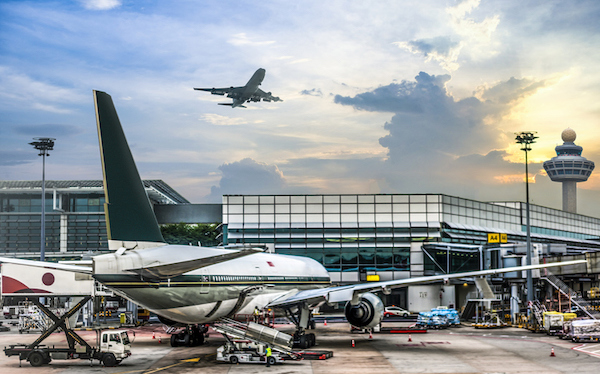
Changi International Airport is testing a robotic luggage loading and unloading system.
Get news, papers, media and research delivered. Sign up for our free newsletters.
Stay up-to-date with news and resources you need to do your job. Research industry trends, compare companies and get weekly market intelligence with Robotics 24/7.
Getty Images
Changi International Airport is testing a robotic luggage loading and unloading system.
Sarcos Technology and Robotics Corp. and Changi Airport Group Pte. Ltd. yesterday announced the first demonstration of a jointly developed, outdoor-based autonomous baggage-loading system.
“Similar to major airports throughout the world, recruiting enough ground handling personnel to support our growth is a challenge,” said Poh Li San, senior vice president of Terminal 5 Planning at Changi Airport Group. “We have been encouraged by the innovative solution from Sarcos to help address these issues, and we’re excited to explore the next steps towards implementation.”
Founded in 2009, Changi Airport Group (CAG) manages operations and management, air hub development, and commercial activities at Changi Airport in Singapore. CAG also manages Seletar Airport and invests in and manages foreign airports.
As one of Asia’s most connected international aviation hubs, Changi Airport links Singapore to more than 120 cities globally, with over 80 airlines operating more than 4,000 weekly flights. Jewel Changi Airport opened in April 2019, adding to Changi Airport’s shopping and dining offerings of more than 550 food and beverage and retail outlets.
To support air traffic recovery and meet long-term staffing needs, CAG said it is investing in automation to meet a "significantly increased need for airport employees."
CAG and Sarcos are developing technology to automate the loading and unloading of loose passenger bags from narrow-bodied aircraft. It is currently a labor-intensive role in the outdoor apron environment.
The partners conducted an inaugural demonstration in September 2022 at the Singapore Changi Airport. They said the prototype validated the ability of robots to reduce the risk of on-the-job injuries from baggage handling. The system also promises to augment the ground-handling labor force, said Sarcos.
The Civil Aviation Authority of Singapore (CAAS) partly funded the development and trial of the baggage-loading system through its Aviation Development Fund (ADF). The ADF supports innovations to improve productivity in Singapore's aviation sector.
“Changi Airport is an industry visionary and continues to be a key development partner to Sarcos,” said Kiva Allgood, president and CEO of Sarcos.
“Deploying robotics to improve workplace safety is core to our mission at Sarcos, and this system has the potential to transform airports across the globe by making them safer and reducing passenger delays due to weather-related downtime," she said. "We look forward to continuing our collaboration with CAG to augment the workforce of the tarmac with robotics.”
Salt Lake City, Utah-based Sarcos has designs, develops, and manufactures systems combining the intelligence, instinct, and judgment of humans with the strength, endurance, and precision of machines for unstructured environments.
The company's products include industrial exoskeletons, teleoperated systems, software, and mobile manipulators for the construction, defense, and energy sectors, among others.
Sarcos robotic systems operate in challenging, unstructured, industrial environments and include teleoperated robotic systems, a powered robotic exoskeleton, and software solutions that enable task autonomy.
Enjoyed this article? Add Robotics 24/7 as a preferred source in Google Search.
Edge computing gives AI agents the processing power to turn instructions into…
Daimon-TWM world model debuts for the public
Platform helps robots adapt to complex tasks

Look beyond the headlines for the latest in humanoid robots