Deloitte
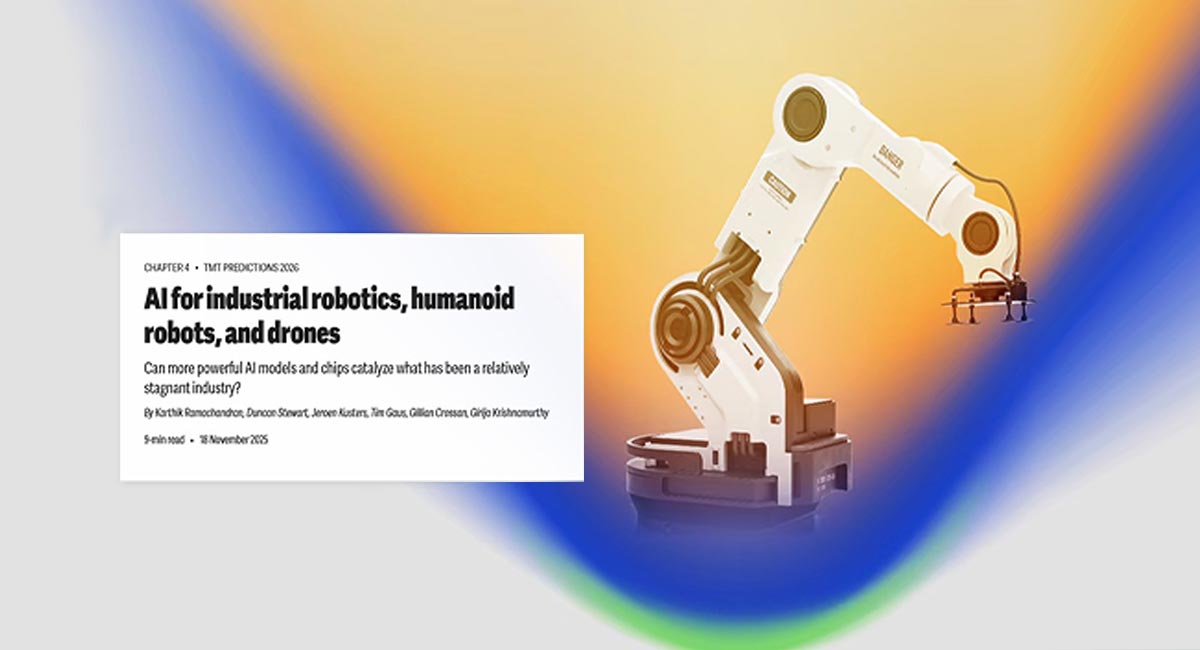
Chapter 4 of Deloitte's annual “Technology, Media & Telecommunications Predictions” report focuses on AI's evolution and its relationship with various types of robotics.
Get news, papers, media and research delivered. Sign up for our free newsletters.
Stay up-to-date with news and resources you need to do your job. Research industry trends, compare companies and get weekly market intelligence with Robotics 24/7.
Deloitte
Chapter 4 of Deloitte's annual “Technology, Media & Telecommunications Predictions” report focuses on AI's evolution and its relationship with various types of robotics.
Robotics and AI autonomy will reach a turning point in 2026, according to Deloitte’s annual “Technology, Media & Telecommunications Predictions” report.
The global business consulting and professional services company, and its Deloitte Insights group, highlights how AI is redefining the foundations of hardware, software, telecom, media and robotics.
Some major takeaways from the report include:
Deloitte’s report found that AI is driving infrastructure investment, reshaping business models and accelerating shifts in how people can connect and consume content - creating a more competitive and complex digital economy in 2026 and beyond.
“AI is rapidly evolving from promise to practical progress, transforming how technology, media, and telecom companies create, connect and compete,” said China Widener, vice chair and U.S. Technology, Media & Telecommunications industry leader, Deloitte. “Together, these sectors account for nearly half of global market capitalization - representing a powerful opportunity to redefine how businesses innovate and deliver value. From hardware and software to media and entertainment, applied creativity and technological advances are accelerating this shift, driving real-world solutions and measurable impact.”
The cumulative installed base of global industrial robots is estimated to surpass 5.5 million by 2026, with modest annual growth. Annual sales are projected at about 500,000 units in 2026, not much higher than in previous years.
Longer term, growth could accelerate as labor shortages bolster domestic manufacturing in developed markets and as advances in computing power and GenAI expand robotic capabilities.
Deloitte said that these AI advances could propel annual industrial robot sales to over a million units and $20 billion in revenues by 2030. Drones are also emerging as part of this shift: Many remain human-operated, but autonomous functions are advancing rapidly, with applications ranging from infrastructure inspection to public safety, defense and more.
Click here to read the robotics-specific chapter, “AI for industrial robotics, humanoid robots, and drones” in Deloitte’s report.
The report found that agentic AI and automation are accelerating demand for new hardware and infrastructure. But they’re also exposing supply chain vulnerabilities and fueling a global push for greater local control of technology.
Deloitte predicts that inference will account for roughly two-thirds of AI compute in 2026. Deloitte further predicts that while the market for inference-optimized chips will grow to over $50 billion in 2026, combined training/inference AI chips in data centers will continue to dominate the $200 billion AI chip market.
The Deloitte report found that AI is also changing business software, creating new markets, and reshaping how people can search for information and products - trends that are predicted to accelerate through 2026.
Deloitte’s report said that AI is becoming an intuitive interface that summarizes results, infusing traditional search portals with AI context. By 2026, daily usage of AI within search is projected to be three times greater than any standalone AI tool - reshaping how people can discover information. Deloitte predicts that close to one-third (29%) of adults in developed countries will view at least one AI-generated search summary each day, but just 10% will use standalone AI applications daily. Instead of users clicking through links and stitching together answers, search will increasingly deliver AI-crafted summaries up front, evolving from a gateway into a guide that can help interpret, organize and explain information in context.
The report suggests that agentic AI is expected to drive the next era of enterprise integration. Estimates suggest that the global agentic AI market could reach $35 billion in 2030, up from a projected $8.5 billion in 2026. However, Deloitte predicts that if enterprises orchestrate agents better and more thoughtfully address the associated challenges and risks, this market projection could increase by up to 30%, or as high as $45 billion by 2030.
In 2026, Deloitte said that SaaS apps will likely get smarter, more personalized, adaptive and autonomous. Agentic AI could even begin to replace today’s SaaS tools over time. By the end of 2026, Deloitte predicts that as many as 75% of companies may invest in agentic AI, fueling a surge in spending on autonomous AI agents across SaaS platforms.
“AI is becoming the engine of digital business, spanning everything from generative creativity to agentic automation,” said Steve Fineberg, vice chair and U.S. Technology Sector leader, Deloitte. “It’s reshaping how technology connects, how people search and how value is created across the enterprise. We’re now seeing it move into every level of software and hardware, and the leaders who can orchestrate that intelligence responsibly will turn experimentation into efficiency - and sustained momentum - at scale.”
Artificial Intelligence Machine Vision Machine Learning Autonomy Drones Industrial Automation Collaborative Robots Robot Arm Software Cloud and Edge Fleet Management News Press Release Deloitte Inspection Investment Labor Shortage Orchestration Research Research and Markets SaaS Safety
Enjoyed this article? Add Robotics 24/7 as a preferred source in Google Search.
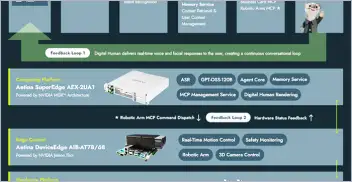
Edge computing gives AI agents the processing power to turn instructions into…
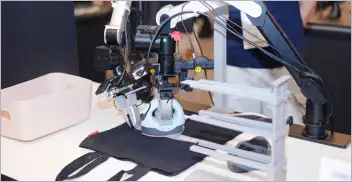
Daimon-TWM world model debuts for the public
Platform helps robots adapt to complex tasks
Look beyond the headlines for the latest in humanoid robots