What robotic technology/technologies do you expect will make the most impact in 2026?
The industrial, logistics, healthcare, manufacturing and smart cities sectors will lead the adoption of robotics and automation to handle rising complexity, throughput demands and labor shortages. Advances in simulation, foundation models and AI infrastructure are enabling robots to work safely in dynamic environments, coordinate across fleets and perform tasks once needing specialized systems. In healthcare, automation improves patient care and operations; in manufacturing, it drives precision and flexibility; and in smart cities, it enhances infrastructure and public services. As these capabilities advance, automation will become a core strategy for productivity, safety and efficiency.
What is your boldest robotics prediction for 2026?
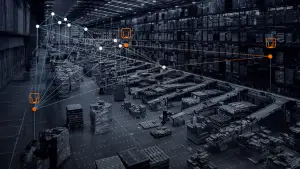
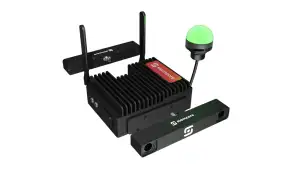
Scalable synthetic data generation is propelling the next wave of robotics innovation. Powered by NVIDIA Omniverse libraries and frameworks, open Cosmos World models can develop custom synthetic data generation pipelines to create vast, photorealistic and physically accurate datasets to safely train and test robots at scale. Combined with world models, synthetic data enhances robotic reasoning by helping generalize these models to never before seen situations or scenarios. This approach cuts data collection costs, mitigates risk and accelerates deployment, fueling robotics adoption across industries. Advances in multimodal foundation models such as NVIDIA GR00T N, an open robotics vision-language action model, are enabling robots to reason, plan and collaborate more intelligently with humans. NVIDIA’s work in vision-language-action models and simulation-to-real training allows robots to interpret complex environments and make context-aware decisions with human-like understanding. These reasoning advances also drive the use of video analytics AI agents powered by the Metropolis VSS blueprint for tasks like visual inspection, operator assistance, or facility management - improving quality control, productivity and worker safety at scale. High-fidelity physics remains central to realistic simulation and safe robot training. Newton, an open-source physics engine co-developed by Disney Research, Google DeepMind and NVIDIA allows developers to accurately simulate complex robotics tasks such as manipulation or navigation - reducing the sim-to-real gap. Neural simulators such as neural dynamics are also making their way into classic robotic simulations. These neural simulation frameworks are learned embodiments of a specific motion or dynamics and can predict the future state of the robot. Lastly, outside-in functional safety agents for robotics is emerging as a major breakthrough, extending perception by drawing rich contextual intelligence from sensors embedded in the surroundings. Combining NVIDIA IGX Thor and NVIDIA Metropolis blueprint for video search and summarization (VSS), these agents act as a control tower for environments where people and robot fleets work side by side - streaming situational data enabling precise navigation, safer interactions, and coordinated fleet behavior. These agents enhance this ecosystem by delivering safety-certified solutions for real-time decision-making, ensuring that autonomous systems can operate securely in mission-critical environments.
What industry/industries do you expect will invest more in robotics and automation in 2026 and why?
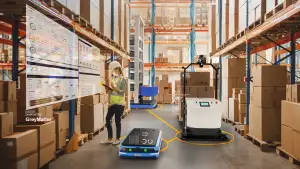
In 2026, mobile manipulators will emerge as a pivotal new form factor in robotics, redefining how machines interact with the physical world. By combining the dexterity of humanoid arms with the mobility and stability of autonomous platforms, these systems will bridge the gap between fixed industrial manipulators and general-purpose humanoids. Accelerated by advances in edge AI computing like NVIDIA Jetson Thor, simulation training and high-fidelity digital twins like NVIDIA Omniverse, mobile manipulators will bring real-time reasoning and general intelligence to factories, fulfillment centers and service environments. They won’t mimic humans, they’ll extend human capability, handling unstructured tasks with efficiency and safety. Powered by NVIDIA’s Metropolis VSS blueprint and Cosmos Reason, vision AI agents are moving from proofs of concept into production as vision-language models advance - boosting productivity and worker safety. These agents can automate visual inspections and act as AI coaches to train new workers. In industrial settings such as factories and warehouses, organizations are piloting robot safety systems that combine “inside-out” protections on the robot with “outside-in” workspace monitoring. Backed by NVIDIA IGX and safety AI, these systems provide scene-level understanding so robots can detect people or hazards and safely slow, stop, or reroute - enhancing safety without reducing efficiency.
GENISOM AI makes ICRA debut at conference in Vienna
World's first omni-modal evaluation including tactile sensing for…

Ultrasonic sensing enhances robotics perception

Cybernetix Ventures’ event kicks off Robotics Tech Week 2026 slate of events