What robotic technology/technologies do you expect will make the most impact in 2026?
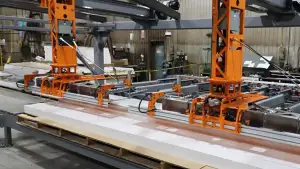
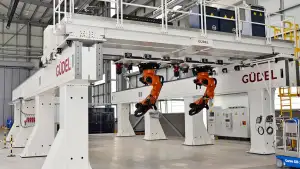
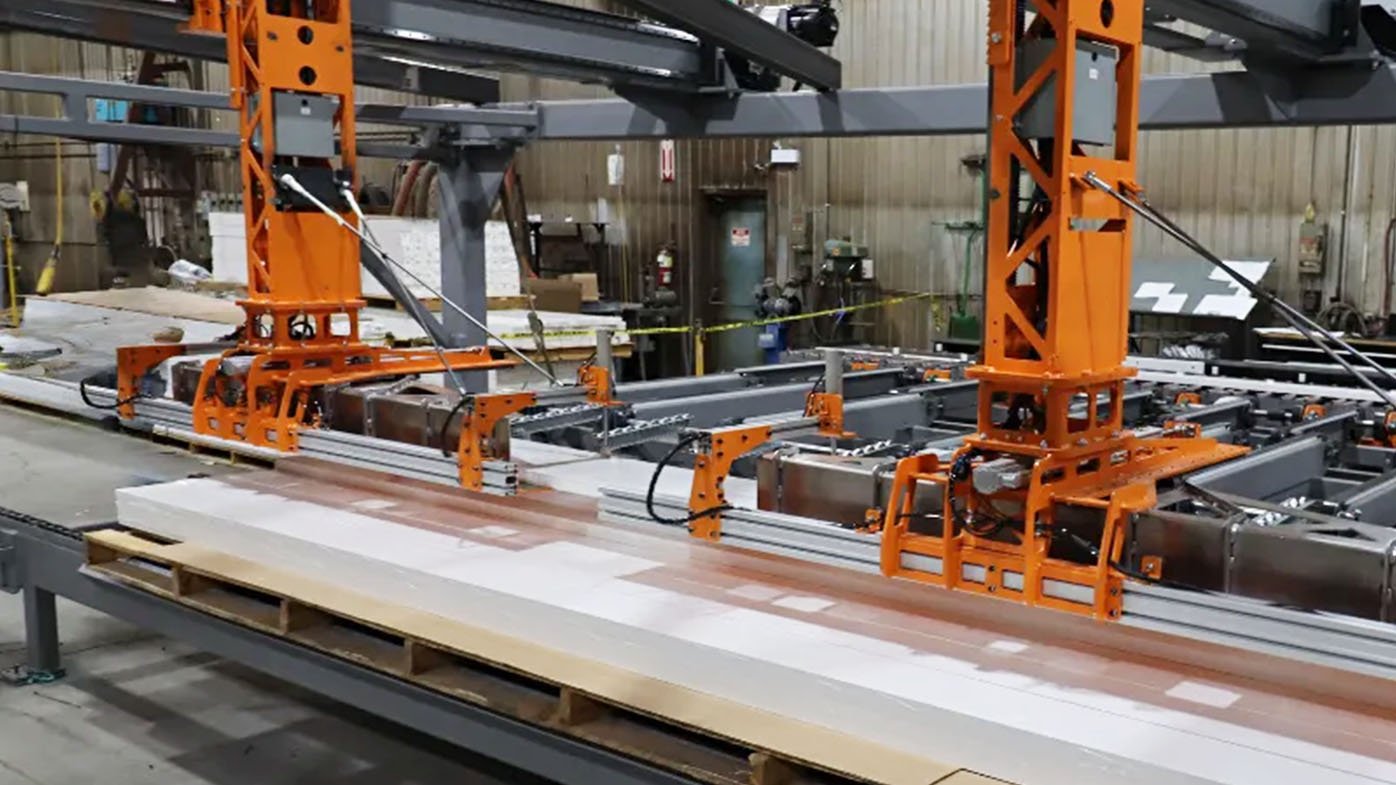
In 2026, gantry-type robotic manipulators will continue to be one of the most impactful robotic technologies in manufacturing, particularly for material handling applications involving large, heavy, or repetitive parts. These systems - ranging from two-axis to four-axis configurations - address two critical challenges manufacturers are facing today: operator safety and consistent performance. By automating the manipulation of heavy panels or awkward components, gantry robots significantly reduce the risk of injuries while eliminating fatigue-related variability. Unlike manual operations, robots maintain the same level of precision, speed, and reliability throughout the entire shift. At Doucet, gantry robots have been our fastest-growing robotic product line in 2025, and this trend is clearly continuing into 2026. Solutions like the GANTRYX, equipped with vacuum gripping technology, automate stacking, destacking, and panel handling at the infeed and outfeed of moulders and sanders - either as standalone systems or as part of a fully integrated operating cell. Beyond the mechanical benefits, customers are increasingly looking for robotic solutions that combine safety with flexibility. Easier programming, faster changeovers, and the ability to adapt to variations in production volume and material types are becoming essential features, reinforcing the role of gantry robots as a cornerstone of modern, efficient manufacturing lines.
What is your boldest robotics prediction for 2026?
My boldest prediction for 2026 is that robotics will move decisively away from rigid, sequential programming and toward adaptive, self-optimizing systems driven by AI and vision technologies. We are already seeing early signs of this shift. AI combined with vision systems allows robots to make decisions differently than traditional PLC-based logic. Instead of following a fixed sequence, the robot can adjust its behavior in real time. For example, modifying its trajectory to move faster when material height or positioning changes during processing. This evolution will unlock applications that were previously considered too complex or inconsistent to automate, such as stacking or destacking materials with natural variation. In these cases, AI-enabled robots no longer “repeat a motion,” they learn, adapt, and improve performance over time. In my view, 2026 will be the year when this approach becomes a competitive necessity rather than an innovation reserved for early adopters.
What industry/industries do you expect will invest more in robotics and automation in 2026 and why?
The wood manufacturing industry will continue to significantly increase its investment in robotics and automation in 2026. We have been integrating robots into this industry for nearly a decade, and every year the demand grows. Not only in volume, but also in sophistication. Within the wood sector, cabinet manufacturing, commercial millwork, and entry door production are increasingly inclined to automate material handling tasks. These environments face ongoing labor challenges, high expectations for consistency, and the physical demands of handling large or heavy panels. Robots like the GANTRYX reduce the risk of operator injuries while maintaining a stable, repeatable level of performance throughout the day. One of the fastest-growing segments we see is the prefabricated wall industry, where high throughput and precise material handling are critical. In these applications, gantry robots integrated into production cells play a key role in removing non-value-added tasks from operators, allowing skilled labor to focus on higher-impact work. In short, industries that prioritize safety, flexibility, and productivity will continue to see robotics not as an option, but as a strategic investment in their long-term competitiveness.

From geometry preparation to AI-assisted analysis, integrated CFD workflows…
Software-based GripperAI manages mixed picking through basic geometry
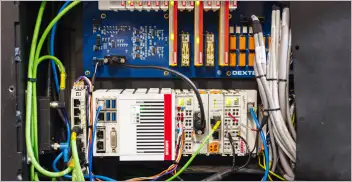
Safety, communication and motion control components enable smooth operation

North America’s largest robotics and automation event winds down